

Alternatives to Conventionally Grown Coffee
Table of Contents
- Why Choose Alternatives to Conventionally Grown Coffee
- Organic Coffee: A Cleaner Cup Without Synthetic Pesticides
- Shade-Grown Coffee: Supporting Forest Ecosystems
- Regenerative Coffee Farming: Rebuilding Soil Health
- Tea-Based Coffee Alternatives Without Caffeine
- How to Make the Switch: Practical Brewing and Taste Tips
- Frequently Asked Questions
Last Updated: October 7, 2026
Why Choose Alternatives to Conventionally Grown Coffee
Conventionally grown coffee relies heavily on synthetic pesticides and fertilizers that can harm both the environment and your cup. Many drinkers are discovering that stepping away from conventional farming opens up cleaner, more flavorful options.
The shift toward alternatives to conventionally grown coffee isn't just about health, it's about taste, sustainability, and supporting farming practices that regenerate rather than deplete.
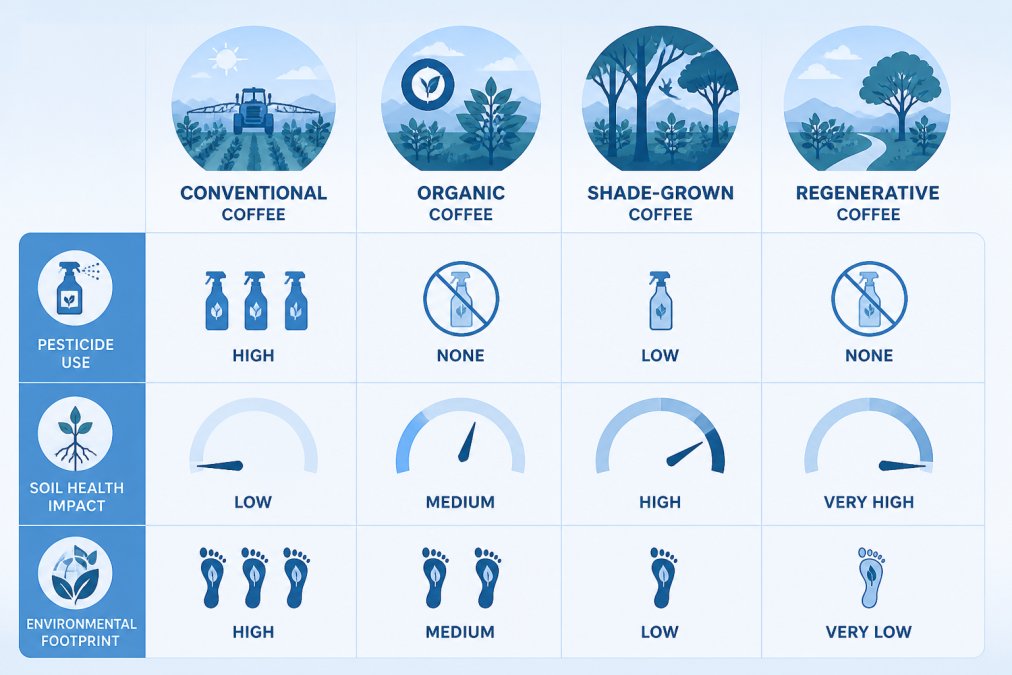
The real difference between conventional and alternative coffee methods comes down to three factors: chemical inputs, soil management, and ecosystem impact.
Organic Coffee: A Cleaner Cup Without Synthetic Pesticides
Organic coffee is grown without synthetic pesticides, herbicides, or chemical fertilizers. Farmers use natural pest management, composting, and crop rotation, and third-party auditors verify certification.
The taste difference is noticeable: organic beans have cleaner, brighter flavor notes because the plant isn't stressed by chemical exposure. Many brewers report a richer aroma.
One common concern is price. Organic certification requires more labor-intensive farming and third-party verification, which increases cost.
For small businesses upgrading an employee kitchen or corporate pantry selections, organic coffee signals quality and care. Many corporate clients make the switch for this exact reason, a low-cost benefit with high perceived value.
Shade-Grown Coffee: Supporting Forest Ecosystems
Shade-grown coffee is cultivated under a canopy of native trees rather than in full sun on cleared land, mimicking the natural forest environment where coffee plants originated.
When coffee grows in shade, it ripens more slowly, allowing sugars and acids to develop more fully. This creates beans with deeper, more nuanced flavors, which is why many specialty roasters prefer shade-grown beans.
The ecosystem impact is substantial. Shade-grown farms support bird populations, preserve forest biodiversity, prevent soil erosion, and sequester more carbon than conventional plantations.
The trade-off is availability and cost.
Regenerative Coffee Farming: Rebuilding Soil Health
Regenerative coffee farming goes beyond organic by actively improving soil health, increasing biodiversity, and sequestering carbon. Farmers use composting, cover cropping, and minimal tillage to rebuild soil structure year after year.
This is where alternatives to conventionally grown coffee reach their fullest potential. Regenerative farming doesn't just avoid harm, it actively heals the land. Over time, regenerative farms become more resilient to drought and disease, require fewer external inputs, and produce coffee with remarkable flavor depth.
The flavor profile of regenerative coffee is distinctly rich.
Regenerative coffee is the most expensive alternative because it represents the highest level of farming sophistication and environmental investment. It's also the fastest-growing segment of specialty coffee, so availability is improving.
Tea-Based Coffee Alternatives Without Caffeine
If your goal is to move away from conventionally grown coffee entirely, tea-based options deliver ritual, flavor, and energy on different terms. These aren't coffee impersonators, they're distinct beverages worth exploring on their own. The key is matching the option to the moment: a gentle morning lift, an afternoon reset, or an evening wind-down.
Herbal Blends for Caffeine-Free Comfort
Herbal blends offer warmth and complexity without any caffeine. Options like Apple Cider Rooibos combine naturally caffeine-free bases with spices for a satisfying ritual.

Herbal blends work particularly well for afternoon and evening consumption. Unlike coffee, they won't disrupt sleep, yet they provide the comfort and sensory experience that make the coffee ritual meaningful. For corporate pantry selections, herbal options signal that you're thinking about employee wellness holistically.
Hibiscus Berry Tea is vibrant, fruity, and refreshing. Hibiscus delivers natural tartness and body that makes it feel substantial, and it brews beautifully cold or hot, a strong iced option for warm-weather employee kitchens.
Green Tea and Roasted Tea Options
Green tea contains roughly one-third the caffeine of coffee, making it a gentler transition for those stepping back from coffee dependence. Jasmine combines green tea with jasmine blossoms for a floral, refined cup.

For those seeking the roasted, toasty notes that make coffee appealing, Hojicha delivers exactly that.
Black tea options like English Breakfast and Masala Chai provide strong, malty flavors with moderate caffeine. English Breakfast pairs classically with milk and sugar, while Masala Chai brings spice and complexity.
For those exploring matcha, Matcha from the Matsushita Tea Garden in Shizuoka offers ceremonial-grade quality. Matcha provides sustained, gentle energy through L-theanine, and the whisking ritual transforms the experience into meditation.

Yerba Mate, Chicory, and Mushroom Options
Beyond tea, several other coffee alternatives deserve a place in your rotation, especially if you want something closer to a coffee ritual without conventional beans.
Yerba mate is a South American holly plant brewed as a strong, earthy infusion. It contains caffeine, though amounts vary widely by brand and serving size.
Chicory root is the classic coffee stand-in, roasted and ground to brew a dark, nutty cup with no caffeine.
Mushroom-based blends, typically combining ground mushrooms like lion's mane or chaga with cocoa or herbs, have grown quickly in the wellness space. They usually contain little to no caffeine and are marketed for focus and calm.
Caffeine and Nutrition at a Glance
One reason readers get confused is that "coffee alternative" covers everything from zero-caffeine herbal tea to yerba mate, which can rival coffee. The numbers below are typical ranges, not guarantees, since brewing strength and brand vary.
| Option | Typical Caffeine per 8 oz | Notes |
|---|---|---|
| Brewed coffee | 95-165 mg | Reference point |
| Black tea | 40-70 mg | Moderate, steady |
| Green tea | 25-45 mg | Gentle, L-theanine |
| Matcha | 60-80 mg | Whisked, sustained |
| Yerba mate | 65-130 mg | Varies widely |
| Hojicha | 15-30 mg | Low, roasted |
| Herbal (rooibos, hibiscus) | 0 mg | Caffeine-free |
| Chicory root | 0 mg | Coffee-like, no caffeine |
| Mushroom blends | 0-25 mg | Depends on blend |
For small businesses building an employee kitchen benefit, this range is an advantage. Stock a caffeine-free herbal for the afternoon, a moderate black tea for the morning, and a low-caffeine hojicha for anyone sensitive to stimulants, variety that signals care in a way a single coffee urn never can.
How to Make the Switch: Practical Brewing and Taste Tips
The transition from conventional coffee to alternatives works best as exploration rather than deprivation. Your palate has been trained by conventional coffee's specific flavor profile, and alternatives taste different, often better, but definitely different. The most useful decision is to clarify what you actually want: a different crop, or the same crop grown better.
Two Paths: Better-Grown Coffee or a Different Beverage
If you love coffee and your concern is how it's grown, you don't have to give it up. Organic, shade-grown, and regenerative coffees are still coffee, just produced with different inputs and land management. Switching within coffee is usually the easiest transition because the ritual, brewing method, and flavor reference points stay the same.
If you want to reduce caffeine, explore new flavors, or step away from coffee entirely, beverage alternatives are the better fit. This path asks more of your palate because the flavor reference points change. A gradual plan helps: replace one cup per day in week one, two in week two, and so on.
Taste Expectations by Category
Knowing what to expect prevents the most common disappointment: judging a new drink against coffee.
- Better-grown coffee: similar profile, cleaner finish, less bitterness, more origin character.
- Black and green tea: lighter body, astringent edge, savory or floral notes rather than roasted.
- Matcha: grassy and umami-rich, thicker mouthfeel, sustained energy.
- Hojicha: toasty and nutty, low caffeine, closest in comfort to a dark roast.
- Herbal blends: sweet, tart, or spicy depending on the base, no caffeine.
- Yerba mate: grassy, earthy, slightly bitter, strong lift.
- Chicory: dark and nutty, no caffeine, closest in color and bitterness to coffee.
- Mushroom blends: mild, earthy, often cocoa-forward, calming rather than stimulating.
Brewing Method and Temperature
Brewing method matters significantly. Alternatives to conventionally grown coffee often perform better with gentler techniques. French press, pour-over, and AeroPress all work well because they let the beans' natural flavors shine without over-extraction.
For tea-based alternatives, water temperature is critical. Green teas and herbal blends steep at lower temperatures (around 175°F) to avoid bitterness, while black teas and chai benefit from hotter water (195°F or higher).
| Alternative | Brewing Method | Temperature | Steep Time | Best For |
|---|---|---|---|---|
| Organic Coffee | French Press | 200°F | 4 minutes | Full-bodied flavor |
| Shade-Grown Coffee | Pour-Over | 195°F | 3-4 minutes | Nuanced complexity |
| Regenerative Coffee | AeroPress | 175°F | 1-2 minutes | Clean, bright notes |
| Green Tea (Jasmine) | Infuser | 175°F | 4-6 minutes | Floral, delicate |
| Roasted Tea (Hojicha) | Whisk or Infuser | 175°F | 2-3 minutes | Toasty, smooth |
| Herbal Blend (Rooibos) | Infuser | 212°F | 4-6 minutes | Sweet, warming |
| Black Tea (Chai) | Infuser | 195°F | 5-7 minutes | Strong, spiced |
| Yerba Mate | French Press or Gourd | 170°F | 3-5 minutes | Earthy, energizing |
| Chicory Root | Drip or French Press | 200°F | 4-5 minutes | Dark, caffeine-free |
For businesses serving alternatives to conventionally grown coffee in an employee kitchen or corporate pantry, this table helps ensure quality preparation. Employees notice the difference when their tea is brewed properly, and it signals you've invested thought into this benefit.
Sourcing and Storage
Availability varies by category. Better-grown coffees are widely available through specialty roasters and online.
Storage matters more than most people expect. Coffee should be kept in an airtight container away from light and used within a few weeks of roasting.
If you're sourcing for a small business or corporate client, consider offering variety. Not everyone wants to abandon coffee entirely, but many will appreciate organic or regenerative options.
One practical tip: brew a tasting flight. Prepare small cups of three different alternatives side-by-side, this removes the pressure to commit and lets you discover your preference.
Frequently Asked Questions
What are the main differences between organic coffee and conventionally grown coffee?
Organic coffee is grown without synthetic pesticides, herbicides, or fertilizers, relying instead on natural soil management and pest control methods. Conventionally grown coffee often uses chemical inputs that can leave residue on beans and in soil. Organic certification requires third-party verification and adherence to USDA standards. While both produce caffeine, organic farming typically supports better soil health and reduces chemical exposure for farmers and consumers alike.
Is shade-grown coffee better for the environment than other alternatives to conventionally grown coffee?
Shade-grown coffee preserves forest canopy, supporting biodiversity and carbon sequestration compared to sun-grown varieties. It reduces erosion, improves soil quality, and creates habitat for migratory birds and other wildlife. However, shade-grown coffee is just one alternative approach. Regenerative coffee farming goes further by actively rebuilding soil, while organic certification focuses on eliminating synthetic inputs. The best choice depends on whether your priority is biodiversity, soil health, pesticide reduction, or a combination of factors.
What does regenerative coffee farming actually mean?
Regenerative coffee farming goes beyond organic by actively improving soil health, increasing biodiversity, and sequestering carbon. Practices include composting, crop rotation, minimal tillage, and integrating legumes and other plants to rebuild degraded land. Instead of simply avoiding harm, regenerative methods restore ecosystems. This approach benefits farmers through improved yields and resilience, supports wildlife, and can reduce greenhouse gas emissions. It's an emerging standard that combines environmental restoration with sustainable economics.
What are good caffeine-free alternatives to conventionally grown coffee?
Herbal teas like rooibos, hibiscus, and roasted green tea (hojicha) offer warmth and ritual without caffeine. Black teas such as English Breakfast provide a bold morning cup with natural energy from L-theanine. Green teas like jasmine and matcha deliver a gentler caffeine lift alongside antioxidants. For those seeking zero caffeine, caffeine-free herbal blends with spices and fruits provide comfort and flavor complexity similar to coffee's sensory experience without the stimulant.
How do I know if coffee is actually sustainably or ethically grown?
Look for third-party certifications: USDA Organic, Fair Trade, Rainforest Alliance, or B Corp status. These require independent verification and transparent supply chains. Shade-grown and regenerative labels are emerging but less standardized; research the certifier. Direct-trade relationships with single-origin roasters often provide traceability and farmer transparency. Check the roaster's website for sourcing details, farmer relationships, and certifications. Brewtiful Coffee sources single-origin beans from Uganda, Kenya, Sumatra, Peru, Mexico, and Bali, you can ask about specific farming practices for each origin to understand their environmental and ethical standards.