

Best Loose Leaf Herbal Teas for Relaxation 2026
Table of Contents
- What Makes the Best Herbal Tea for Relaxation
- Loose Leaf Chamomile Tea: The Classic Choice
- Lavender and Herbal Blends for Calming Support
- How to Brew Loose Leaf Herbal Tea Properly
- Herbal Tea Gift Ideas for Relaxation Seekers
- Building a Relaxation Routine with Loose Leaf Blends
- Safety, Interactions, and Realistic Expectations
- Frequently Asked Questions
Last Updated: October 6, 2026
What Makes the Best Herbal Tea for Relaxation
Finding the right loose leaf herbal teas relaxation blend doesn't require complicated brewing knowledge or expensive equipment. What matters is choosing herbs and blends that deliver genuine calming effects without filler. At Brewtiful Coffee US, we focus on loose leaf herbal teas that combine traditional calming properties with flavors you'll actually enjoy.
The best loose leaf herbal teas share a few key qualities: whole botanical ingredients, consistent steeping, and flavors good enough to drink regularly. Many assume relaxation teas taste medicinal or bitter, but quality blends prove otherwise. With premium herbs and thoughtful flavor combinations, relaxation becomes something you look forward to.
A few practical considerations separate good choices from mediocre ones. Most herbal blends steep best at 212°F, for 4 to 10 minutes depending on the herb, at a ratio of 2.5 to 3 grams per 12 ounces. These specifics are the difference between a cup that soothes and one that tastes flat or oversteeped.
Loose Leaf Chamomile Tea: The Classic Choice
Chamomile stands as the most recognized herb for relaxation, and for solid reasons. Used for centuries in traditional wellness practices, it remains popular for evening routines. Loose leaf chamomile delivers a gentler, more nuanced flavor than bagged versions because whole flowers retain their essential oils and aromatics.

Brewed properly, loose leaf chamomile gives a pale golden cup with a naturally sweet, apple-like aroma. The flavor is subtle, floral without being perfumy, slightly sweet without added sugar, making it an ideal base for blending or drinking on its own.
Steep loose leaf chamomile 5 to 7 minutes at 212°F, adjusting timing to taste. It pairs well with honey or lemon but is excellent plain, and its caffeine-free nature suits any time of day, though most reserve it for evening.
Chamomile works best as part of an established bedtime ritual. Drinking the same tea at the same time each evening signals to your body that relaxation is coming, and that consistency matters as much as the herb itself.
Lavender and Herbal Blends for Calming Support
Lavender brings a distinctly floral, slightly herbal character to relaxation blends. Unlike chamomile's gentle sweetness, lavender is assertive, with an aroma that fills the room. That intensity makes it best suited for blends rather than solo brewing.
A well-built lavender blend keeps lavender at roughly 10 to 20 percent of total leaf weight, with the rest split between a soft base herb (chamomile, lemon balm, or rose) and a rounding herb (peppermint, rooibos, or licorice root). Below that range lavender disappears; above it the cup tastes like soap.
The most effective lavender blends combine the flower with complementary herbs like lemon balm, chamomile, or rose petals, creating layers of flavor more sophisticated than single-herb teas. For wholesale or bulk orders for corporate pantry selections, Brewtiful Coffee US offers customizable corporate tea collections designed specifically for office environments.
Lavender blends typically steep 5 to 8 minutes at 212°F, depending on the other ingredients. Start at the shorter end and taste as you go. A chamomile-and-rose blend can go the full 8 minutes; one heavy on peppermint or lemon balm is better pulled at 5 to 6 minutes to keep the cup from turning sharp.
Here is how the five most common lavender companions compare when you are choosing a blend:
- Lavender + chamomile: softest, most apple-like, best for people who find lavender alone too strong.
- Lavender + lemon balm: brighter and more citrusy, good for afternoon wind-down rather than bedtime.
- Lavender + rose: the most aromatic and the most giftable, which is why it shows up often in holiday gift ideas and curated corporate collections.
- Lavender + peppermint: cooling and clarifying, better after a heavy meal than right before sleep.
- Lavender + rooibos: naturally sweet and caffeine-free with a rounder body, the easiest one to drink plain.
Lavender blends work particularly well for afternoon wind-down moments, creating a transition between work and personal time. Many find the aroma alone begins the relaxation process before they even taste the tea. This sensory component is why loose leaf outperforms tea bags: whole leaves release aromatics more fully than the dust in a sachet.
One honest caveat: lavender's calming reputation rests mostly on traditional use and aromatherapy research rather than large clinical trials of lavender tea itself. Treat a lavender blend as a cue for winding down, not a substitute for sleep hygiene or medical care.
Apple Cider Rooibos (Caffeine Free) →
How to Brew Loose Leaf Herbal Tea Properly
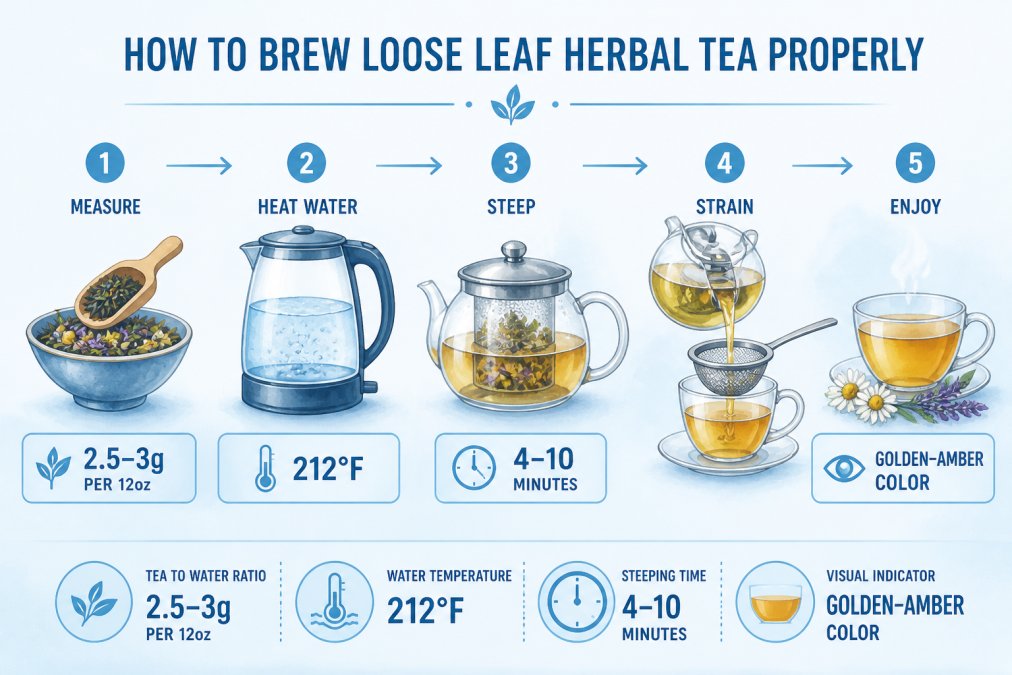
Brewing loose leaf herbal tea correctly transforms the experience from acceptable to genuinely enjoyable. The process is straightforward but deserves attention.
Start with filtered water heated to 212°F, just off the boil, which extracts flavor from dried herbs without scorching delicate botanicals. Without a thermometer, let boiled water cool about 30 seconds.
Measure using the standard ratio: 2.5 to 3 grams per 12 ounces of water, roughly one teaspoon per cup. Use an infuser basket, mesh strainer, or small teapot with an infuser insert, anything that lets the leaves move freely.
Pour hot water over the leaves and steep for the time on your tea's packaging, typically 4 to 10 minutes. Set a timer rather than guessing; longer steeping often produces bitterness. Once time is up, strain immediately to stop the process.
The cup should be a clear golden or amber color with a pleasant aroma. If it looks pale and tastes weak, increase the leaf amount next time; if harsh or bitter, reduce steeping time. These small adjustments dial in your preferred strength and flavor.
Herbal Tea Gift Ideas for Relaxation Seekers
Loose leaf herbal tea makes an excellent gift for anyone interested in relaxation, wellness, or quality beverages, working as both a practical daily ritual and a thoughtful present.
For corporate clients and employee kitchen benefits, loose leaf herbal tea selections add a premium touch that standard tea bags cannot match. Offering a small collection of calming blends in the break room signals that you value employee wellness. Companies often find that providing quality relaxation options reduces stress and improves workplace culture. For wholesale or bulk orders for corporate pantry selections, Brewtiful Coffee US offers customizable corporate tea collections designed specifically for office environments.
For holiday gift ideas, curate three to five different loose leaf herbal teas and pair them with a simple infuser basket or mesh strainer. Loose leaf feels more thoughtful than standard bags, and the variety lets the recipient experiment with different flavors.
Small business owners often appreciate loose leaf tea gifts because they support the daily ritual that keeps them grounded. A quality herbal blend becomes part of their self-care routine, something they reach for during high-stress periods.
Personal preferences matter when selecting a gift. Floral-leaning recipients will enjoy lavender blends; those who prefer subtle tastes are safer with chamomile. When in doubt, a mixed selection lets them discover their own preference.
Building a Relaxation Routine with Loose Leaf Blends
The real power of loose leaf herbal teas relaxation emerges when you integrate it into a consistent evening routine. A single cup is pleasant; a ritual built around tea becomes transformative. The key is repetition and intentionality: same time, same place, same tea whenever possible.
Most people find 30 to 60 minutes before bed works best for a relaxation tea ritual, allowing the calming effects to build while you wind down. The warm liquid promotes relaxation, the brewing ritual shifts attention away from work or worries, and the herbal compounds support your natural sleep cycle.
Your routine might look like this: set a specific time each evening, brew your chosen loose leaf herbal tea, settle into a comfortable space without screens, and spend 10 to 15 minutes simply drinking and breathing. This consistency trains your body to recognize the aroma, warmth, and taste as precursors to rest.
Rotating between different loose leaf herbal tea blends prevents boredom while exploring which herbs work best for you. Some respond more strongly to chamomile, others to lavender or lemon balm; trying different options over several weeks reveals your preferences.
The psychological component matters as much as the botanical one. Dedicating time to a relaxation ritual signals to yourself that rest is a priority, and that mental shift often proves as valuable as any herb. Loose leaf tea simply provides the framework to pause.
Apple Cider Rooibos (Caffeine Free) →
Safety, Interactions, and Realistic Expectations
Herbal teas are generally safe for most adults, but certain herbs interact with medications and some people experience sensitivity to specific botanicals.
Chamomile. May interact with blood thinners such as warfarin and with sedatives, and people with allergies to ragweed, daisies, or chrysanthemums can react to it.
Lavender. Typically well-tolerated but can cause drowsiness in sensitive individuals. That is usually a benefit for evening use but worth noting if you are driving or operating equipment.
Valerian root. The strongest of the common relaxation herbs and the one that most deserves respect. It can cause drowsiness and, in some people, grogginess the next morning. It may interact with sedatives, antidepressants, and alcohol.
Peppermint. Generally gentle, but it can worsen acid reflux or GERD in some people and may interact with antacids and certain medications.
Rooibos. Caffeine-free and low-risk for most people, which is one reason it is a safe default for a mixed group.
A practical rule for a shared kitchen: stock rooibos as an everyday option, and keep other blends clearly labeled and separate so coworkers can opt in knowingly.
Realistic expectations matter. These beverages support your body's natural calming processes; they don't create dramatic sedation or eliminate anxiety. Separate traditional use, where chamomile, lavender, and lemon balm have centuries of folk practice, from clinical evidence, where the picture is thinner and mixed. Valerian has been studied more than most, but results are inconsistent; chamomile has small studies suggesting mild calming effects, but nothing supporting it as a sleep aid. The honest claim is "pleasant ritual with a plausible calming effect," not "clinically proven to cure insomnia."
Think of loose leaf herbal tea as a gentle tool within a broader relaxation strategy that includes sleep hygiene, exercise, stress management, and when needed, professional support.
Some notice effects within a few days of consistent use; others require weeks. Individual variation is normal and doesn't mean the tea isn't working, just that your body processes herbs at its own pace.
Quality matters for safety and effectiveness. Loose leaf tea from reputable sources like Brewtiful Coffee US comes from suppliers who test for contaminants and source from trusted growers, reducing the risk of pesticide residue found in lower-grade products.
Frequently Asked Questions
What is the most relaxing herbal tea to drink before bed?
Caffeine-free options like rooibos and hibiscus blends work well for evening routines. The best choice depends on your flavor preference and how your body responds to specific botanicals. Brewing loose leaf versions allows you to control strength and steeping time for maximum comfort.
How do you brew loose leaf herbal tea without it getting bitter?
Use water at 212°F and follow recommended steeping times closely, most herbal teas need 4-10 minutes depending on the blend. Over-steeping is the main cause of bitterness. Use the correct leaf-to-water ratio (typically 2.5-3g per 12oz cup). Quality loose leaf tea with whole botanicals steeps more evenly than broken pieces. Remove leaves promptly once steeping is complete, or use an infuser basket to prevent over-extraction.
Are loose leaf herbal teas better than tea bags for relaxation?
Loose leaf herbal teas generally offer more flavor complexity and aroma because they contain whole botanicals rather than dust and fragments. Whole leaves expand fully during steeping, releasing more of their beneficial compounds. They also allow you to adjust steeping time and leaf amount for a personalized strength. While convenient, tea bags often contain smaller particles that steep faster and can become bitter if left too long. For a true relaxation experience, loose leaf gives you more control and a richer sensory ritual.
Can herbal tea for relaxation interact with medications?
Some herbal teas can interact with medications, particularly blood thinners, sedatives, and blood pressure medications. Always consult your healthcare provider before adding new herbal teas to your routine, especially if you take prescription medications. Pregnant or nursing individuals should also check with their doctor. Individual circumstances vary.