

Coffee vs Tea for Relaxation Without Drowsiness
Table of Contents
- Caffeine Content in Coffee vs Tea: What the Numbers Show
- How L-Theanine in Tea Creates Calm Focus
- Physiological Effects: Why Tea Feels Different Than Coffee
- How to Brew Loose Leaf Tea for Maximum Relaxation
- Managing Sleep and Anxiety: Coffee, Tea, and Timing
- Tea vs Coffee for Afternoon and Evening Relaxation
- Frequently Asked Questions
Last Updated: October 1, 2026
Caffeine Content in Coffee vs Tea: What the Numbers Show
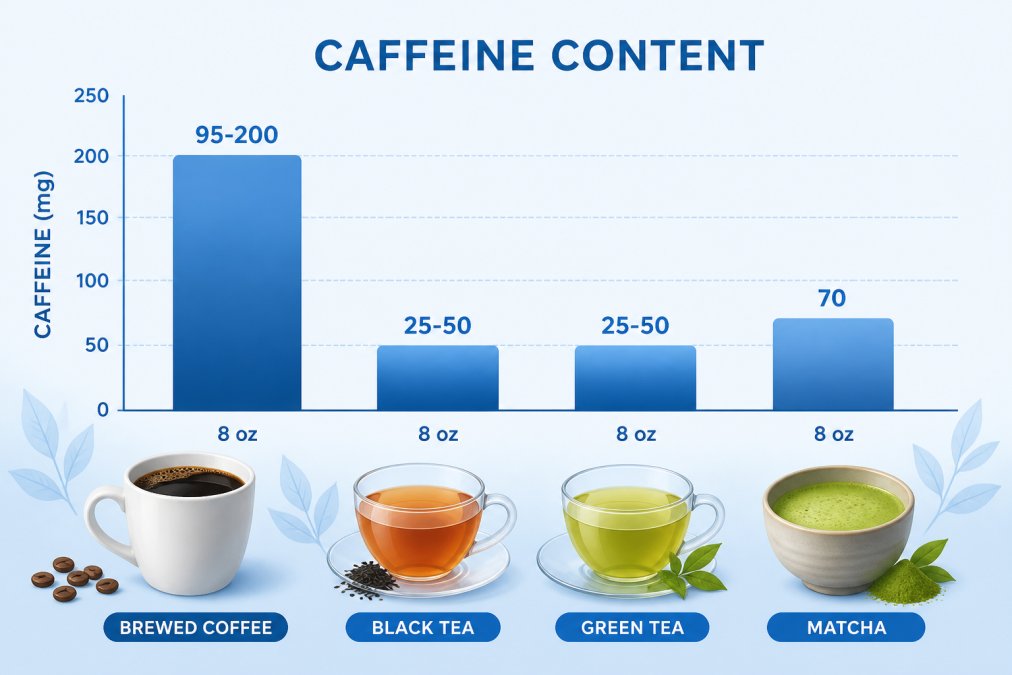
When considering coffee vs tea relaxation and choosing between them without drowsiness, caffeine content is the starting point. Coffee contains roughly 3 to 4 times more caffeine per serving than tea, but more caffeine doesn't automatically mean better relaxation.
How L-Theanine in Tea Creates Calm Focus
Tea contains L-theanine, an amino acid that coffee lacks. L-theanine increases alpha wave activity in the brain, creating calm alertness without drowsiness. The synergy between caffeine and L-theanine moderates stimulation, smoothing out peaks and valleys for sustained energy without jitters or crashes.
Why Your Response to Tea Might Differ From Others
Individual response to tea varies due to genetics. The CYP1A2 gene influences caffeine metabolism: fast metabolizers feel stimulation intensely but briefly, while slow metabolizers experience gradual caffeine release that pairs well with L-theanine's calming effect. For fast metabolizers, L-theanine's effect may arrive too late to smooth the initial spike.
Caffeine history, body weight, and medications also affect your experience. Regular coffee drinkers may find tea underwhelming initially as their adenosine receptors have adapted. Body weight influences caffeine concentration in your bloodstream, and certain medications can amplify or dampen L-theanine's effect.
At Brewtiful Coffee US, customers seeking relaxation gravitate toward loose leaf tea for the L-theanine effect. Our matcha contains roughly 70 milligrams of caffeine per serving, yet users report calm focus rather than agitation.

Physiological Effects: Why Tea Feels Different Than Coffee
The physiological experience of tea versus coffee comes down to how these drinks interact with your nervous system. Understanding this difference helps explain why the same amount of caffeine can feel completely different in each beverage.
Coffee's caffeine blocks adenosine receptors aggressively, causing heart rate increases and anxiety without L-theanine moderation. Tea's caffeine and L-theanine combination refines stimulation, delivering alertness without the harsh edge, what many call "wired but calm."
Tea's tannins slow caffeine absorption, creating gradual stimulation rather than an immediate jolt. This makes tea feel smoother and more sustainable for relaxation without drowsiness.
How to Brew Loose Leaf Tea for Maximum Relaxation
Brewing method directly determines caffeine content and L-theanine effect. Water temperature and steeping time give you precise control over your cup's stimulation level.
The Steeping Time and Caffeine Extraction Relationship
Caffeine extraction follows a predictable curve: 30 seconds yields 25%, 2 minutes yields 50%, 3 minutes yields 75%, and 5 minutes yields 90%. This gives you concrete control over stimulation.
For caffeine sensitivity, steep 2 to 3 minutes: green tea at 170°F yields 15-25mg caffeine; black tea at 195°F yields 30-40mg. A 5-minute steep of black tea reaches 45-60mg. All remain substantially lower than coffee's 95-200mg.
Matcha delivers 70mg caffeine per teaspoon regardless of steeping time. Use half a teaspoon for 35mg caffeine while preserving the calm-focus effect.
Water Temperature and Tannin Release
Water temperature controls caffeine extraction and tannin release. Green tea at 160-170°F for 2-3 minutes yields smooth stimulation; at 200°F for 5 minutes, over-extracted tannins create bitterness and anxiety.
Brew black tea at 190-200°F for 3-4 minutes for relaxation without harshness. Longer steeping extracts more caffeine and tannins, better for morning than afternoon.
Hojicha, the roasted green tea we offer, is specifically designed for relaxation. The roasting process reduces caffeine content while creating a warm, toasted flavor profile. Brew it at 175 degrees for 2 to 3 minutes. Because it's already low in caffeine, you can steep longer without bitterness, up to 5 minutes if you prefer a stronger flavor.
Dosage Guidelines for Your Caffeine Sensitivity
Not everyone processes caffeine the same way. Your metabolic rate, body weight, regular caffeine consumption, and individual sensitivity all play a role in how you experience caffeine. The standard dose is 2 to 3 grams of loose leaf tea per 8 to 12 ounces of water, but this is a starting point, not a rule.
For high caffeine sensitivity: Use 1 to 1.5 grams of tea per 8 ounces of water, steeped for 2 minutes at 170 degrees. This delivers roughly 10 to 15 milligrams of caffeine with full L-theanine benefits. You'll get the flavor and the calm-focus effect with minimal stimulation.
For moderate sensitivity or afternoon brewing: Use 2 grams of tea per 8 ounces, steeped for 2 to 3 minutes at 175 degrees. This yields approximately 20 to 35 milligrams of caffeine depending on tea type. It's enough to combat the post-lunch energy dip without disrupting evening sleep.
For coffee drinkers transitioning to tea: Start with green tea or matcha rather than black tea. Green tea's lower caffeine content and higher L-theanine ratio make it an easier stepping stone. Use 2 grams per 8 ounces, steeped for 3 minutes at 170 degrees. This gives you roughly 25 to 35 milligrams of caffeine, a noticeable reduction from coffee's 95 to 200 milligrams, but enough to ease the transition without withdrawal headaches.
For corporate clients and employee kitchen benefit programs, loose leaf tea options like our Jasmine or Hojicha provide a workplace-appropriate relaxation option that doesn't trigger the jitters some employees experience with coffee. Offering a wholesale link for bulk tea selections allows small business owners to stock their pantries with premium options that support both alertness and relaxation throughout the day. When employees can control their own dosage through steeping time and leaf quantity, they're more likely to maintain sustained focus without the afternoon crash or evening sleep disruption that coffee creates.
Track how you feel after brewing at different doses and steeping times. Your ideal cup is personal. What creates calm focus for one person might feel too stimulating or too mild for another. The precision available in tea brewing, something coffee can't offer, is your advantage.
Managing Sleep and Anxiety: Coffee, Tea, and Timing
Timing is everything when you're trying to achieve relaxation without drowsiness while protecting your sleep quality.
Caffeine has a half-life of about 5 to 6 hours in most people's bodies. This means if you drink coffee at 2 p.m., roughly half the caffeine is still in your system at 7 or 8 p.m. That residual caffeine can disrupt sleep even if you don't feel consciously wired.
Tea's lower caffeine content means it has less impact on sleep, especially if consumed earlier in the day. But timing still matters. If sleep quality is important to you, stop consuming caffeine, whether coffee or tea, by mid-afternoon.
For anxiety specifically, the L-theanine in tea provides a genuine advantage. Studies on L-theanine show it reduces physiological markers of anxiety without causing drowsiness. This makes tea a better choice than coffee if anxiety is your concern. The calm focus L-theanine creates actually improves your ability to manage stress and stay present, rather than the racing-mind feeling coffee can trigger.
If you're a regular coffee drinker and want to reduce anxiety while staying alert, consider replacing one or two daily cups with tea. The transition period might bring mild fatigue as your body adjusts, but most people report feeling less anxious overall.
Tea vs Coffee for Afternoon and Evening Relaxation
The afternoon and evening window is where tea truly outperforms coffee for relaxation without drowsiness.
Frequently Asked Questions
What kind of tea makes you feel calm but not sleepy?
Green teas like matcha and jasmine contain L-theanine, which promotes relaxation without drowsiness by working with caffeine to enhance focus. Hojicha, a roasted green tea, offers even lower caffeine with the same calming compound. Steep at 175°F for 4-6 minutes to avoid over-extraction, which can increase bitterness and anxiety. For maximum relaxation, brew 2-3g per 8 oz of water.
Does L-theanine in tea really prevent caffeine jitters?
Yes. L-theanine increases alpha brain wave activity, promoting calm alertness while caffeine blocks adenosine receptors to boost focus. Together, they create sustained energy without the jitteriness coffee alone produces. The synergy works best when caffeine and L-theanine are consumed together, which happens naturally in tea.
How much caffeine is in coffee versus tea?
An 8 oz cup of brewed coffee contains 95-200mg of caffeine, while the same serving of black or green tea contains 25-50mg. Matcha delivers around 70mg per serving. This 3-4x difference means tea provides alertness with a gentler rise and fall in caffeine levels, reducing the crash and anxiety spikes common with coffee. Individual sensitivity varies based on metabolism and body weight, so start with smaller servings if you're new to caffeine or prone to jitters.
Can I drink tea or coffee in the afternoon without ruining my sleep?
Tea is safer for afternoon consumption due to its lower caffeine content and L-theanine's calming effect on the nervous system. Caffeine's half-life is 5-6 hours, meaning half of a morning coffee's caffeine remains in your system 6 hours later. A cup of tea at 3 PM will have minimal impact on sleep. Avoid coffee after 2 PM if you're sensitive. For evening relaxation without any caffeine, try caffeine-free herbal blends like Apple Cider Rooibos, which contains no stimulants and supports hydration.