

Green Tea vs Coffee for Mental Focus: A 2026 Guide
Table of Contents
- Green Tea vs Coffee: Caffeine Content and Speed of Action
- L-Theanine vs Caffeine for Focus: How They Work Together
- Sustained Energy: Why Coffee and Green Tea Feel Different
- Caffeine Crash Symptoms and How to Avoid Them
- Brain Health: Antioxidants, Neuroprotection, and Cognitive Decline
- How to Transition from Coffee to Tea for Better Focus
- Which Should You Choose? A Decision Framework
- Frequently Asked Questions
Last Updated: September 21, 2026
Green Tea vs Coffee: Caffeine Content and Speed of Action
When you're chasing mental clarity, the first question is always the same: which gives you the fastest boost? Understanding green tea vs coffee for mental focus helps you choose the right tool for your cognitive needs. At Brewtiful Coffee US, we've helped thousands of home brewers understand that coffee and green tea deliver caffeine in fundamentally different ways.
Coffee hits harder and faster. A typical cup contains 80-100mg of caffeine and reaches your bloodstream within 15-30 minutes. Green tea delivers 25-50mg of caffeine more gradually, taking 30-45 minutes to peak. That speed difference shapes everything about how each one feels.
But here's what most comparisons miss: faster isn't always better. The speed of caffeine absorption determines not just when you feel alert, but how long that alertness lasts and whether you'll crash afterward. Coffee's rapid spike means rapid decline. Green tea's slower climb means a gentler descent.
The practical difference shows up in real workflows. If you need immediate focus for a meeting in 20 minutes, coffee wins decisively. If you're settling in for a 4-hour work block, green tea's sustained release often feels more stable. Neither is objectively superior, the choice depends on your schedule and how your nervous system responds to stimulants.
L-Theanine vs Caffeine for Focus: How They Work Together
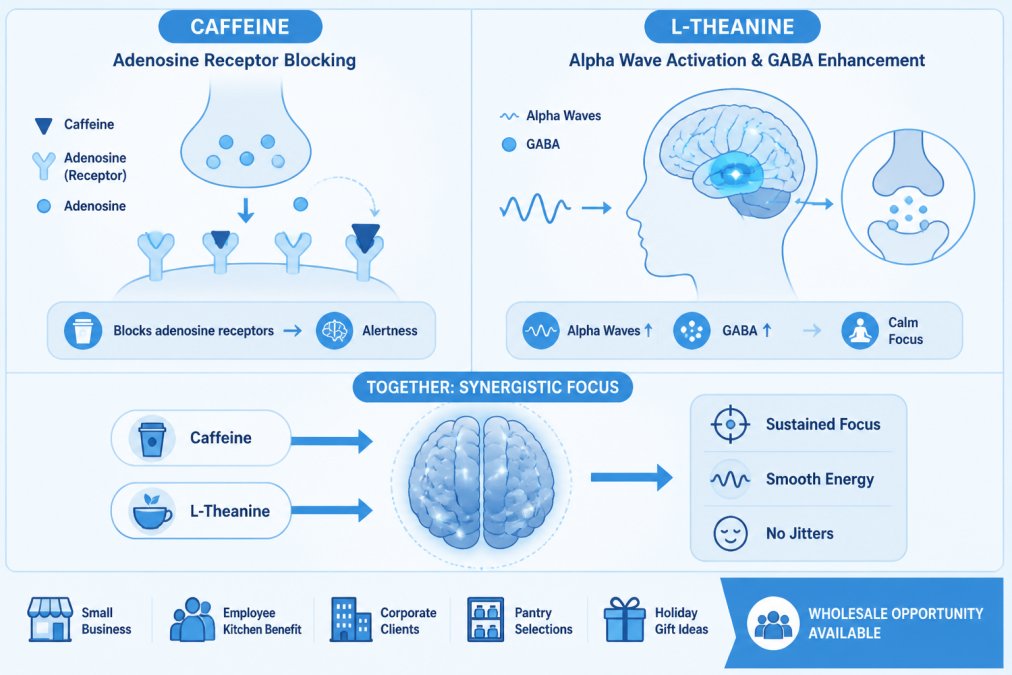
Green tea contains an amino acid called L-theanine that coffee lacks entirely. This single difference explains why people describe green tea's mental effect as "calm focus" while coffee feels like pure stimulation.
L-theanine works by promoting alpha wave activity in the brain, the same brainwave pattern associated with relaxed alertness. It also increases dopamine and serotonin production without the jittery edge that caffeine alone can trigger. When L-theanine and caffeine combine, they create a synergistic effect: the caffeine provides alertness while L-theanine smooths out the sharp edges.
Coffee drinkers who want this effect sometimes add L-theanine powder separately, creating a 2:1 ratio of L-theanine to caffeine. Green tea naturally delivers roughly a 1:1 ratio, which many people find optimal for sustained focus without anxiety.
The neurotransmitter angle matters here. Caffeine blocks adenosine receptors, which normally signal fatigue to your brain. L-theanine enhances GABA and serotonin signaling, which promotes calm. Together, they address focus from two angles: removing the signal to rest while adding signals that promote relaxation. Caffeine alone can feel like driving with the accelerator floored. L-theanine + caffeine feels more like controlled acceleration.
Sustained Energy: Why Coffee and Green Tea Feel Different
The caffeine crash is real, and it hits differently depending on which beverage you choose. Coffee's rapid spike and decline creates a predictable energy arc: sharp rise, plateau, sharp drop. Many people feel the crash 3-4 hours after drinking coffee, sudden fatigue, difficulty concentrating, sometimes irritability.
Green tea's gentler absorption curve produces a different pattern. The energy builds gradually, plateaus longer, and declines more slowly. You're less likely to notice a distinct "crash" because the descent is gradual. Some people describe it as "fading naturally" rather than hitting a wall.
This difference comes down to how your body processes the caffeine. Coffee delivers a large dose quickly, spiking blood glucose and cortisol levels sharply. Your body responds by producing insulin to manage the spike, which can trigger fatigue when blood sugar drops. Green tea's slower absorption means smaller, more manageable metabolic shifts.
The sustained energy effect also depends on individual metabolic variability. Some people metabolize caffeine quickly (fast metabolizers) and experience sharp crashes. Others process it slowly (slow metabolizers) and feel sustained energy from either source. Genetics, body composition, medications, and even sleep debt affect how long caffeine stays active in your system.
For professionals working long days, the sustained energy profile often matters more than the initial kick. A steady 4-5 hour energy plateau beats a 2-hour spike followed by a crash. This is where green tea's profile shines for many people, not necessarily more total energy, but more usable energy across a longer timeframe.
Caffeine Crash Symptoms and How to Avoid Them
The caffeine crash isn't inevitable, it's a symptom of how much caffeine you consumed and how quickly your body processed it. Common symptoms include fatigue, difficulty concentrating, headache, mood dip, and sometimes irritability.
Coffee drinkers experience crashes more often because the rapid caffeine spike triggers a larger metabolic response. Your body overshoots on insulin production, blood sugar drops, and you feel the consequences. Green tea drinkers report crashes less frequently, partly because the smaller caffeine dose creates a smaller metabolic swing.
You can minimize crashes by controlling caffeine timing and dose. Drinking coffee earlier in the day (before 2pm) gives your body time to metabolize the caffeine before bedtime, which improves sleep quality and reduces rebound fatigue the next day. Spreading caffeine intake across the day instead of front-loading it prevents the sharp drop that triggers crashes.
Hydration matters more than most guides mention. Caffeine is a mild diuretic, and dehydration amplifies the crash sensation. Drinking water alongside your coffee or tea reduces the intensity of the energy dip.
Another approach: transition gradually from coffee to green tea if crashes are a problem. This isn't about going cold turkey, it's about replacing one coffee per day with green tea for a week, then another, until you find a ratio that works.
Brain Health: Antioxidants, Neuroprotection, and Cognitive Decline
This is where green tea pulls ahead on the health comparison. Green tea contains catechins and polyphenols, powerful antioxidants that protect neurons from oxidative stress (pubmed.ncbi.nlm.nih.gov). Coffee has antioxidants too, but green tea's profile is specifically associated with cognitive preservation over time.
How to Transition from Coffee to Tea for Better Focus
If you've decided to shift toward green tea but you're a committed coffee drinker, the transition doesn't have to be abrupt. A gradual shift reduces withdrawal headaches and lets you assess how your focus actually changes.
Which Should You Choose? A Decision Framework
The answer depends on three factors: your immediate cognitive goal, your time horizon, and your personal metabolic response.
| Decision Factor | Choose Coffee | Choose Green Tea | Choose Both |
|---|---|---|---|
| Time to peak alertness | 15-30 min (need it now) | 30-45 min (can wait) | Varies by time of day |
| Desired duration | 2-3 hours (short task) | 4-5 hours (long task) | Different windows |
| Caffeine sensitivity | Low (tolerate high doses) | High (prefer gentler effect) | Dose-controlled |
| Brain health focus | Secondary concern | Primary concern | Long-term + immediate |
| Sleep quality concern | Not a problem | Yes (avoid afternoon caffeine) | Yes (time coffee early) |
Frequently Asked Questions
Does green tea or coffee provide better mental focus?
Both improve focus, but differently. Coffee delivers faster alertness through higher caffeine (95-200mg per cup), while green tea combines caffeine (25-50mg) with L-theanine to create sustained concentration without jitters. Coffee peaks faster; green tea sustains longer. Your choice depends on whether you need immediate sharpness or steady focus over hours. For remote work or long study sessions, green tea's sustained approach often wins. For quick morning clarity, coffee's speed advantage matters.
What is the role of L-theanine in green tea for cognitive performance?
L-theanine is an amino acid unique to tea that promotes alpha brain waves associated with relaxed alertness. It doesn't cause drowsiness but prevents the jittery overstimulation caffeine alone creates. When L-theanine and caffeine work together, they enhance focus, attention span, and mental clarity without the anxiety spike. This synergy makes green tea gentler on your nervous system while still boosting productivity. Coffee lacks L-theanine, which is why many people experience caffeine jitters from coffee but not from green tea at similar caffeine doses.
How do I transition from coffee to tea without caffeine crash symptoms?
Gradual substitution prevents withdrawal headaches and fatigue. Start by replacing one cup of coffee with green tea daily for 3-5 days, then increase to two cups. This allows your body to adjust to lower overall caffeine intake. Pair tea with protein or healthy fats to stabilize blood sugar and reduce energy dips. Stay hydrated and maintain consistent sleep. If you experience headaches, slow the transition or add one coffee day per week. Hojicha, a roasted green tea with naturally lower caffeine, works well as a bridge option for afternoon or evening shifts away from coffee.
What are the main caffeine crash symptoms and which drink causes them more?
Caffeine crash symptoms include fatigue, brain fog, irritability, and difficulty concentrating 3-5 hours after consumption. They occur when caffeine wears off and adenosine receptors flood your system. Coffee triggers sharper crashes because its high caffeine dose (95-200mg) creates a steeper drop-off. Green tea's lower caffeine (25-50mg) combined with L-theanine produces gentler, less noticeable crashes. Timing matters: consuming caffeine after 2 PM increases evening crashes and sleep disruption. Eating food with your drink and spacing consumption throughout the day reduces crash severity regardless of source.
Can green tea help prevent cognitive decline better than coffee?
Both contain antioxidants that support brain health, but green tea's polyphenols and catechins are particularly studied for neuroprotection. These compounds may reduce neuroinflammation and support memory retention over time. Coffee's chlorogenic acid and polyphenols offer similar benefits but in different profiles. Regular consumption of either appears protective against age-related cognitive decline. The advantage goes to green tea if you're seeking sustained, gentle support with fewer jitters; to coffee if you prioritize immediate mental performance. Combining both throughout the day, green tea for afternoon focus, coffee for morning alertness, maximizes the cognitive benefits of each.