

7 Health Benefits of Drinking Specialty Coffee Daily
Last Updated: October 25, 2026
Quick Summary
Specialty coffee is coffee that scores 80 or above on the 100-point scale used by licensed graders, and drinking it daily is linked to benefits including cellular protection from antioxidants, lower risk of liver disease, and neutral to slightly lower cardiovascular risk. Filtered brewing methods are the healthiest default because paper filters trap cholesterol-raising oils while leaving most antioxidants in the cup.
- An 8-ounce cup of drip coffee typically contains roughly 95 milligrams of caffeine, while a single espresso shot delivers about 63 milligrams.
- Most adults can consume up to 400 milligrams of caffeine per day without adverse effects, though individual sensitivity varies widely.
- Major health organizations advise limiting caffeine to about 200 milligrams per day during pregnancy, roughly one 12-ounce cup of drip coffee.
- Two level tablespoons of ground coffee per 6 ounces of water is a reliable starting ratio for measuring your dose.
- Sleep quality is the first thing to suffer from caffeine, and it degrades before you notice it.
Table of Contents
- What Makes Specialty Coffee Different From Regular Coffee
- Specialty Coffee Antioxidants and Cellular Protection
- Coffee Caffeine Content: What a Cup Actually Delivers
- Liver, Heart, and Metabolic Health: What the Evidence Shows
- The Healthiest Way to Brew Coffee for Maximum Benefit
- Coffee Side Effects and Who Should Adjust Their Intake
- Building a Better Coffee Ritual at Home
- Frequently Asked Questions
What Makes Specialty Coffee Different From Regular Coffee
The practical difference shows up in the cup. Specialty beans are roasted lighter and dated, so the natural sugars and acids survive the roast instead of being burned into generic bitterness. Freshness matters just as much: coffee stales within weeks of roasting, and most supermarket bags carry a "best by" date rather than a roast date.
At Brewtiful Coffee US, we roast in small batches and ship nationwide, so the beans reach your kitchen close to their peak. If you want to taste the range before committing to a full bag, the Best Sellers Sample Pack includes six 2-ounce portions, from the dark 6Bean house blend to single origins from Peru and Mexico.

Specialty Coffee Antioxidants and Cellular Protection
Coffee is one of the largest sources of antioxidants in the typical diet, and specialty beans carry more of them into the cup because lighter roasts preserve more of the raw bean's compounds.
Those compounds are studied for their role in limiting oxidative stress, the cellular wear that comes from unstable molecules. The National Center for Complementary and Integrative Health's overview of antioxidants is a reasonable starting point for understanding what the evidence can and cannot tell you.
One insider note: adding a splash of milk does not cancel out the antioxidants, but a heavy pour of cream and sugar adds calories and saturated fat that can outweigh the benefit of a modest cup.
Coffee Caffeine Content: What a Cup Actually Delivers
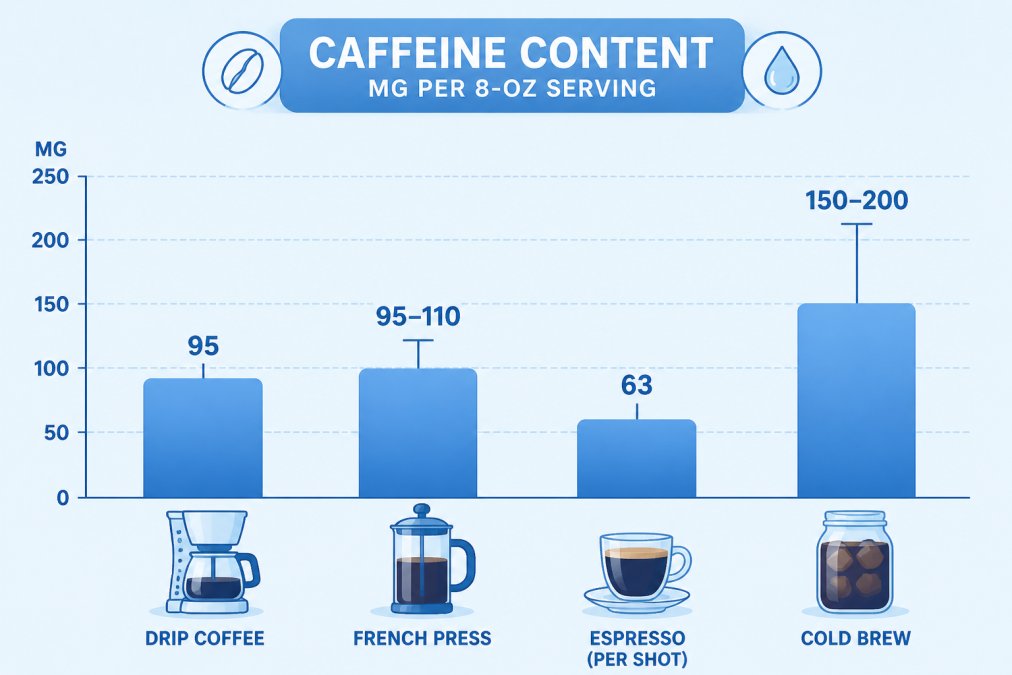
Three variables drive the number: the dose of ground coffee, the brew ratio, and the contact time. A French press steeped for four minutes extracts more caffeine than a pour-over that finishes in three. Espresso is concentrated but served small, so a latte built on two shots can carry more caffeine than a mug of drip.
Roast level is the variable most people get backwards. Dark roasts are not stronger in caffeine; by weight, lighter roasts often edge them out slightly, though the difference is small enough that dose matters far more than color.
Practical Caffeine Guidance for Different Groups
Caffeine affects people differently, and a cup that feels fine for one person can disrupt another. The Food and Drug Administration's guidance on caffeine and health notes that most adults can consume up to 400 milligrams per day without adverse effects, but individual sensitivity varies widely.
- Pregnancy: Major health organizations advise limiting caffeine to about 200 milligrams per day during pregnancy. That is roughly one 12-ounce cup of drip coffee. Decaf specialty coffee can preserve the ritual without the stimulant load.
- Medication interactions: Caffeine can interact with certain stimulants, some antibiotics, and medications for asthma or depression. If you take prescription drugs, ask your pharmacist whether caffeine matters for your specific regimen.
- Caffeine sensitivity: Genetics affect how quickly you clear caffeine. If a single afternoon cup keeps you awake at midnight, you are likely a slow metabolizer and should set a personal cutoff time, often early afternoon.
- Sleep concerns: Sleep quality degrades before you notice it. If you are waking at 3 a.m. or feeling wired at bedtime, move your last cup earlier rather than cutting coffee out entirely.
How Serving Size and Add-Ins Change the Picture
A specialty coffee drink is not just coffee. A 16-ounce latte with whole milk and two pumps of flavored syrup can carry more calories, sugar, and saturated fat than a small meal, which can offset the health profile of the coffee itself. The caffeine also scales with size: a large cold brew may deliver 200 milligrams or more, equivalent to two cups of drip.
For a workplace pantry or employee kitchen, offering smaller cups, unsweetened options, and clear caffeine labeling helps people make informed choices without cutting coffee out.
Coffee with Mushrooms Dark Roast →
Liver, Heart, and Metabolic Health: What the Evidence Shows
The strongest coffee evidence points to the liver. Regular coffee consumption is consistently associated with lower risk of liver disease, including cirrhosis and hepatocellular carcinoma, across large observational studies. Filtered coffee appears to carry this association more reliably than unfiltered styles such as French press or Turkish, which retain cafestol and kahweol, two compounds that raise LDL cholesterol.
For cardiovascular disease, the picture is more nuanced. Moderate intake, generally described as two to four cups a day, is associated with neutral to slightly lower risk in most cohort studies, but the Food and Drug Administration's guidance on caffeine and health notes that individual response varies widely and that people with certain conditions should discuss intake with a clinician.
On blood sugar and type 2 diabetes, observational data links regular coffee drinking to lower risk, but short-term trials show acute caffeine intake can temporarily reduce insulin sensitivity. That contradiction is a useful reminder: association in large populations is not the same as cause and effect in a single body.
The Healthiest Way to Brew Coffee for Maximum Benefit
Filtered brewing methods, including drip machines and pour-over, are the healthiest default because paper filters trap the cholesterol-raising oils while leaving most antioxidants in the cup. That single choice does more for the health profile of your coffee than any bean upgrade.
Here is how we would set it up:
- Use a paper filter. A standard drip machine or a pour-over cone with a paper filter catches cafestol; a metal mesh filter lets it through.
- Measure your dose. Two level tablespoons of ground coffee per 6 ounces of water is a reliable starting ratio. Guessing leads to over-extraction and bitterness.
- Keep water below a rolling boil. Water just off the boil extracts flavor without scorching the grounds.
- Skip the sugar, or taper it. A teaspoon of sugar per cup adds up quickly across a daily habit.
- Drink it fresh. Brewed coffee is at its best within an hour; a thermal carafe holds temperature without the burnt flavor of a hot plate.
If you want to add functional ingredients to the ritual, our Coffee with Mushrooms Dark Roast blends Lion's Mane, Cordyceps, and Reishi powders into specialty-grade beans with notes of apple, dark chocolate, and nuts. It is coffee first, with earthy undertones layered in.

Coffee Side Effects and Who Should Adjust Their Intake
Caffeine sensitivity is real and unevenly distributed. Some people clear caffeine quickly and drink a cup at seven in the evening without consequence; others feel a single afternoon cup at midnight. Genetics, medications, and body weight all shift the equation.
Watch out: sleep quality is the first thing to suffer, and it degrades before you notice it. If you are waking at 3 a.m. or feeling wired at bedtime, move your last cup earlier rather than cutting coffee out entirely.
Groups who should pay closer attention include:
- People with acid reflux or GERD, since both caffeine and coffee's natural acidity can loosen the esophageal sphincter.
- Anyone with an anxiety disorder, because caffeine can amplify physical symptoms of anxiety.
- Pregnant people, who are generally advised to limit caffeine and should follow their clinician's guidance.
- People taking medications that interact with caffeine, including some stimulants and certain antibiotics.
Evidence Quality and What Observational Studies Can Tell You
Most of the disease-risk reductions attributed to coffee come from observational studies, which track large groups of people over time and compare coffee drinkers with non-drinkers. These studies are valuable but cannot prove cause and effect.
Randomized controlled trials, which can show cause and effect, are shorter and usually focus on intermediate markers such as blood pressure or insulin sensitivity rather than long-term disease outcomes.
A reasonable takeaway: moderate coffee consumption is associated with health benefits in large populations, but individual results vary, and no single cup is a treatment. If you have a specific health condition, discuss coffee intake with your clinician rather than relying on general population data.
Coffee with Mushrooms Dark Roast →
How Preparation and Add-Ins Change the Health Impact
The way you brew and what you add can matter as much as the beans. Filtered methods, drip machines and pour-over with paper filters, trap cafestol and kahweol, two compounds in coffee oils that raise LDL cholesterol.
Add-ins are the other lever. A heavy pour of cream and sugar adds calories and saturated fat that can outweigh the benefit of a modest cup. Specialty coffee drinks from cafes often include flavored syrups, whipped cream, and large serving sizes that turn a low-calorie beverage into a dessert.
If you love the ritual but need to cut caffeine, a Peru Decaf keeps the single-origin character without the stimulant load.
Building a Better Coffee Ritual at Home
A better ritual is mostly about removing friction. Grind fresh, store beans in an airtight container away from light, and keep the whole process to a few minutes you actually enjoy.
Our customers tell us the ritual is the point. "Brewtiful Coffee is a game-changer for my mornings," Michael T. told us, and that sentiment tracks with what we hear repeatedly: the freshness and aroma do more for the experience than any gadget.
A simple weekly rhythm helps:
| Day | Action | Why it matters |
|---|---|---|
| Sunday | Restock beans, check roast date | Freshness peaks in the first weeks |
| Daily | Grind just before brewing | Preserves aroma compounds |
| Midweek | Clean the brewer | Old oils turn rancid and bitter |
| Weekend | Try one new origin or method | Keeps the habit interesting |
If you want ongoing brewing tips and seasonal offers, sign up for our newsletters.
Building a coffee habit you actually look forward to takes a little intention and the right beans.
Frequently Asked Questions
What are the health benefits of drinking specialty coffee?
Specialty coffee delivers higher concentrations of antioxidants called polyphenols and chlorogenic acids than commodity coffee, largely because of fresher beans and lighter roast profiles. These compounds are linked to reduced oxidative stress and inflammation. Research also associates moderate coffee consumption with lower risk of type 2 diabetes, liver disease, and cardiovascular disease. Specialty coffee's traceable sourcing and careful processing mean you get these compounds in a cup that tastes better, so drinking it remains a pleasurable habit rather than a medicinal one.
How much caffeine is in a cup of specialty coffee?
An 8-ounce cup of specialty drip coffee typically contains 95 to 165 milligrams of caffeine, depending on roast level, grind size, and brewing method. Espresso delivers about 63 milligrams per shot. Lighter roasts often retain slightly more caffeine by weight because beans lose mass during roasting, but the difference is small. Your daily intake matters more than the exact number: most healthy adults can safely consume up to 400 milligrams per day, roughly three to four 8-ounce cups.
Does the roast level affect coffee's health benefits?
Yes, roast level changes the antioxidant profile. Lighter roasts preserve more chlorogenic acids, the polyphenols tied to blood sugar regulation and cellular protection. Darker roasts develop other beneficial compounds through the Maillard reaction but contain less chlorogenic acid. Neither is universally healthier. If antioxidant content is your priority, choose a medium or light roast. If you prefer smoother flavor and easier digestion, a dark roast works well and still provides meaningful antioxidant activity.
Can specialty coffee cause side effects?
Specialty coffee can cause the same side effects as any coffee: jitteriness, insomnia, upset stomach, and a temporary rise in blood pressure. People with caffeine sensitivity, anxiety disorders, or acid reflux may need to limit intake or choose lower-acid brewing methods like cold brew. Pregnant individuals should keep caffeine under 200 milligrams daily. Drinking coffee with food and staying hydrated reduces most discomfort. If you experience heart palpitations or persistent stomach issues, reduce your intake and consult a healthcare provider.
