

How to Stop Bitter Home Brewed Coffee
Table of Contents
- Why Your Home Brewed Coffee Tastes Bitter
- Ideal Water Temperature for Coffee Brewing
- Coffee Grind Size Chart for Beginners
- Get Your Coffee-to-Water Ratio Right
- How to Clean Coffee Maker to Remove Bitter Taste
- Choose Fresh, Quality Coffee Beans
- Common Brewing Mistakes That Cause Bitterness
- Conclusion
Last Updated: August 27, 2026
Why Your Home Brewed Coffee Tastes Bitter
Bitter coffee signals over-extraction, when water pulls too many compounds from the beans. The culprit is usually water that's too hot, grounds that are too fine, or brewing time that's too long. The good news: once you identify which step went wrong, correcting it is straightforward.
Over-extraction and grind size
Grind size controls extraction speed. Finer grounds have more surface area, so water reaches more compounds faster. If your grounds are too fine for your brewing method, water extracts bitter compounds along with the good stuff. A common mistake is grinding too fine because finer seems stronger, but strength comes from the amount of coffee you use, not fineness. Each brewing method has an optimal contact time: drip makers need medium grind, French presses need coarse, espresso machines need fine. Grind size determines whether you hit that window or overshoot it.
Water temperature and brew time
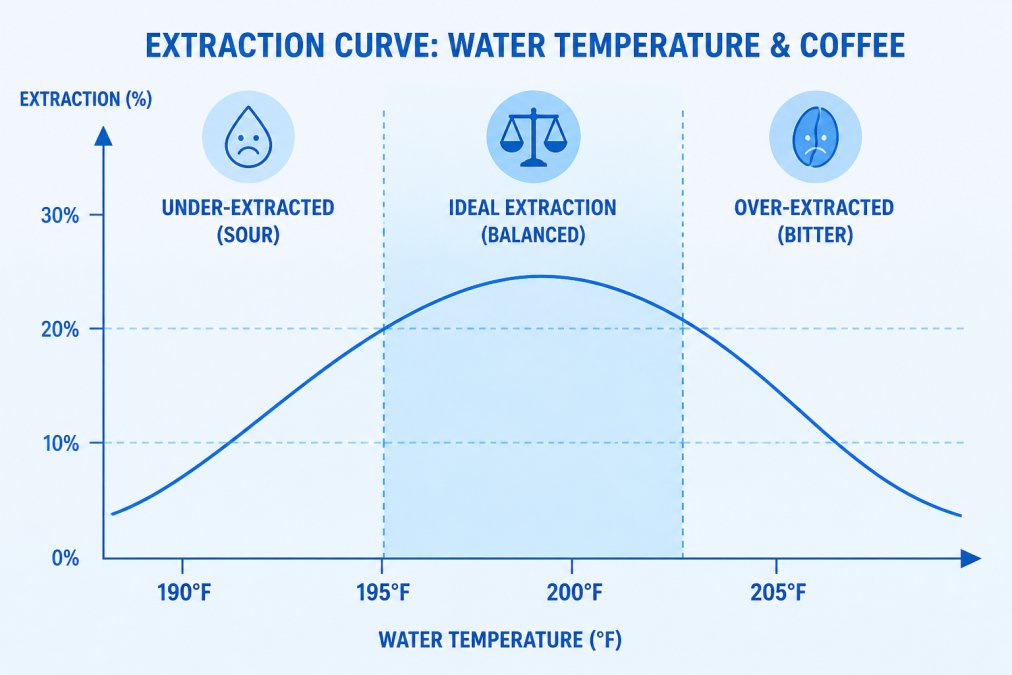
Water temperature is the second major extraction lever. Hotter water extracts faster. Above 205°F, you're likely over-extracting; below 195°F, you're under-extracting (sour, thin coffee) (peer-reviewed research). The sweet spot is 195-205°F for most methods. Brew time compounds this effect. A French press steeped for 10 minutes will taste more bitter than one steeped for 4 minutes, even with everything else identical.
Water quality and mineral content
Tap water contains minerals and chlorine that affect extraction and taste. Hard water (high in calcium and magnesium) can reduce bitterness by interfering with extraction. Soft or distilled water can make over-extraction worse. Chlorine adds off-flavor that compounds bitterness. If your tap water smells like chlorine, filtering it before brewing will almost always improve taste.
Ideal Water Temperature for Coffee Brewing
The ideal brewing temperature is between 195°F and 205°F for most coffee brewing methods. This range extracts desirable flavors without pulling out harsh, bitter compounds.
How temperature affects extraction and flavor
Water temperature directly controls extraction speed. Think of extraction as a timeline: bright, acidic compounds dissolve first; sweet and balanced compounds follow; harsh and bitter compounds come last. Your goal is to stop in the sweet middle. Temperature shifts this timeline, hotter water moves through stages faster, cooler water slows everything down. The brewing method you choose has an ideal contact time, and temperature helps you hit that target.
Measuring and maintaining the right temperature
Use a digital thermometer to check water temperature. Boil water, wait about 30 seconds, then measure, this gives roughly 205°F. For 200°F, wait 45 seconds; for 195°F, wait 60 seconds. Drip coffee makers handle temperature automatically if in decent condition. For pour-over or French press, you have direct control. A common mistake is using boiling water, which over-extracts almost any coffee. Even waiting 30 seconds makes a measurable difference.
Coffee Grind Size Chart for Beginners
Matching grind size to your brewing method is essential to avoid bitterness. Each method has a different contact time between water and grounds.
Matching grind size to your brewing method
Brewing Method |
Grind Size |
Grind Texture |
Typical Brew Time |
|---|---|---|---|
French Press |
Coarse |
Chunky, like breadcrumbs |
4 minutes |
Pour Over |
Medium |
Sand-like |
3-4 minutes |
Drip Coffee Maker |
Medium |
Sand-like |
5-8 minutes |
Espresso Machine |
Fine |
Powdery |
25-30 seconds |
Turkish Coffee |
Extra Fine |
Powder |
3-5 minutes |
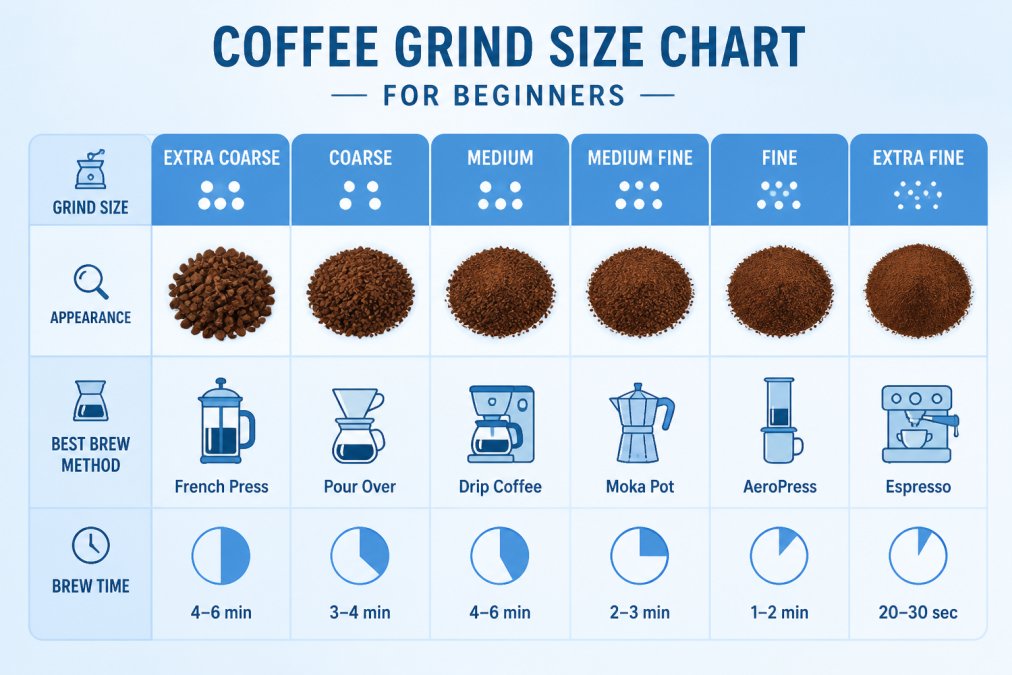
Grind size controls how fast water moves through coffee. Coarse grounds have large particles with gaps; water flows quickly. Fine grounds are tightly packed; water flows slowly. Use coarse in a French press (4-minute contact) and fine in espresso (25-second contact) to hit the extraction window. If you use a coarse grind in espresso, water flows through too fast and barely extracts. If you use fine in a French press, water stays too long and over-extracts, tasting bitter.
The connection between surface area and bitterness
Finer grounds have more surface area exposed to water, meaning faster extraction. If you double surface area, you roughly double extraction speed. Espresso machines use fine grounds because water contacts for only 25-30 seconds, requiring maximum surface area. French presses use coarse grounds because water stays 4 minutes, requiring minimum surface area to avoid over-extraction. If your drip coffee tastes bitter, try grinding coarser. Most home brewers grind too fine, thinking finer equals stronger, but strength comes from the amount of coffee, not fineness.
Get Your Coffee-to-Water Ratio Right
The standard ratio for most brewing methods is 1 part coffee to 16 parts water by weight (peer-reviewed research). If you use 25 grams of coffee, use 400 grams of water (about 13.5 ounces). This is a starting point; some prefer stronger (1:14 or 1:15) and some weaker (1:17 or 1:18).
Ratio matters for bitterness because too little coffee relative to water causes over-extraction as water tries to reach target strength, producing thin, bitter coffee. Too much coffee leaves water without enough time to extract everything, producing weak, underwhelming coffee. Use a kitchen scale measuring in grams for consistency. Once you find your preferred ratio, stick with it to remove one variable and make troubleshooting easier.
How to Clean Coffee Maker to Remove Bitter Taste
Residue buildup inside your coffee maker adds bitterness to every cup. Even perfect technique produces mediocre coffee from a dirty machine.
Removing mineral buildup and residue
Mineral deposits from water accumulate inside machines over time, affecting heat distribution and water temperature. They also harbor old coffee oils that oxidize and taste stale. For drip makers, run a descaling solution monthly: fill the reservoir with equal parts white vinegar and water, run a brew cycle, then run two cycles of plain water to rinse. For French press, rinse immediately after use and soak the metal filter weekly in hot water with vinegar for 15 minutes, then scrub and rinse. For pour-over, rinse the dripper and filter after each use. Wash metal filters with hot soapy water and dry completely; use fresh paper filters each time.
Descaling frequency and best practices
Descale every 30 days if you brew daily; every 60 days if less frequently. Hard water requires more frequent descaling; soft water requires less. Use commercial descaling solution or white vinegar and water. Commercial solutions are gentler on components and rinse more completely. Always run at least two cycles of fresh water through the machine before brewing coffee after descaling. A clean machine with mediocre technique produces better coffee than a dirty machine with perfect technique.
Choose Fresh, Quality Coffee Beans
Quality beans matter, but a premium bean brewed poorly tastes worse than a decent bean brewed well. Starting with quality beans gives you a better foundation.
The role of roast profile and bean freshness
Roast profile determines baseline flavor. Light roast emphasizes origin characteristics and acidity; medium roast balances acidity and sweetness; dark roast emphasizes body and reduces acidity. For avoiding bitterness, lighter roasts are less forgiving of over-extraction, over-extracting a light roast tastes sour and harsh. Dark roasts are more forgiving because roasting has already pushed flavor toward darker, bitter notes. This doesn't make dark roasts better, just more forgiving of imperfect technique.
Bean freshness is critical. Coffee loses best flavors within 2-3 weeks of roasting; after a month, beans are noticeably stale (peer-reviewed research). Oils oxidize and volatile compounds fade, making beans taste flat and bitter regardless of brewing quality. When you buy from Brewtiful Coffee US, beans are roasted fresh and shipped immediately, arriving at peak freshness so your technique can shine through.
Single-origin beans vs. blends for flavor control
Single-origin beans come from one specific region or farm with distinct flavor characteristics. Kenyan beans often have bright acidity and berry notes; Sumatran beans have earthy, full-bodied characteristics; Peruvian beans have balanced sweetness and mild acidity. Blends combine multiple origins to create specific flavor profiles and are often more forgiving because variety can mask minor extraction issues.
For learning to brew without bitterness, single-origin beans are easier to work with. They have clear flavor profiles, so you taste immediately when extraction is wrong. Brewtiful Coffee US offers single-origin beans from Uganda, Kenya, Sumatra, Peru, Mexico, and Bali, along with specialty blends and whiskey barrel-aged varieties. Starting with single-origin lets you dial in technique without blend complexity masking what's happening.
Common Brewing Mistakes That Cause Bitterness
Using water that's too hot is the most common mistake. Boiling water straight from the kettle over-extracts almost any coffee. Even waiting 30 seconds makes a difference. Grinding too fine is the second most common, home brewers assume finer means stronger, but this produces over-extracted, bitter coffee. If your coffee tastes bitter, try grinding coarser. Brewing too long is the third mistake; a French press steeped 8 minutes instead of 4 tastes noticeably more bitter. Set a timer and stick to it. Using stale beans is harder to fix because you can't adjust technique to compensate, buy fresher beans and use them within 2-3 weeks of roast date. Not cleaning equipment compounds over time; residue builds up and adds stale, rancid flavors to every cup. Clean after each use and descale monthly.
Bitter coffee is frustrating but fixable. The problem is almost always in your technique, water temperature, grind size, brew time, or equipment cleanliness, not in your ability as a brewer. Once you identify which factor is off and adjust it, you'll notice immediate flavor improvement.
Starting with quality beans puts you halfway there. Brewtiful Coffee US's fresh-roasted specialty beans are designed for home brewing, with single-origin options and unique blends that let you explore different flavor profiles. Pair fresh beans with the techniques in this guide, and you'll brew cafe-quality coffee at home consistently.
Frequently Asked Questions
Q: Why is my homemade coffee bitter?
A: Bitterness usually comes from over-extraction, which happens when water contacts coffee grounds too long or at too high a temperature. Fine grinds, water above 205°F, or brew times longer than recommended all pull excessive organic compounds from the beans. Water quality matters too—high mineral content or chlorine can add unwanted flavors. Start by checking your grind size, water temperature, and brew time against your brewing method's guidelines.
Q: What's the ideal water temperature for coffee brewing?
A: The sweet spot is 195-205°F for most brewing methods. Water cooler than 195°F under-extracts, leaving your coffee sour and weak. Above 205°F risks over-extraction, pulling bitter compounds. Use a simple thermometer or electric kettle with temperature control to hit this range consistently. Let boiled water cool for 30 seconds, or invest in a gooseneck kettle designed for precision brewing.
Q: Does grind size really affect how bitter my coffee tastes?
A: Yes—grind size directly controls extraction speed. Finer grinds have more surface area, so water extracts flavor faster. If your grind is too fine for your brewing method, you'll over-extract and taste bitterness. Coarser grinds slow extraction but risk sourness if too coarse. Match your grind to your method: coarse for French press, medium for drip, fine for espresso. A burr grinder gives you consistent results.
Q: How often should I clean my coffee maker to prevent bitter taste?
A: Clean your brewer after every use to remove residue and oils. Descale (deep clean) monthly if you have hard water, or every 3-6 months with soft water. Mineral buildup and old coffee residue create bitter, stale flavors. Use a 1:1 white vinegar-to-water solution or commercial descaler, run it through a brew cycle, then flush with fresh water twice. This removes buildup that traps bitter compounds.