

How to Store Coffee Beans for Freshness
Table of Contents
- Why Proper Storage Matters for Coffee Freshness and Flavor
- Best Coffee Storage Container Options
- The Ideal Storage Environment: Cool, Dry, and Dark
- How Long Do Coffee Beans Stay Fresh
- Should Coffee Beans Be Refrigerated
- Can You Freeze Coffee Beans
- Storage Tips for Different Coffee Types and Brewing Habits
- Frequently Asked Questions
Last Updated: October 19, 2026
Why Proper Storage Matters for Coffee Freshness and Flavor
The moment coffee beans are roasted, they begin to lose their freshness, which is why understanding how to store coffee beans for freshness is essential.
Think of roasted coffee like a perishable ingredient. The window for peak freshness is surprisingly short. Beans stored carelessly can taste dull within weeks. Beans stored properly?
This matters because specialty coffee costs more than supermarket blends. You're investing in quality. Storage is how you protect that investment and actually taste the difference between a mediocre cup and a memorable one.
Best Coffee Storage Container Options
Your container is your first line of defense against staleness. Not all containers are created equal.
Airtight containers with one-way valves
The gold standard for coffee storage is an airtight container with a one-way valve. This valve lets carbon dioxide (a natural byproduct of roasting) escape without letting oxygen in. That's crucial.
Look for containers made specifically for coffee. They're designed with this valve system in mind.
The valve solves that problem. Your beans stay fresh longer because the container actively protects them from oxidation.
Opaque and food-safe materials
Color matters more than you might think. Clear containers let light reach your beans. Light triggers oxidation and breaks down flavor compounds. Choose opaque containers, ones you can't see through.
Glass or stainless steel both work well. Both are food-safe and won't absorb odors. Plastic containers can work, but lower-quality plastics sometimes absorb the coffee's aroma, which means you're losing flavor to the container itself.
The material should feel substantial. Thin plastic flexes and creates micro-gaps where air sneaks in.
Original packaging with proper sealing
Many specialty roasters, including Brewtiful Coffee US, package beans in bags designed for storage. These bags often have one-way valves built in and fold-over seals.

Fold the top down tightly after each use. Push out excess air before sealing. Some people clip the top with a bag clip for extra security.
For longer storage, transfer to a dedicated container. The bag is designed for freshness during shipping and the first few weeks. After that, a proper storage container does a better job.
The Ideal Storage Environment: Cool, Dry, and Dark
Where you store your container matters as much as what you store it in.
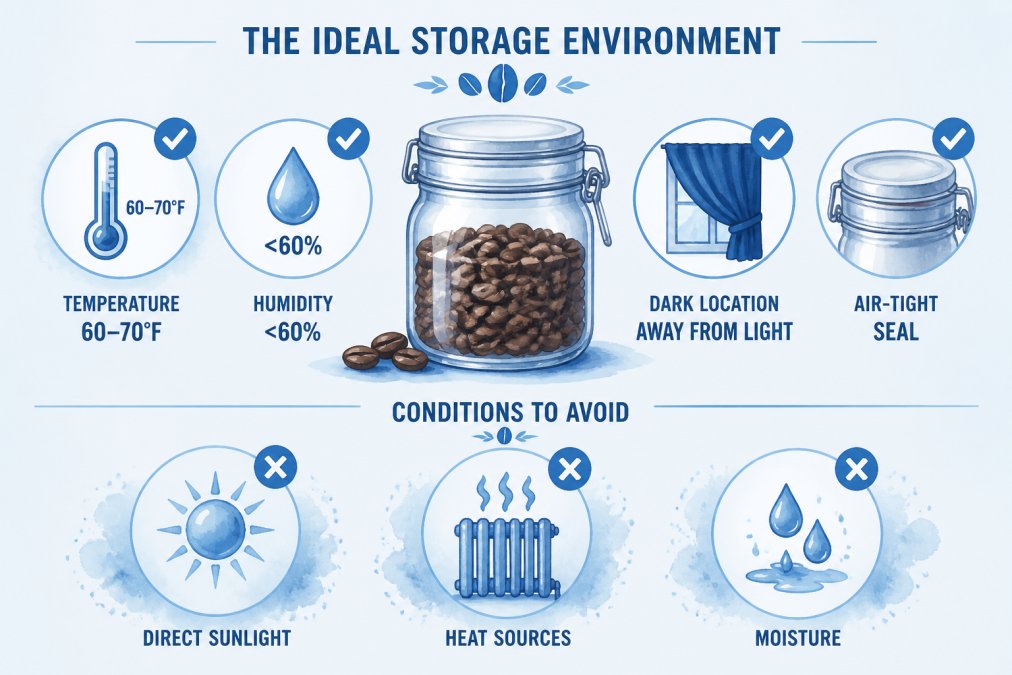
Room temperature and pantry placement
Coffee stays freshest between 60 and 70 degrees Fahrenheit. Room temperature in most homes falls right in that range. A pantry or cupboard is ideal, consistent temperature, away from appliances that generate heat.
Avoid storing beans above the stove or near the oven. Heat accelerates the staling process. Every degree warmer speeds up oxidation. A warm kitchen can cut your beans' freshness window in half.
Consistency matters more than cold. Fluctuating temperatures cause condensation inside the container. Moisture is one of the fastest ways to ruin coffee.
Avoiding direct sunlight and heat sources
Direct sunlight damages coffee faster than almost anything else. UV light breaks down the compounds responsible for flavor and aroma. Even a few hours in bright sunlight can noticeably dull your beans.
Keep your container in a dark place. A closed cupboard is perfect. A pantry shelf away from windows works. The back of a kitchen cabinet beats the counter.
Heat sources are equally important to avoid:
- Don't store near the stove or oven
- Keep away from sunny windowsills
- Avoid spots above refrigerators (they generate heat)
- Skip the microwave area
- Don't place near heating vents or radiators
Protecting against moisture and humidity
Moisture is invisible but devastating. Humid air gets inside your container and causes beans to absorb water. Wet beans get moldy.
Keep your container in a dry location. Avoid storing coffee in bathrooms or near the kitchen sink. Kitchens are humid spaces, choose a spot away from steam and splashing water.
If you live in a humid climate, consider adding a small silica gel packet inside your container. It absorbs excess moisture without affecting the beans. Replace it every month or two.
How Long Do Coffee Beans Stay Fresh
Freshness has a timeline. Understanding it helps you buy the right amount and brew at peak flavor.
Peak freshness window by roast date
Most roasters print a roast date on the bag. This date is your reference point.
After 10 days, the beans are still excellent. They stay at high quality for about 2 to 4 weeks from the roast date.
After 4 weeks, the beans are still drinkable but noticeably flatter. The aroma fades first. The flavor becomes duller.
This timeline assumes proper storage. Beans in a clear jar on a warm counter will taste stale in half the time.
Signs your beans have lost their freshness
Stale beans show clear signs. Learn to spot them so you know when to buy fresh.

Your beans are past their prime if:
- The aroma is weak or absent when you open the container
- The smell is musty or cardboard-like instead of rich and complex
- Brewing produces less crema (that tan foam on espresso)
- The cup tastes flat, thin, or one-dimensional
- There's no aftertaste or finish
- The flavor is bitter or sour in an unpleasant way
Fresh beans smell vibrant and alive. Stale beans smell dull. Your nose is the best freshness indicator. Trust it.
Should Coffee Beans Be Refrigerated
This is the question we hear most often. The short answer: generally no, but it's more nuanced than that.
Refrigerators are cold and humid. Cold slows oxidation, which sounds good. But humidity is the problem.
The temperature swings are also problematic. Each time you grab your coffee, the beans experience a temperature change.
If you must refrigerate, use an airtight container with a one-way valve.
But honestly? A cool, dark pantry works better than a refrigerator. You get the temperature benefit without the humidity and temperature-swing problems.
Can You Freeze Coffee Beans
Freezing is the best way to extend freshness beyond a few months. It actually works. The key is doing it right.
Freezing stops oxidation almost completely. Beans frozen immediately after roasting and kept frozen will stay fresh-tasting for 6 months or longer. The flavor won't be quite as bright as fresh beans, but it's dramatically better than room-temperature beans that are 2 months old.
Freezing beans in usable portions
Here's the mistake most people make: they freeze a whole bag, then thaw and refreeze it repeatedly. Each thaw-refreeze cycle creates condensation and damages the beans.
Instead, portion your beans before freezing. Use small freezer bags or ice cube trays designed for coffee. Freeze individual portions so you thaw only what you need.
Here's the process:
- Buy fresh beans from a quality roaster like Brewtiful Coffee US
- Let them sit at room temperature for 3 to 5 days after roasting (this is when they're most stable)
- Divide into portions you'll use within a week
- Place each portion in a small freezer bag, pressing out excess air
- Label with the roast date
- Freeze immediately
- When you're ready to brew, remove one portion and let it thaw at room temperature for 30 minutes before opening
This method keeps each portion fresh. You're not repeatedly exposing all your beans to temperature swings.
Thawing and brewing frozen beans
Thawing properly is crucial. Remove your portion from the freezer and let it sit in its sealed bag at room temperature for 30 minutes.
Once thawed, use the beans within a few days. Don't refreeze. Thawed beans are no longer stable.
Grind the beans shortly before brewing. Frozen beans that have thawed are slightly more prone to staling, so using them quickly makes a difference.
Many people find that frozen beans taste nearly as good as fresh ones when thawed and brewed properly.
Storage Tips for Different Coffee Types and Brewing Habits
Not all coffee is the same. Your storage approach should match your beans and how you brew.
Whole beans versus ground coffee
Whole beans stay fresh much longer than ground coffee. Grinding dramatically increases surface area. More surface area means faster oxidation.
This is why coffee experts always recommend grinding just before brewing. You get maximum flavor.
If you must buy pre-ground coffee, store it in an airtight container in a cool, dark place. Use it within 1 to 2 weeks.
Whole beans are always the better choice for freshness. They're more forgiving and stay flavorful longer.
Buying in small batches for peak freshness
The best storage practice is simple: buy less, more often. A half-pound of beans you'll use within 2 weeks stays fresher than a 5-pound bag you'll stretch over 2 months.
For small businesses, employee kitchen benefits, and corporate pantry selections, learning how to store coffee beans for freshness means ordering fresh shipments more frequently.
For holiday gift ideas or one-time purchases, buy what you'll realistically use in 3 to 4 weeks. Smaller quantities mean fresher coffee when you brew.
Avoiding strong odors and contamination
Coffee absorbs odors from its environment. Store beans away from:
- Spices and strong seasonings
- Onions and garlic
- Cleaning products
- Perfumes and air fresheners
- Anything with a pungent smell
Coffee is porous. It will pick up nearby aromas and transfer them to your cup. A sealed container helps, but it's not foolproof.
Also avoid storing coffee with foods that might transfer moisture or odors. A separate shelf in your pantry is ideal.
Proper storage transforms how your coffee tastes. You've already invested in quality beans.

Start with an airtight container with a one-way valve. Store it in a cool, dark, dry pantry.
For businesses looking to upgrade their pantry selection or corporate kitchen benefit, explore specialty coffee sourcing for workplace wellness, fresh-roasted beans delivered regularly ensure your team always has peak-freshness coffee available.
Frequently Asked Questions
How long do coffee beans stay fresh after roasting?
Roasted coffee beans maintain peak freshness for about 2-4 weeks after the roast date when stored properly in an airtight container. After this window, the beans gradually lose their aroma and flavor complexity. You can still use beans beyond this timeframe, but they won't deliver the same vibrant taste. Check the roast date on your package and plan to use your beans within this optimal window for the best cup.
Should coffee beans be refrigerated to keep them fresh longer?
No, refrigeration is not recommended for coffee beans. The temperature fluctuations and moisture inside a refrigerator can cause condensation on the beans, leading to oxidation and flavor degradation. Instead, store beans in a cool, dry pantry or cupboard at room temperature in an airtight container away from heat and sunlight. If you need to extend freshness beyond the peak window, freezing in sealed portions is a better option than refrigeration.
Can you freeze coffee beans, and does it affect flavor?
Yes, you can freeze coffee beans to extend their life, but only if done properly. Divide beans into small portions in airtight freezer bags or containers to minimize air exposure, then freeze for up to 3-4 months. Thaw only the portion you plan to use, allowing beans to reach room temperature before opening to prevent moisture condensation. Frozen beans maintain flavor better than refrigerated ones, but thawed beans should be used within a few days for optimal taste.
What is the best container for storing coffee beans?
The best coffee storage containers are airtight, opaque, and food-safe. Look for containers with one-way valves that allow CO2 to escape without letting air in. Opaque materials (glass or ceramic) protect beans from light exposure, which degrades flavor. Many specialty roasters, including Brewtiful Coffee, ship beans in packaging designed for storage. If transferring beans, choose containers that seal tightly and keep them away from windows and heat sources for maximum freshness.