

How to Tell if Coffee Beans Are Fresh
Table of Contents
- How to Tell if Coffee Beans Are Fresh: Key Sensory Checks
- Understanding Coffee Bean Roast Date and Shelf Life
- Recognizing Signs Coffee Beans Are Stale
- How to Store Coffee Beans for Maximum Freshness
- Coffee Bloom During Brewing: An Imperfect Freshness Test
- A Simple At-Home Freshness Test You Can Try
- Sourcing Fresh Coffee Beans from the Start
- Frequently Asked Questions
Last Updated: October 13, 2026
How to Tell if Coffee Beans Are Fresh: Key Sensory Checks
The difference between fresh coffee beans and stale ones shows up in your cup before you even take a sip. Most people don't realize how much the age of their beans affects taste until they experience truly fresh coffee.
How to tell if coffee beans are fresh comes down to four main sensory checks: what you smell, what you see, what you taste, and when the beans were roasted. Let's walk through each one.
Aroma as Your First Freshness Indicator
The smell of your coffee beans tells you almost everything you need to know.
When beans are fresh, you'll notice:
- A strong, inviting scent when you bring the bag close to your nose
- Fruity, chocolate, or caramel notes depending on the roast level
- A lively fragrance that fills your kitchen when you grind them
Stale beans smell flat and muted. The aroma is faint or nearly absent. If you open a bag and get almost no smell, the beans have lost their freshness.
A simple test: compare the aroma of beans that are one week old to beans that are two months old. The difference is unmistakable.
Visual Appearance: Shine, Dullness, and Oiliness
What your beans look like reveals important clues about freshness. Fresh beans have a specific appearance that changes as they age.
Fresh beans typically show:
- A glossy or slightly shiny surface on darker roasts
- Even color throughout the bean
- A vibrant appearance that catches light
Stale beans look:
- Dull and lifeless
- Faded in color
- Sometimes grayish or ashy on the surface
One important note: oily beans are not always a sign of staleness.
Light and medium roasts show less surface oil, so use the shine test more carefully with those roasts. Look for a subtle luster rather than obvious greasiness.
Taste: Vibrant vs. Flat or Hollow Flavor
The real test of freshness happens when you brew and taste your coffee. Fresh beans deliver complex flavors. Stale beans taste flat, hollow, or sometimes papery.
Fresh coffee tastes:
- Smooth and balanced
- Rich with flavor notes (chocolate, fruit, caramel, etc.)
- Bright and lively on your palate
Stale coffee tastes:
- Flat and one-dimensional
- Hollow or thin
- Sometimes papery or cardboard-like
If your coffee tastes thin or lacks the flavor depth you expect, staleness is often the culprit. Fresh beans are roasted to bring out bold, balanced flavors that stay true through brewing.
Understanding Coffee Bean Roast Date and Shelf Life
The roast date printed on your coffee bag is your most reliable freshness guide. Unlike expiration dates on other foods, a roast date tells you exactly when your beans reached peak freshness.
How to Read Roast Dates on Packaging
Most quality coffee bags print the roast date clearly on the package.
What the roast date means:
- Day 1-3 after roasting: Peak freshness, beans are still degassing
- Day 4-14: Excellent freshness window for most brewing methods
- Day 15-30: Still fresh and flavorful, but beginning to decline
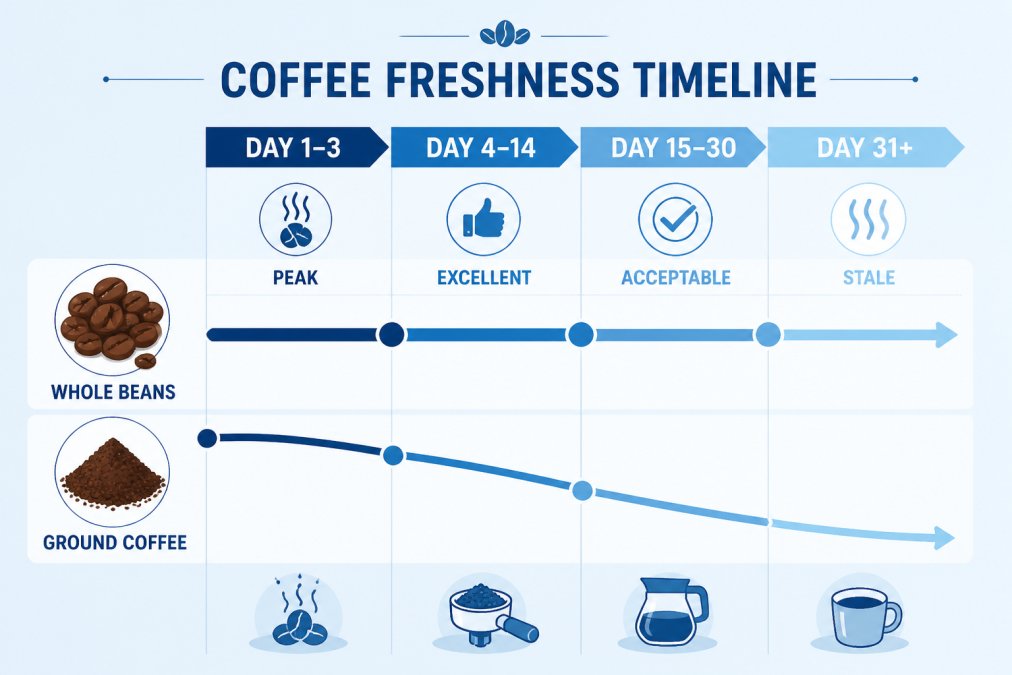
When you buy coffee, check that roast date. If the bag doesn't show one, ask the seller.
Freshness Timelines: Whole Beans vs. Ground Coffee
Whole beans and ground coffee age at different rates. This matters when you're deciding what to buy and how to store it.
Whole beans stay fresh longer:
- Peak freshness: 4-14 days after roasting
- Acceptable quality: up to 30 days
- Still drinkable: up to 60 days (though noticeably stale)
Ground coffee fades much faster:
- Peak freshness: 1-3 days after grinding
- Acceptable quality: up to 7 days
- Stale: after 2 weeks
If you want the freshest possible coffee, buy whole beans and grind just before brewing. If convenience matters more, buy pre-ground from a roaster with a recent roast date and use it within a week.
Recognizing Signs Coffee Beans Are Stale
Stale coffee doesn't taste bad in a dangerous way, it just tastes boring. But understanding what staleness looks and smells like helps you avoid it.
The Difference Between Staleness and Spoilage
This is important: stale and spoiled are not the same thing. Stale coffee is old and has lost flavor.
Stale coffee:
- Has lost vibrant aroma and taste
- Smells flat or muted
- Tastes hollow or papery
Spoiled coffee (rare but possible):
- Smells sour, vinegary, or unpleasant
- Shows visible mold or discoloration
- Smells musty or moldy
Spoilage usually happens when beans are stored in damp conditions or exposed to moisture.
Most coffee you encounter will be stale, not spoiled. Staleness is just oxidation, the beans have been exposed to air and light, and the flavorful compounds have broken down.
What Stale Coffee Smells and Tastes Like
Stale coffee has a distinctive profile that's easy to recognize once you know what to look for.
Stale aroma:
Best Sellers Sample Pack: 6Bean, Cowboy, Breakfast, Peru, Mexico, Bali →
- Faint or nearly absent
- Lacks the bright, inviting quality of fresh beans
- Sometimes smells slightly musty or cardboard-like
Stale taste:
- Flat and one-dimensional
- Hollow or thin mouthfeel
- Sometimes papery or ashy
If you've never tasted truly fresh coffee, stale beans might seem normal. But once you experience the difference, you'll never go back. The vibrant aroma and rich flavor of fresh beans makes the comparison obvious.
How to Store Coffee Beans for Maximum Freshness
Once you have fresh beans, storage is everything. How you keep your coffee determines whether it stays fresh or goes stale quickly.
Storage Conditions That Preserve Freshness
Coffee's enemies are air, light, heat, and moisture. Protect your beans from all four, and they'll stay fresh much longer.
Best storage conditions:
- Cool temperature (ideally 50-70°F)
- Dark environment (away from sunlight)
- Dry location (not near steam or humidity)
Your pantry or kitchen cupboard is usually ideal. A cool, dark corner away from the stove works well. Never store beans on a sunny windowsill or above the refrigerator where heat rises.
Freezing is controversial among coffee experts. Cold temperatures slow oxidation, but freezing can introduce moisture when beans thaw.
Container Types and Why They Matter
Not all containers are created equal. What you store your beans in makes a real difference.
Best containers:
- Airtight glass jars with rubber seals
- Opaque airtight containers (blocks light)
- Vacuum-sealed bags (removes oxygen)
Avoid:
- Paper bags without sealing (air gets in)
- Clear containers on shelves (light exposure)
- Open bowls or cups (maximum air exposure)
The original bag your beans came in is often a good option if it has a resealable valve. Quality roasters design these bags specifically to protect coffee.
For bulk storage or pantry selections, transfer beans to airtight glass jars and label them with the roast date. This keeps everything organized and fresh.
Coffee Bloom During Brewing: An Imperfect Freshness Test
When you pour hot water over coffee grounds, they bubble and foam for a few seconds.
What bloom actually shows:
- Carbon dioxide (CO2) being released from the grounds
- This happens more vigorously with fresher beans
- Stale beans produce less dramatic bloom
Fresh beans still have CO2 trapped inside from the roasting process.
However, bloom depends on other factors too. Grind size, water temperature, and brewing method all affect how much foam you see.
Use bloom as a clue, not a definitive test. If you see vigorous, sustained bloom, your beans are probably fresh.
A Simple At-Home Freshness Test You Can Try
Here's a practical way to test your beans right now and understand what fresh coffee should smell and taste like.
The side-by-side comparison:
- Buy two bags of beans: one roasted within the last week, one roasted 4-6 weeks ago
- Open both bags and smell them side by side
- Notice the difference in aroma intensity and character
- Grind a small amount of each
- Brew them using the same method with the same water and proportions
- Taste them back-to-back
This simple test teaches your senses what to expect. Once you've tasted truly fresh coffee, you'll recognize staleness immediately in future bags.
You can do this with any beans, but starting with specialty coffee from a quality roaster makes the difference more obvious.
Sourcing Fresh Coffee Beans from the Start
The best way to ensure freshness is to buy from roasters who prioritize it. Look for these signs when choosing where to buy your beans.
What to look for:
- Clear roast dates on every bag
- Roaster's location and website (transparency matters)
- Recent roast dates when you're buying (within 1-2 weeks is ideal)
Small roasters and specialty coffee companies usually take freshness seriously because their reputation depends on it.
Brewtiful Coffee US roasts fresh to order and ships nationwide, so your beans arrive at their best. Our single-origin selections from Uganda, Kenya, Sumatra, Peru, Mexico, and Bali showcase the flavors that only fresh beans can deliver.

For small businesses, employee kitchen benefits, corporate clients looking for pantry selections, or anyone seeking holiday gift ideas, fresh-roasted coffee makes a meaningful difference.
Frequently Asked Questions
How long do coffee beans stay fresh after roasting?
Whole beans remain peak-fresh for 3-14 days after roasting, with acceptable flavor through about 30 days. Ground coffee degrades faster, use within 15 minutes of grinding for best results. After 30 days, beans enter stale territory, though they're still safe to drink. Roast date on the bag is your best guide. Store in an airtight container away from heat and light to extend freshness throughout this window.
What does fresh coffee smell like compared to stale beans?
Fresh beans release a rich, vibrant aroma with fruity, chocolate, or caramel notes depending on origin and roast level. Stale beans smell flat, faint, or papery, the fragrance becomes muted or nearly absent. Some describe old beans as smelling musty or hollow. If you open a bag and detect little to no aroma, or notice a papery scent instead of the bold fragrance expected, those beans have likely lost their peak freshness and will brew a weaker cup.
Should fresh coffee beans have oil on them?
Oiliness depends on roast level, not freshness. Dark roasts naturally develop a glossy, oily surface due to the roasting process and degassing. Light and medium roasts appear drier. Fresh beans of any roast level will have a vibrant appearance, either glossy (dark roast) or matte with a subtle sheen (light/medium). Dull, lifeless appearance signals staleness regardless of oiliness. Don't judge freshness by oil alone; combine appearance with aroma and roast date for a complete picture.
How can I tell if my coffee beans are past their prime?
Look for a combination of signs: faint or absent aroma when you open the bag, dull or flat appearance, and a papery or hollow taste when brewed. Check the roast date, beans older than 30-45 days are likely past their prime. If the bag feels stale or the beans lack the fragrance and vibrant flavor you expect, it's time for a fresh supply. For the best experience, source beans with recent roast dates and store them properly in an airtight container away from heat, light, and moisture.
Freshness is the foundation of great coffee. Once you know how to recognize fresh beans and keep them that way, you'll never settle for stale coffee again. Start by checking the roast date on your next purchase, then pay attention to the aroma and taste. Within a few weeks, you'll develop an instinct for what fresh coffee should be. From there, sourcing quality beans and storing them properly becomes second nature. The result is cafe-quality coffee at home, every single morning.