

Kenyan vs Sumatran Coffee: Flavor Profiles Explained
Table of Contents
- Kenyan vs Sumatran Coffee: A Side-by-Side Flavor Comparison
- Kenyan Coffee Flavor Profile: Bright Acidity and Floral Notes
- Sumatran Coffee Flavor Profile: Earthy Body and Complexity
- Key Differences: Acidity, Body, and Mouthfeel
- Best Single Origin Coffee Beans for Pour Over: Which Wins?
- How to Brew Sumatran Coffee: Bringing Out the Best Flavors
- Which Coffee Should You Choose?
- Frequently Asked Questions
Last Updated: September 30, 2026
Kenyan vs Sumatran Coffee: A Side-by-Side Flavor Comparison
The choice between Kenyan and Sumatran coffee comes down to what your palate craves. One delivers bright, citrus-forward acidity with floral complexity. The other offers deep earthiness and a syrupy body that coats your mouth. At Brewtiful Coffee US, we've found that understanding these differences transforms how you approach brewing and helps you pick beans that match your taste preferences, not someone else's.
Kenyan Coffee Flavor Profile: Bright Acidity and Floral Notes
Kenyan coffee is defined by vibrant acidity and complex flavors: citrus (lemon, orange, grapefruit), floral, and stone fruit notes. Grown at high altitudes in volcanic soil, these beans develop crisp, lively acidity that makes you sit up straighter with the first sip.
Tasting Notes and Sensory Characteristics
Kenyan coffee delivers "effervescence", a sparkling quality with clean, tea-like mouthfeel. Common tasting notes: citrus, floral (jasmine, hibiscus), stone fruit, and wine-like complexity with blackcurrant or bergamot finish.
These characteristics make Kenyan beans exceptional for pour-over brewing, where clarity of flavor shines through. The Specialty Coffee Association's cupping standards emphasize how altitude and terroir create these distinctive sensory profiles in East African coffees.
Growing Region and Altitude Impact
Kenya's coffee-growing regions sit at 1,700-1,890 meters elevation. High altitude and volcanic soil in regions like Othaya and Nyeri County concentrate sugars and acids, creating complexity and mineral notes. Fully washed and dried-on-raised-beds processing further enhances these characteristics.
Sumatran Coffee Flavor Profile: Earthy Body and Complexity
Sumatran coffee develops in humid tropical conditions at 1,100-1,600 meters. Where Kenyan sparkles, Sumatran grounds itself with dark chocolate, dried fruit, earthy spice, full syrupy body, and lingering finish.
Cupping Notes and Sensory Experience
Sumatran coffee has a savory-sweet character with medium acidity. Tasting notes: dark chocolate, dried fruit (prune, raisin, fig), earthy and herbal notes, spicy undertones, full-bodied syrupy mouthfeel, and lingering finish. This profile excels in espresso and French press, where full body and low acidity shine.
Processing Methods and Their Impact on Flavor
Most Sumatran beans use giling basah (wet-hulling), a semi-washed method unique to the region. The parchment is removed while the bean retains moisture, creating lower acidity, heavier body, earthy character, and complexity from semi-anaerobic fermentation. This processing method produces Sumatran's signature flavor profile and requires different brewing approaches than Kenyan washed coffees.
Key Differences: Acidity, Body, and Mouthfeel
Characteristic |
Kenyan Coffee |
Sumatran Coffee |
|---|---|---|
Acidity Level |
High, bright, crisp |
Medium, muted, balanced |
Body |
Light to medium |
Full, syrupy |
Mouthfeel |
Clean, tea-like, delicate |
Heavy, oily, coating |
Primary Flavors |
Citrus, floral, stone fruit |
Chocolate, earthy, dried fruit |
Processing |
Fully washed, raised beds |
Giling basah (wet-hulled) |
Terroir Expression |
Volcanic soil, high altitude |
Tropical humidity, lower altitude |
Best Brewing Method |
Pour over, Aeropress, drip |
French press, espresso, immersion |
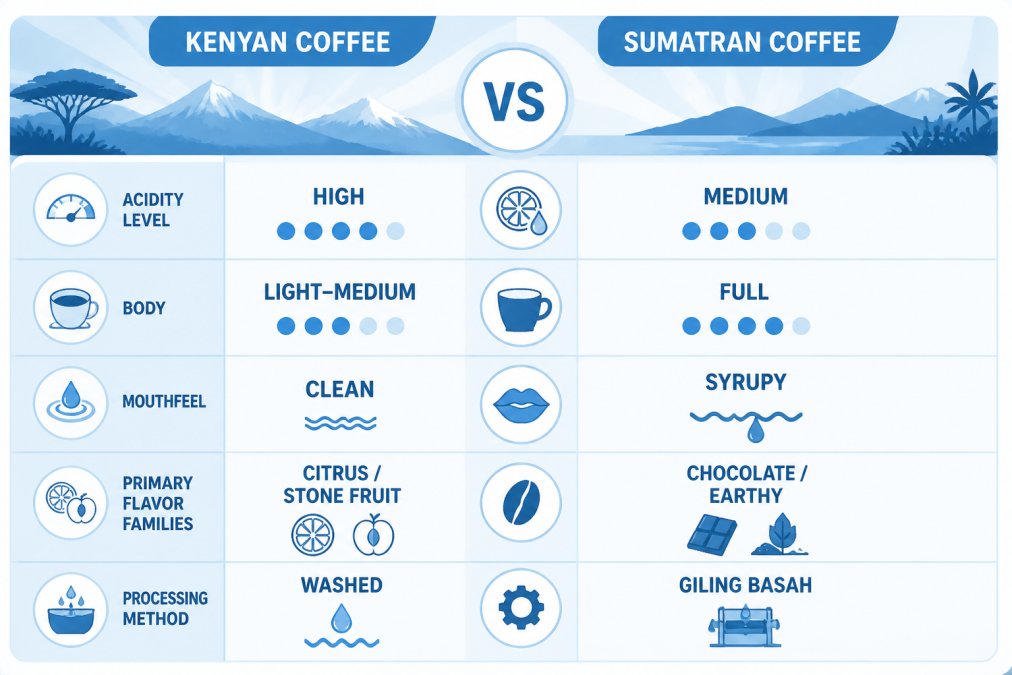
Kenyan coffee emphasizes clarity and brightness; Sumatran emphasizes body and earthiness. The acidity difference is most noticeable: Kenyan's crisp, lively profile energizes; Sumatran's smooth, full-bodied character feels luxurious.
Best Single Origin Coffee Beans for Pour Over: Which Wins?
For pour-over brewing, Kenyan coffee has a structural advantage: high acidity and clean mouthfeel translate beautifully through paper filters, highlighting brightness and complexity.
Why Kenyan Coffee Excels in Pour-Over
Pour-over emphasizes clarity: the paper filter removes oils and sediment, letting you taste every layer, citrus, floral notes, stone fruit finish. Kenyan's natural brightness shines. Sumatran works in pour-over but isn't ideal; the paper filter strips the full body and oily character that make Sumatran special.
Brewing Parameters to Unlock Kenyan's Brightness
To maximize Kenyan coffee's potential in pour-over, adjust these variables:
Grind Size: Medium-fine (denser Kenyan beans need finer grind to extract bright acids fully without bitterness).
Water Temperature: 200-205°F (bright acids require sufficient heat for complete extraction).
Brew Ratio: 1:16 coffee-to-water by weight (e.g., 25g coffee to 400g water).
Brew Time: 3-4 minutes total contact time. Slower pour emphasizes floral notes; faster pour highlights citrus.
Roast Level Matters for Pour-Over Clarity
For Kenyan pour-over, light to medium roasts preserve natural acidity and floral complexity. Medium-dark or dark roasts suppress these characteristics, adding heat-driven flavors (caramel, chocolate, smoke) that obscure terroir and processing nuances.
Kenyan Coffee for Corporate and Small-Business Settings
For employee kitchen benefits and corporate clients, Kenyan coffee offers bright acidity that appeals to morning drinkers and floral complexity that adds sophistication without requiring advanced brewing skills. Small business pantry selections benefit from Kenyan's versatility across drip machines, Aeropress, and pour-over devices. For wholesale inquiries on bulk Kenyan selections for corporate programs, explore our wholesale options.

How to Brew Sumatran Coffee: Bringing Out the Best Flavors
Sumatran coffee demands brewing methods that respect its full body and syrupy character. Roast level fundamentally changes which flavors emerge, understanding the interaction between processing method, roast, and brewing unlocks Sumatran's complexity.
The Roast-Processing Connection: Why It Matters for Sumatran
Sumatran coffee's giling basah (wet-hulling) processing creates beans with unique moisture retention and density characteristics. Unlike washed coffees, which dry to a uniform moisture content, wet-hulled beans retain slightly higher residual moisture and have a denser structure. This affects how they respond to heat during roasting, and ultimately, which flavors dominate in your cup.
Roast level controls which flavors become prominent:
Light Roasts: Amplify acidity and fruity notes but fight Sumatran's processing signature (giling basah naturally suppresses acidity). Result often tastes thin or unbalanced.
Medium Roasts: The sweet spot. Bring out chocolate, caramel, and spice while preserving syrupy body and herbal undertones. Respect terroir while delivering comfort and complexity.
Medium-Dark to Dark Roasts: Deepen chocolate and add smokiness. Acidity nearly disappears. Risk obscuring Sumatran's unique processing signature, but ideal for espresso or those preferring bold, low-acid coffee.
Brewing Methods That Complement Sumatran Characteristics
French Press (Immersion Brewing): This is the gold standard for Sumatran coffee. The immersion method allows the full body to develop without restriction. No paper filter means the oils and sediment stay in your cup, creating that luxurious mouthfeel Sumatran coffee is famous for. For French press, use a medium roast Sumatran, a coarse grind (similar to sea salt), a 1:15 coffee-to-water ratio, and a 4-minute steep. The result is a cup that showcases the chocolate, dried fruit, and earthy complexity without any sharpness.
Espresso Machines: Espresso excels with Sumatran beans, particularly medium roasts. The pressure extraction emphasizes body and sweetness, pulling out the chocolate and dried fruit notes while keeping acidity in check. Sumatran's density (a result of giling basah processing) actually benefits espresso extraction, the beans compress well and resist over-extraction better than lighter, less-dense coffees. Use a medium roast, dial in for a 25-30 second pull, and expect a rich, syrupy shot with minimal sourness.
Immersion Brewers (Clever Dripper, Cupping Bowls): These combine some of the clarity of pour-over with the body-forward characteristics of French press. A 3-4 minute immersion followed by a gentle drain produces a cup that's slightly brighter than French press but fuller than pour-over. Medium roasts work best here as well.
Avoid: Very light roasts of Sumatran coffee, and avoid under-extracting (too coarse a grind, too short a brew time, too cool water).
Grinding and Water Temperature for Sumatran
For immersion methods (French press, Clever Dripper), use a coarse grind and water at 200-205°F. The coarse grind prevents over-extraction of tannins, which can create unpleasant bitterness in full-bodied coffees. The higher water temperature ensures the denser Sumatran beans extract fully.
Sumatran Coffee for Corporate Clients and Small Business Pantries
For employee kitchen benefits and corporate clients, Sumatran coffee offers a different value proposition than Kenyan: comfort and consistency. The full body and low acidity appeal to afternoon drinkers and those seeking a gentler coffee experience. For small business pantry selections, offering a medium-roast Sumatran alongside a bright Kenyan gives your team choice, morning brightness or afternoon comfort.
Which Coffee Should You Choose?
The answer depends on your palate, your brewing equipment, and your daily ritual.
Choose Kenyan coffee if you:
- Love bright, crisp flavors
- Enjoy citrus and floral notes
- Brew with pour-over, Aeropress, or drip methods
- Want clarity and complexity in every sip
- Prefer lighter to medium roasts
- View coffee as an energizing part of your morning
Choose Sumatran coffee if you:
- Crave full body and earthiness
- Enjoy chocolate and dried fruit notes
- Brew with French press or espresso
- Want a luxurious, coating mouthfeel
- Prefer medium to dark roasts
- View coffee as a comforting ritual
Frequently Asked Questions
What does Kenyan coffee taste like compared to Sumatran?
Kenyan coffee delivers bright acidity with vibrant citrus, stone fruit, and floral notes—think orange, lemon, and bergamot. Sumatran coffee offers the opposite profile: medium acidity, full body, and earthy, savory-sweet flavors with dark chocolate and dried fruit undertones. Kenyan feels crisp and wine-like; Sumatran feels rich and lingering. Your preference depends on whether you favor brightness or complexity.
Which coffee is better for pour over brewing?
Kenyan coffee's bright acidity and lighter body shine through pour-over methods, highlighting its citrus and floral characteristics. Sumatran coffee's full body and syrupy mouthfeel can also work with pour over, though many prefer immersion methods like French press to fully embrace its earthy, complex profile. Choose based on your palate: brightness or richness.
How does roast level affect Kenyan vs Sumatran coffee flavor?
Light to medium roasts preserve Kenyan coffee's signature bright acidity and floral notes—this is where those citrus and stone fruit flavors shine. Medium to dark roasts on Kenyan beans can mute acidity and add chocolate notes. Sumatran coffee maintains its earthy, full-bodied character across roast levels, though darker roasts can enhance the chocolatey, smoky finish. Neither origin needs dark roasting to taste good.
What's the difference in processing between Kenyan and Sumatran beans?
Kenyan coffee uses the washed (wet) process: beans are fermented and thoroughly cleaned before drying on raised beds. This method highlights acidity and clarity of flavor. Sumatran coffee uses giling basah (wet-hulling), where the hull is removed while the bean still has high moisture content. This unique processing creates the full body, earthy character, and lower acidity Sumatran is known for. Processing directly shapes the final cup.