

Light Roast vs Medium Roast for Pour Over: Which Wins?
Table of Contents
- Light Roast vs Medium Roast for Pour Over: The Short Answer
- How Roast Level Changes Flavor, Acidity, and Body in the Cup
- How to Brew Light Roast Coffee So It Tastes Sweet, Not Sour
- A Light Roast Pour Over Recipe You Can Repeat
- Medium Roast Pour Over Recipe: Small Adjustments That Fix Bitterness
- Pour Over Coffee Grind Size: Why Roast Level Changes the Setting
- A Side-by-Side Comparison: Same Recipe, Two Roasts
- Which Roast Should You Choose? A Preference-Based Guide
- Frequently Asked Questions
Last Updated: October 20, 2026
Light Roast vs Medium Roast for Pour Over: The Short Answer
The short answer: light roast vs medium roast for pour over comes down to what you want in the cup.
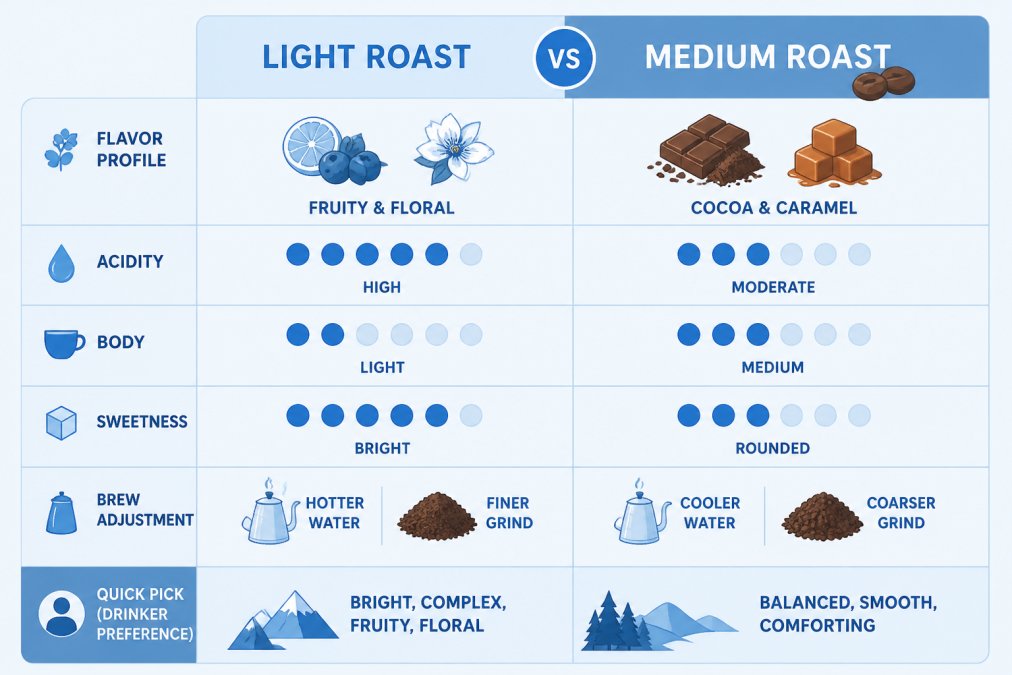
Neither roast is "better" for pour over. The roast changes how soluble the beans are, which means the same recipe will not taste the same across both.
Below, we break down flavor differences, grind size, water temperature, and two repeatable recipes so you can taste the difference yourself.
How Roast Level Changes Flavor, Acidity, and Body in the Cup
Roast level is the single biggest lever on flavor after the bean itself. As beans roast longer, sugars caramelize, acids break down, and the bean becomes more porous. That shift explains almost every difference you taste between a light and medium pour over.
Tasting Notes: Bright and Fruity vs Sweet and Balanced
Light roast coffees keep more of the bean's origin character. Expect bright, fruity, and floral notes, sometimes with tea-like delicacy. A washed Ethiopian might taste of jasmine and citrus; a natural process bean leans toward berry and stone fruit.
Medium roast coffees trade some of that brightness for sweetness and roundness. Chocolate notes, caramel, toffee, and mild fruit move to the front. The cup feels more familiar and, for many drinkers, more comforting.
Acidity, Body, and Perceived Smoothness
Light roasts carry higher perceived acidity and a lighter body. That acidity is not a flaw, it is the snap that makes a light pour over taste alive. Medium roasts soften the acidity and build a rounder body, which reads as smoothness to most palates.
How to Brew Light Roast Coffee So It Tastes Sweet, Not Sour
Light roast beans are denser and less porous, so they resist extraction. The fix is straightforward: more energy. Use water just off the boil, a finer grind, and a slightly longer contact time. Do that and the sweetness inside a light roast shows up instead of the sourness that comes from stopping short.
Three adjustments matter most:
- Water temperature: hotter water pulls more from dense beans
- Grind size: a step finer than you would use for a medium roast
- Pour technique: steady, gentle circles that keep the bed even
A common mistake is brewing light roast exactly like medium roast, then deciding light roast is "too acidic." It usually is not. It is under-extracted.
A Light Roast Pour Over Recipe You Can Repeat
This light roast pour over recipe is built for a single 10-ounce cup and a V60-style dripper. It favors clarity and sweetness over strength.
- Dose: 18 grams of coffee, ground medium-fine, like table salt
- Water: 300 grams, just off the boil
- Bloom: pour 50 grams, wait 40 seconds
- First pour: add water to 150 grams in slow circles
- Second pour: finish to 300 grams by the 1:45 mark
- Drawdown: the bed should finish draining around 2:45 to 3:15
Expected result: a bright cup with clear fruit and a clean finish. If it tastes thin or sour, grind one notch finer next time.
Our Breakfast Blend is a lightly roasted South American blend with walnut, mild apple, and toffee notes, and it responds well to this recipe. For a fruit-forward single origin, the Ethiopia Natural brings milk chocolate, fruit, and caramel to the same method.


Medium Roast Pour Over Recipe: Small Adjustments That Fix Bitterness
Medium roast beans are more porous and give up their flavors more easily. Brew them with the light roast recipe and you often get bitterness or a flat, drying finish.
- Dose: 18 grams, ground medium, like coarse sand
- Water: 300 grams, a minute or two off the boil
- Bloom: 50 grams, wait 30 to 40 seconds
- Pours: same two-stage pour, finishing around 1:40
- Drawdown: target 2:30 to 2:50
If the cup still tastes bitter, coarsen the grind before you change anything else. Bitterness in a medium roast pour over almost always means over-extraction.
The Medium Blend is our house medium roast, balanced with medium body and acidity. The Gourmet Donut Shop sits at light-medium with cocoa, caramel, and toffee, and works with either recipe depending on how sweet you like your morning cup.

Pour Over Coffee Grind Size: Why Roast Level Changes the Setting
Pour over coffee grind size is not a fixed number, it is a setting you tune to the bean. Dense light roasts need a finer grind to extract fully. Porous medium roasts need a coarser grind to avoid over-extraction. Same grinder, same dial, different setting.
| Roast Level | Grind Setting | Water Temp | Brew Time | Watch For |
|---|---|---|---|---|
| Light roast | Medium-fine | Just off boil | 2:45-3:15 | Sourness, thin body |
| Medium roast | Medium | Slightly cooler | 2:30-2:50 | Bitterness, dry finish |
Troubleshoot by Taste, Not by Guesswork
Use what is in the cup to decide what to change. Change one variable at a time and brew again.
- Sour, sharp, or thin cup: under-extraction. Grind finer first, then raise water temperature. If the drawdown is very fast, a finer grind also slows it.
- Bitter, drying, or ashy finish: over-extraction. Coarsen the grind first, then lower water temperature slightly. Do not add more coffee; a stronger dose of an over-extracted brew just gives you more bitterness.
- Weak body but no sourness: increase dose by 1 to 2 grams or tighten the ratio before changing grind.
Water Chemistry and Roast Level
Water composition interacts with roast level more than most guides admit. Light roasts lean on acidity and delicate aromatics, so very soft water can flatten them, while water with moderate mineral content supports sweetness and body. Medium roasts are more forgiving, but hard water can still mute chocolate and caramel notes and leave a drying finish. If you are brewing for a group, start with filtered water and adjust from there rather than chasing grind changes that cannot fix a water problem.
Match the Setting to the Roast, Then to the Drinker
For a light roast, start medium-fine and just off the boil, then fine up if the cup tastes sour. For a medium roast, start medium and slightly cooler, then coarsen if the finish dries out. If you are choosing beans for an employee kitchen, a corporate pantry, or a holiday gift, a medium roast is the more forgiving default for a crowd, while a light roast rewards the drinker who wants to tune the recipe. Our wholesale selection makes it easy to stock both profiles for teams and client gifts.
A Side-by-Side Comparison: Same Recipe, Two Roasts
The clearest way to understand light roast vs medium roast is a controlled side-by-side pour over. Most guides describe the roasts in the abstract; this one gives you a repeatable protocol so the only variable is the bean. Use the same brewer, the same water, the same dose, the same grind setting, and the same pour schedule. Change nothing but the roast.
Set Up the Controlled Comparison
- Same brewer and filter: one V60-style dripper and one box of filters for both brews. Rinse the filter the same way each time.
- Same water: one batch of filtered water, weighed to 300 grams per cup. Do not switch water sources between brews.
- Same dose and grind: 18 grams of coffee at the same grinder setting for both. This is the baseline; you will adjust each roast separately in the second round.
- Same temperature: water just off the boil for both baseline brews.
- Same pour schedule: 50-gram bloom for 40 seconds, then two pours finishing at 300 grams by 1:45.
- Same cup and cooling time: taste both at the same temperature, about 3 to 4 minutes after brewing, so heat does not skew your perception.
Brew the light roast first, then the medium roast, and label the cups so you can taste blind. A blind taste removes the expectation that light roast should be bright and medium roast should be sweet.
What to Measure and Taste
Score each cup on a simple five-point scale for four attributes:
- Acidity: from flat (1) to sharply bright (5)
- Sweetness: from absent (1) to rounded and clear (5)
- Body: from thin and tea-like (1) to syrupy (5)
Also note the drawdown time for each brew. A common pattern is that the medium roast finishes 15 to 30 seconds faster because it is more porous and releases water more readily. If your medium roast drains much faster and tastes flat, that is a sign to coarsen the grind slightly or shorten the brew.
What the Baseline Usually Shows
With an identical recipe, most tasters find the light roast reads brighter and more complex, with fruit and floral notes up front and a lighter body. The medium roast reads sweeter and rounder, with chocolate and caramel leading and a heavier body. The light roast may taste thin or sharply sour at this baseline because dense beans resist the same recipe; that is expected, not a verdict on the roast.
Run the Second Round With Each Roast's Adjustments
Now brew each roast with its recommended adjustments: hotter water and a finer grind for the light roast, slightly cooler water and a coarser grind for the medium roast. Taste blind again and rescore. Most drinkers find the gap narrows and the real difference becomes preference rather than quality.
If you are setting up a tasting for an office kitchen, a client pantry, or a holiday gift pairing, brew both roasts side by side and let people score them. A light and a medium from the same roaster make a genuinely useful pairing, and our wholesale program lets you stock both for teams, corporate clients, and gift sets without committing to a single profile.
Which Roast Should You Choose? A Preference-Based Guide
Choose light roast if you want origin character, bright acidity, and delicate fruit or floral notes, and you are willing to tune your recipe.
A simple way to decide:
- New to pour over: start with medium roast, it forgives small mistakes
- Chasing flavor clarity: go light, and grind finer
- Want a cozy daily cup: medium roast with chocolate and caramel notes
Whichever you pick, freshness matters more than roast level. Coffee tastes best within weeks of roasting, and whole beans beat pre-ground every time. Brewtiful Coffee US roasts to order and ships free nationwide, so your beans arrive fresh rather than shelf-worn.
Frequently Asked Questions
What kind of roast is best for pour over?
Both light and medium roasts work well in a pour over; the choice comes down to what you want in the cup. Light roasts keep more origin character, so you get brighter acidity, fruity or floral notes, and a lighter body. Medium roasts trade some of that brightness for sweetness, balance, and a rounder body. If you like delicate flavors, start light. If you want a smooth, balanced morning cup, start medium. Try both with the same recipe before deciding.
Can you use light roast for pour over?
Yes, and many home brewers prefer it. Light roast beans are denser and less soluble, so they need a little more help: a finer pour over coffee grind size, water just off a boil, and a slightly longer brew time. Without those adjustments, light roast coffee can taste sour or thin. With them, the same beans can taste sweet and fruit-forward. A light roast pour over recipe built around those changes is the difference between a sharp cup and a balanced one.
Does medium roast coffee taste less acidic than light roast?
Usually, yes. Roasting breaks down some of the acids in green coffee, so a medium roast tends to taste less sharp than a light roast from the same origin. The difference is most obvious in the finish. A light roast may leave a bright, tangy sensation, while a medium roast feels rounder and sweeter. If you enjoy acidity, stay light. If acidity reads as harsh to you, a medium roast pour over recipe with a slightly coarser grind is the easier starting point.
How do you make light roast coffee taste less sour?
Sourness in light roast coffee usually means under-extraction. Try three fixes in order: grind finer, use hotter water, and extend the brew time slightly. Each change pulls more sweetness and body out of the grounds. Keep your coffee-to-water ratio steady so you can judge one change at a time. If the cup is still sharp after a finer grind, check that your beans are fresh; stale light roast coffee loses sweetness first and tastes hollow rather than fruity.
The hardest part of pour over is not the roast, it is repetition and fresh beans. Brewtiful Coffee US roasts specialty coffee to order, from light breakfast blends to medium single origins like our Tanzania with pear, floral, and jasmine notes, and ships it free nationwide. Start with a light and a medium, brew them side by side, and let your own palate settle the light roast vs medium roast debate.