

Light vs Dark Roast Coffee: Key Differences Explained
Table of Contents
- Light vs Dark Roast Coffee: Quick Comparison
- What Is Light Roast Coffee?
- What Is Dark Roast Coffee?
- Caffeine Content in Light vs Dark Roast
- Coffee Roast Flavor Profiles Compared
- Wholesale Coffee for Offices and Corporate Pantries
- Brewing Method Adjustments by Roast Level
- Which Roast Should You Choose?
- Frequently Asked Questions
Last Updated: September 29, 2026
Light vs Dark Roast Coffee: Quick Comparison
The difference between light and dark roast coffee comes down to how long the beans spend in the roaster. Light roasts are removed earlier, preserving bright acidity and origin characteristics. Dark roasts stay longer, developing deeper body, lower acidity, and rich, smoky flavors. The roast level you choose shapes everything about your cup, from the brewing method you use to the flavor notes you'll experience.
Here's what matters most: light roasts highlight the unique qualities of where the beans came from, while dark roasts emphasize the roasting process itself. Neither is objectively "better", it depends on what you want from your coffee.
Characteristic |
Light Roast |
Dark Roast |
|---|---|---|
Roasting Time |
Shorter (pulled at first crack) |
Longer (through second crack) |
Bean Appearance |
Dry, matte surface |
Shiny, oily surface |
Acidity Level |
High (bright, crisp) |
Low (smooth, mellow) |
Body |
Light to medium |
Full, heavy |
Caffeine Content |
Slightly more |
Slightly less |
Flavor Profile |
Origin-driven, floral, citrus |
Roast-driven, smoky, chocolate |
Best For |
Pour-over, Aeropress |
Espresso, French press |
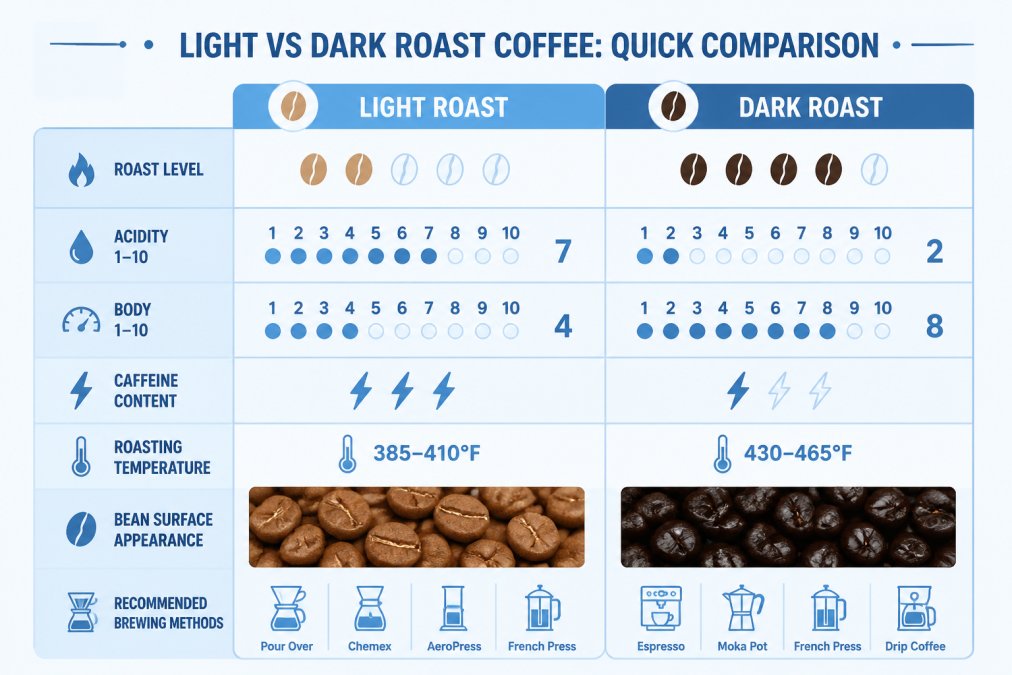
Comparison matrix with roast level, acidity scale 1-10, body scale 1-10, caffeine content comparison, roasting temperature ranges, bean surface appearance photos, and recommended brewing methods for light vs dark roast
What Is Light Roast Coffee?
Light roast coffee is removed from the roaster shortly after the first crack, the moment when heat causes moisture inside the bean to expand and split the outer layer. This happens around 350-400 degrees Fahrenheit. The beans retain most of their original density and haven't developed the surface oils you see in darker roasts.
Light roasts preserve what coffee professionals call the "origin characteristics", the unique flavors that come from where the beans grew. A light roast from Kenya tastes noticeably different from one from Peru or Sumatra because you're tasting the soil, altitude, and climate of that region, not the roaster's handiwork.
Origin Characteristics and Bean Density
Light roast beans are denser than their dark-roasted counterparts. Because they spend less time in the roaster, the bean structure stays tight and compact. This density affects how water flows through the grounds during brewing and how quickly the flavors extract.
The origin characteristics shine brightest in light roasts. You'll notice floral notes, citrus brightness, and sometimes fruity undertones, flavors that get buried or burned away in darker roasts. A single-origin light roast from Uganda or Kenya is the best way to taste what that specific region produces. These beans haven't been transformed by the roasting process; instead, the roaster's job is to bring out what's already there.
Brightness and Acidity Levels
Light roasts have high acidity, but this isn't a bad thing in coffee. Acidity creates brightness, that crisp, lively sensation on your palate. It's what makes a light roast feel refreshing rather than heavy.
The mouthfeel is clean and tea-like. Your mouth doesn't feel coated the way it does after drinking a dark roast. This is because light roasts have minimal oil content on the bean surface.
What Is Dark Roast Coffee?
Dark roast coffee is roasted longer, past the second crack, which occurs around 410-430 degrees Fahrenheit. At this point, the beans have released significant oils to the surface, and the roasting process has become the dominant flavor influence. What you taste is less about origin and more about caramelization and carbonization that happened in the roaster.
Dark roasts are bold and forgiving. The flavor is immediately recognizable: smoky, heavy, sometimes with chocolate or nut undertones.
Coffee with Mushrooms Dark Roast →
The Roasting Process and Surface Sheen
The visible difference between light and dark roast is obvious: dark roast beans have a shiny, oily surface. This oil isn't added, it comes from inside the bean as heat breaks down the cellular structure during the maillard reaction and caramelization.
This surface sheen affects your equipment. Dark roast oils can build up inside grinders and espresso machines over time, which is why some people prefer them for French press (where the metal filter doesn't get clogged) or pour-over (where paper filters catch the oils). The roasting process pushes the bean to its limit, creating complexity through chemical transformation rather than highlighting origin.
Body, Mouthfeel, and Bitterness
Dark roast coffee has a full, heavy body. Your mouth feels coated, that's the oils and dissolved solids. The sensation is rich and satisfying, almost creamy even without milk.
Dark roasts have low acidity, which means they lack the brightness of light roasts. Instead, you get smoothness and depth. The flavor notes lean toward chocolate, nuts, caramel, or smoke, tastes created by the roasting process itself, not the origin of the beans.
For corporate pantries and office kitchens, dark roasts are often the safer choice. Brewtiful Coffee US offers several dark roast options, including our French Roast and Italian Roast, both designed to deliver bold, consistent flavor that works across different brewing methods. For businesses interested in offering premium options, Brewtiful Coffee US provides wholesale solutions tailored to corporate clients and small business pantries. Our wholesale coffee program offers fresh-roasted specialty beans in bulk, with options ranging from dark roasts for everyday drinking to single-origin light roasts for employees who want something special.


Caffeine Content in Light vs Dark Roast
A common myth claims that dark roast has less caffeine because the roasting process burns it away. The truth is more subtle: the difference is minimal and depends on how you measure.
By weight, light roast has slightly more caffeine. The beans are denser, so a scoop of light roast contains marginally more caffeine than a scoop of dark roast. But the difference is small, and most people won't notice it in their cup.
What matters more is how much coffee you use and how long you brew. A longer brew time extracts more caffeine regardless of roast level. If you're looking for maximum caffeine, use more coffee or brew longer, not a specific roast level. The roast level affects flavor far more than it affects caffeine content.
Coffee Roast Flavor Profiles Compared
Light Roast Flavor Notes
Light roasts taste like their origin. A light roast from Kenya might have citrus and floral notes. One from Peru might taste chocolatey with subtle fruit undertones. One from Sumatra might be earthy with herbal complexity.
The flavor profile depends entirely on the region where the beans grew, the altitude, rainfall, soil composition, and processing method all contribute. The roaster's job is to highlight these characteristics without overpowering them. You taste the coffee's birthplace, not the roaster's style.
Light roasts work best in brewing methods that let you control the variables: pour-over, Aeropress, or specialty espresso machines. These methods let you adjust water temperature and contact time to dial in the flavor.
Coffee with Mushrooms Dark Roast →
Dark Roast Flavor Notes
Dark roasts taste like the roasting process. You get chocolate, nuts, caramel, smoke, and sometimes spice. These flavors come from the maillard reaction and caramelization that happens when beans are roasted to a dark degree.
The origin of the beans still matters, a dark roast from Africa tastes different from one from Central America, but the roasting process dominates. Two beans from different regions might taste more similar once they're dark roasted than they would as light roasts, because the roasting process has transformed them so thoroughly.
Dark roasts are forgiving in the brew. You can use hotter water, longer contact time, or automatic brewers.
Wholesale Coffee for Offices and Corporate Pantries
Businesses looking to upgrade their office coffee experience often face a choice: light or dark roast? The answer depends on your team's preferences and your brewing setup.
Brewing Method Adjustments by Roast Level
Your brewing method should match your roast level for the best results.
Which Roast Should You Choose?
Choose light roast if you want to taste the origin of the beans, enjoy bright acidity, and have the time and equipment to brew carefully.
Frequently Asked Questions
Does roast level affect the caffeine content of coffee?
Caffeine content in light vs dark roast is nearly identical. Both contain roughly 95-200 mg per 8-oz cup, depending on brew method and bean origin rather than roast level. The roasting process removes minimal caffeine. If you're seeking more caffeine, focus on brewing strength and coffee-to-water ratio instead of choosing based on roast color alone.
Is dark roast coffee less acidic than light roast?
Yes, dark roast typically has lower acidity than light roast. The extended roasting time breaks down chlorogenic acids, reducing brightness and sharpness. Light roasts retain more of these acids, creating a brighter, more vibrant taste. If you have acid sensitivity, dark roast may feel smoother on your palate, though individual bean origin also plays a significant role.
What are the flavor profiles associated with light vs. dark roasts?
Light roasts showcase origin characteristics with citrus notes, floral notes, and fruity flavors. Dark roasts develop chocolate notes, caramelization, and smoky undertones through the maillard reaction and carbonization. Light roasts taste like the bean's birthplace; dark roasts taste like the roasting process itself. Your preference depends on whether you want to taste geography or roasting craft.
Which coffee roast is best for home brewing?
Both work well at home, but your brewing method matters. Light roasts suit pour-over and drip coffee makers, which highlight acidity and origin flavors. Dark roasts excel in French press and espresso machines, where full body and lower acidity shine. Medium roasts offer balance for any method. Start with your preferred flavor profile, then adjust grind size and extraction time for your equipment.
How does the roasting process change the physical properties of the bean?
Roasting causes the first crack when water inside the bean turns to steam, expanding it. Extended heat triggers the second crack, creating surface oils and a shiny appearance. Bean density decreases as moisture escapes. Light roasts stop near the first crack, preserving bean density and origin flavors. Dark roasts continue through the second crack, developing oil content, surface sheen, and deeper caramelization that creates bold, smoky character.