

7 Ways to Reuse Loose Leaf Tea Leaves
Last Updated: October 27, 2026
Quick Summary
You can reuse loose leaf tea by resteeping the same leaves for a second or third cup, since most loose leaf teas hold their flavor for two or three infusions. Add about a minute to the steep time for each later round and use cooler water for green and white teas. Once the leaves stop tasting good, you can compost them or dry them for other uses.
- Most black teas give a strong first cup and a milder second.
- Add about 1 minute to the steep time for each later infusion.
- Drain wet leaves and refrigerate them in a covered container for up to 24 hours.
- Discard wet leaves that smell sour, look moldy, or sat out over 2 hours.
- Spent leaves can be composted or dried for garden and household uses.
Table of Contents
- How Many Times Can You Reuse Loose Leaf Tea Leaves?
- How to Resteep Loose Leaf Tea: Green, White, and Black Tea
- Troubleshooting Weak, Bitter, or Flat Later Infusions
- How to Store Tea Leaves Between Infusions Safely
- Resteeping Versus Repurposing: Which Reuse Makes Sense
- What to Do With Leftover Tea Leaves
- Pick Your Next Brew: Starting With the Right Loose Leaf Tea
- Frequently Asked Questions
Loose leaf tea leaves do not have to end up in the trash after one pot. Knowing how to reuse loose leaf tea means brewed leaves can often give you a second or third cup, and they have other uses too. If you buy quality loose leaf tea, that is a good reason to get more from every scoop. Brewtiful Coffee US sells loose leaf teas for home brewers who care about flavor, so we have put together this guide on how to reuse your leaves safely and well.
Reusing tea is called resteeping or reinfusing. It is different from repurposing, where you use spent leaves for something else, like compost or a garden bed. Both are covered below.
How Many Times Can You Reuse Loose Leaf Tea Leaves?
Most loose leaf teas can be steeped two or three times before the flavor fades. Some high-quality leaves, especially rolled green and oolong teas, can go even further. The leaves unroll and release new flavor with each round.
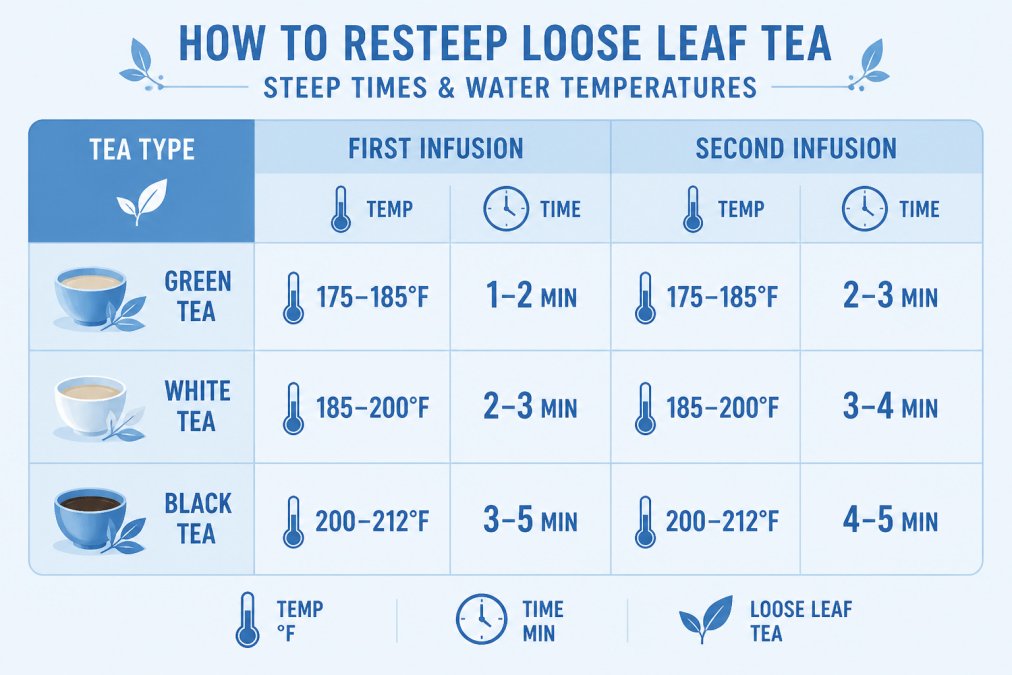
Tea type matters a lot here. Black teas like English Breakfast usually give a strong first cup and a milder second. Jasmine green tea often holds up well for several infusions, which makes it a good pick if you like to stretch your leaves.
- Black tea: 2 infusions is typical
- Green tea: 2 to 3 infusions, sometimes more
- Flavored blends: Often 1 to 2 good infusions
How to Resteep Loose Leaf Tea: Green, White, and Black Tea
Resteeping works best when you change a few things for each round. Use the same leaves, but adjust the time and temperature.
For a second infusion, add about 1 minute to your steep time and use the same water temperature or a little hotter. Black tea can handle boiling water. Green and white teas do better with cooler water, so keep those lower on later rounds to avoid bitterness.
Adjusting Steep Time and Temperature for Later Infusions
Here is a simple way to think about it:
- First infusion: Use the steep time on the package
- Second infusion: Add 1 minute
- Third infusion: Add another minute, and keep the temperature moderate
Jasmine green tea, for example, uses 175 F water for 4 to 6 minutes on the first round. Masala Chai and English Breakfast use hotter water, around 195 F, for 5 to 7 minutes. Your later rounds can start from those numbers and go a bit longer.
Using a Smaller Vessel or Leaf-to-Water Ratio
If your second cup tastes thin, try a smaller pot or mug. A smaller vessel keeps the leaves more concentrated. You can also use slightly more leaf than you would for a single cup. Start small and taste as you go, because it is easy to make the tea too strong.
Troubleshooting Weak, Bitter, or Flat Later Infusions
Later infusions do not always taste great. Here are the most common problems and how to fix them:
- Weak or watery: Steep longer, or use a smaller cup
- Bitter: Water was too hot or steeped too long. Lower the temperature and cut the time
- Flat or dull: The leaves may be past their best. Try a fresh scoop next time
Keep in mind that once a tea tastes flat after two rounds, it is usually finished for drinking.
How to Store Tea Leaves Between Infusions Safely
Wet tea leaves are a food product, and they spoil like one. The content gap in most guides is timing: how long you can safely wait before the next steep, whether refrigeration helps, and when to throw the leaves out. Here is a clear, food-safe approach.
How Quickly to Resteep
The safest window for a second steep is within 2 hours of the first. At room temperature, wet leaves can begin to grow mold and bacteria after that, especially in a warm kitchen. If you plan to steep again later in the day, refrigerate the leaves immediately after the first steep and use them within 24 hours.
A common pattern among tea drinkers is to steep twice in one sitting and then refrigerate the leaves for a single later cup. That works if the leaves are drained well and stored covered. Do not stretch wet leaves beyond 24 hours in the refrigerator, even if they look fine.
How to Store Wet Leaves
- Drain the leaves well in a fine-mesh strainer or press them gently against the side of the infuser to remove excess water.
- Place them in a clean, covered container. A small glass or ceramic container with a lid works well; avoid leaving them in an open bowl.
- Refrigerate at 40 F or below. Keep the container away from strong-smelling foods, because tea leaves absorb odors.
- Label the container with the date and time of the first steep so you know when the 24-hour window closes.
When to Discard Wet Leaves
Discard the leaves if you notice any of the following:
- A sour, fermented, or fizzy smell
- Visible mold, fuzz, or dark spots
- Slimy texture
- The leaves have been out at room temperature for more than 2 hours
When in doubt, throw them out. The cost of a fresh scoop is small compared with the risk of a spoiled cup.
Storing Dry Leaves for Later Use
If you want to keep spent leaves for repurposing rather than resteeping, dry them first. Spread the wet leaves in a single layer on a clean paper towel or a baking sheet and let them air-dry at room temperature for 24 to 48 hours, or dry them in a low oven at 150 F for 30 to 60 minutes. Once fully dry, store them in an airtight tin away from light and heat. Dry leaves keep for several months, though their flavor and aroma will fade over time.
A Quick Decision Guide for Leftover Leaves
Use this table to decide what to do with your leaves after the first steep:
| Situation | Best Next Step |
|---|---|
| You want another cup within 2 hours | Leave drained leaves in the infuser at room temperature, covered loosely |
| You want another cup later today or tomorrow | Refrigerate drained leaves in a covered container for up to 24 hours |
| You are done drinking but want to garden or compost | Dry the leaves, then compost or work into soil |
| The leaves smell sour, look moldy, or sat out overnight | Discard them |
For small businesses, employee kitchens, and corporate pantry selections, a simple labeled container and a posted 24-hour rule can keep the shared tea station clean and safe. If you are stocking a pantry for holiday gift ideas or client appreciation, include a small storage tin and a card with these guidelines so recipients know how to handle wet leaves.
Resteeping Versus Repurposing: Which Reuse Makes Sense
Resteeping means brewing the same leaves for another cup of tea. It works for drinking. Repurposing means using spent leaves for something else.
Resteeping is the better choice if you want a second cup. Repurposing is useful if your leaves are done for drinking and you want to put them to work. Both are good uses, but they serve different goals.
What to Do With Leftover Tea Leaves
Once your leaves are finished for drinking, you have a few options:
- Compost: Spent tea leaves add nitrogen to a compost pile. Mix them in with other materials
- Garden beds: Work used leaves lightly into soil around acid-loving plants
- Odor absorber: Dry leaves can help freshen a fridge or a pair of shoes
- Cleaning: Damp leaves can help clean dusty surfaces, though a microfiber cloth works better
Use caution with garden and compost uses. Remove any tea bags or plastic before composting, and avoid heavily flavored blends in soil where you grow edibles. Flavor oils and additives may not suit every garden.
Pick Your Next Brew: Starting With the Right Loose Leaf Tea
The best leaves for reuse are good-quality leaves that hold their flavor. If you want a classic black tea that stands up to resteeping, try our English Breakfast, a blend of Assam, Ceylon, and Darjeeling teas that stays malty and sweet over a second round. For something bright and smooth, Earl Grey gives you a flavored black tea with a strong base for multiple infusions. If you prefer green tea, our Jasmine blend is floral and silky and holds up well through several rounds.


Want to learn more before you choose? Our guide to buy loose leaf tea covers what to look for in a quality blend, and you can also explore our full range of Brewtiful Coffee US loose leaf teas.
Frequently Asked Questions
Can you reuse loose leaf tea leaves?
Yes, most loose leaf tea can be steeped more than once. Green and white teas often hold up through several infusions, while black teas like English Breakfast typically give a good second cup and a weaker third. Each later brew usually needs a slightly longer steep time or a bit more leaf to keep the flavor balanced. Discard leaves that smell sour, musty, or off, and never leave wet leaves sitting out for many hours.
How many times can you re-steep loose leaf tea?
Many loose leaf teas can be resteeped two to three times, and some high-quality green or jasmine blends can go further. Flavor drops with each infusion, so the third or fourth cup will be lighter. Adding a minute to each subsequent steep helps recover body. For a jasmine green tea like Brewtiful Coffee US's Jasmine, a second and third infusion are a practical target for most drinkers.
How should you store tea leaves between infusions?
If you plan to brew again within a few hours, leave the leaves in the vessel or pour off the liquid and keep them in a covered container at room temperature. For longer gaps, refrigerate wet leaves in a sealed container and use them within about a day. Spent leaves can grow bacteria or mold if left warm and damp, so when in doubt, toss them. Keeping dry tea in an airtight tin away from light and heat preserves flavor for future brews.
What to do with leftover tea leaves?
Used tea leaves can be composted or added to garden soil, where they add some organic matter. Some people also use them to absorb odors in shoes or the refrigerator once they are fully dry. These uses are informal and not tested for every situation, so keep spent leaves away from plants that dislike acidic material and avoid placing them where pests may gather. Dry the leaves completely before any household use.
