

Single Origin vs Blend Coffee: A Complete Comparison
Table of Contents
- Single Origin vs Blend Coffee: Key Differences at a Glance
- What Makes Single Origin Coffee Unique
- Understanding Coffee Blends and Why Roasters Create Them
- Flavor Profiles: How Single Origin and Blends Differ
- Best Single Origin Coffee Beans for Pour Over Brewing
- Wholesale Coffee for Business: Single Origin vs Blend Considerations
- Brewing Method Matters: Which Type Works Best Where
- How to Choose: Single Origin or Blend for Your Palate
- Frequently Asked Questions
Last Updated: September 23, 2026
Single Origin vs Blend Coffee: Key Differences at a Glance
The choice between single origin and blend coffee shapes your entire brewing experience. At Brewtiful Coffee US, we work with specialty roasters who understand that these two categories deliver fundamentally different things: one offers terroir-driven complexity and traceability, the other delivers consistency and balanced flavor across seasons and brewing methods.
Single origin coffee comes from one specific region, farm, or even a micro-lot within a harvest. Blends combine beans from multiple origins to achieve a target flavor profile. The difference isn't just marketing, it affects acidity, body, mouthfeel, and how the coffee tastes in your cup.
Here's what matters most: if you chase flavor clarity and want to taste the unique characteristics of a specific region, single origin wins. If you want a coffee that tastes the same every time you brew it, regardless of season or brewing method, blends are engineered for that consistency.
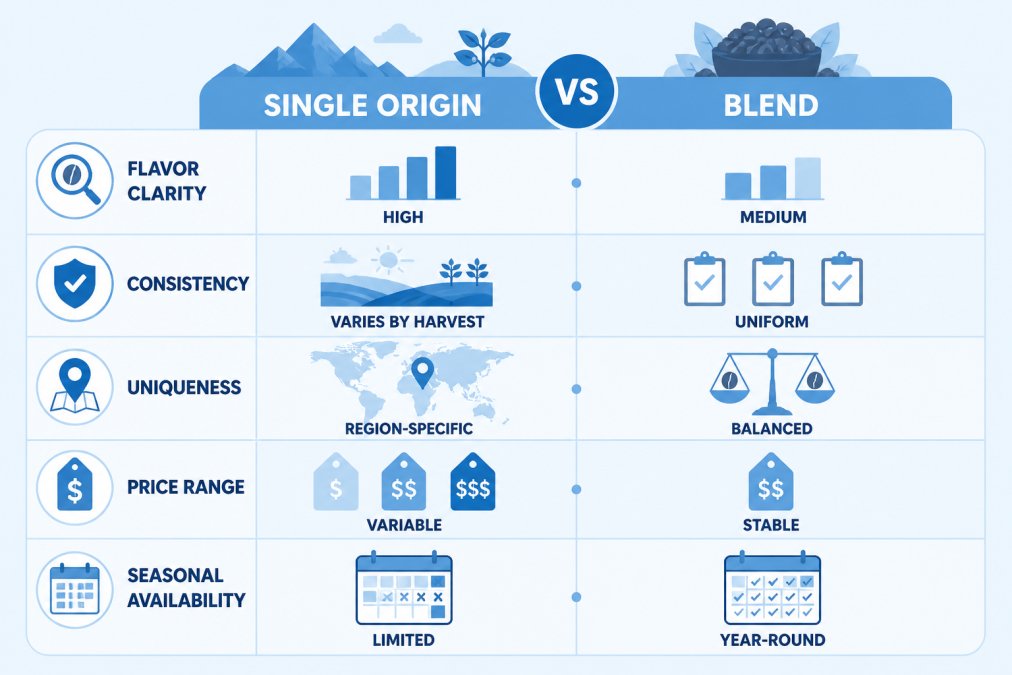
Characteristic |
Single Origin |
Blend |
|---|---|---|
Flavor Profile |
Terroir-driven, unique to region |
Balanced, consistent |
Acidity |
Varies by origin |
Controlled |
Body |
Depends on processing |
Medium, predictable |
Consistency |
Changes seasonally |
Uniform batch to batch |
Traceability |
High (specific farm/region) |
Lower (multiple sources) |
Best For |
Flavor exploration, pour-over |
Everyday brewing, versatility |
What Makes Single Origin Coffee Unique
Single origin coffee carries the signature of place. When you brew a single origin, you're tasting the altitude where the beans grew, the soil type, the rainfall that season, and the processing choices the farmer made. This is terroir, the complete environmental fingerprint that shapes flavor.
Terroir and Flavor Clarity
Terroir creates flavor clarity that blends cannot replicate. A single origin from the volcanic loam soils of Guatemala tastes different from one grown in clay minerals at lower altitude in Mexico. The Guatemala shows dark chocolate and bright fruit; the Mexico expresses chocolate, cinnamon, and green apple notes. These aren't random, they're the direct result of where the beans grew and how they were processed.
The fully washed and sun-dried process used for Guatemala's Antigua region preserves those bright fruit notes. Mexico's washed and sun-dried beans in Chiapas and Oaxaca develop their cinnamon and green apple character through the same method applied to different terroir. When you brew single origin, you're tasting these specific combinations.
Single origin coffee demands precision. The flavor complexity means brewing conditions matter more. Pour-over, French press, and espresso all extract differently from single origin beans. The acidity and body change based on water temperature, grind size, and contact time.
Traceability and Sourcing
You know exactly where your single origin came from. The bag tells you the region, altitude, varietal, and often the processing method. This transparency matters for several reasons: you understand what you're buying, you support specific farming communities, and you can replicate the experience when you reorder.
Understanding Coffee Blends and Why Roasters Create Them
Blends exist to solve a problem: consistency. A single origin's flavor changes with each harvest. The 2024 Guatemala might taste brighter than the 2025 harvest if rainfall patterns shifted. For businesses serving hundreds of cups daily, this variation is unacceptable. Blends lock in a target flavor profile year-round by combining origins strategically.
Balance, Consistency, and Complexity
Roasters blend to create balance. The House Blend from Brewtiful Coffee US combines coffees from Central and South America into a smooth, clean cup with medium body. The blend includes both natural/dry processed and wet mill washed/sun-dried coffees, different processing methods that, together, create nutty and sweet chocolate notes with mild citrus and a clean bright finish.
Flavor Profiles: How Single Origin and Blends Differ
Acidity, Body, and Mouthfeel
Single origin coffees express acidity more prominently. The Colombia from Medellin has bright acidity that comes through as dried orange and berry notes. This acidity isn't sharp or unpleasant, it's the sensation of complexity on your palate. The higher altitude (1,300-1,500 meters) and volcanic loam soil create these characteristics.
Aroma and Tasting Notes
Aroma is the first signal of what's inside the cup. Single origin beans announce their origin immediately. The Colombia's dried orange and berry aroma tells you this coffee grew in specific conditions. The Guatemala's dark chocolate and butterscotch aroma is unmistakable.
Best Single Origin Coffee Beans for Pour Over Brewing
Pour-over brewing suits single origin coffee because the brewing method emphasizes flavor clarity. Hot water contacts the grounds slowly, extracting delicate notes that espresso machines might miss or drown out.
Why Pour Over Suits Single Origin
Pour-over gives you control. Water temperature, pour speed, grind size, and brew time are all adjustable. This control lets you explore how single origin beans express themselves. A slightly hotter pour brings out acidity; a slower pour extracts more body.
Top Single Origin Selections
The Guatemala from Brewtiful Coffee US ($22.99) is ideal for pour-over. The fully washed and sun-dried process creates clarity. You taste dark chocolate, bright fruit, and butterscotch distinctly. The medium roast preserves the origin's characteristics without over-roasting.
Wholesale Coffee for Business: Single Origin vs Blend Considerations
Small businesses, corporate clients, and organizations building employee kitchen benefits face a different decision than home brewers. The wholesale link for bulk coffee ordering allows businesses to stock pantries affordably while maintaining quality.
Consistency and Employee Satisfaction
Blends win for employee kitchens because consistency matters more than novelty. Staff expect their morning coffee to taste the same every day. Rotating single origins, even excellent ones, creates variation that feels unpredictable. The House Blend or Breakfast Blend from Brewtiful Coffee US delivers the same experience daily, which is what most employees want from a pantry coffee.
Cost, Availability, and Seasonal Factors
Single origins fluctuate in availability and price based on harvest seasons. Guatemala's harvest differs from Colombia's, which differs from Mexico's. If you commit to rotating single origins, you need flexibility in your sourcing.
Brewing Method Matters: Which Type Works Best Where
Single Origin for Precision Brewing
Single origin coffee rewards precision. Pour-over, AeroPress, and Moka pot brewing methods give you the control to extract the best from single origin beans. Espresso machines work too, but they demand more skill to dial in the grind and pressure correctly.
Blends for Versatility
Blends work across all brewing methods because they're engineered for consistency. The House Blend tastes good in a pour-over, French press, espresso machine, or cold brew. You don't need to adjust your technique, the blend adapts to your method.
How to Choose: Single Origin or Blend for Your Palate
Choose single origin if you enjoy exploring flavor and you have time to experiment with brewing variables. You'll taste the difference between origins. Guatemala tastes distinctly different from Colombia or Mexico. The terroir matters, and you'll notice it.
Frequently Asked Questions
What are the primary flavor differences between single origin and blended coffee?
Single origin coffees deliver distinct, identifiable flavor notes shaped by their specific terroir—the region's altitude, soil, climate, and processing method. For example, our Colombia single origin offers dried orange, berry, and chocolate notes from its volcanic loam soil and washed process. Blends combine beans from multiple origins to create balance and complexity. Our House Blend merges Central and South American coffees for nutty, sweet chocolate, and mild citrus notes with a clean finish. Single origins highlight uniqueness; blends prioritize harmony and consistency across each cup.
Is single origin coffee always higher quality than a blend?
No. Quality depends on sourcing, roasting, and your brewing preference, not the category. A well-crafted blend from quality beans can match or exceed a poorly processed single origin. Blends offer roasters the chance to balance acidity, body, and flavor complexity intentionally. Single origins showcase the distinctive character of a specific region and harvest. Both approaches require skill. The difference is what you value: unique terroir expression or curated balance. Your choice should match your brewing method and taste preferences, not assumed hierarchy.
Are single origin beans better for pour-over brewing?
Single origin beans excel with pour-over because the brewing method's precision extracts subtle flavor notes and clarity that define the origin's character. Pour-over's slower extraction and water control highlight the bean's acidity, body, and distinct tasting profile. Single origins like our Guatemala, with its dark chocolate and bright fruit notes, or Mexico, with chocolate and cinnamon complexity, shine when brewed this way. Blends work fine in pour-over too, but they're formulated for consistency across brewing methods. If you want to explore terroir and flavor nuance, single origin with pour-over is the ideal pairing.
Why do roasters choose to create coffee blends?
Roasters blend coffees to achieve balance, consistency, and cost efficiency. Single origins vary by harvest season and weather, so blending smooths these fluctuations—ensuring your morning cup tastes the same year-round. Blends also let roasters combine complementary flavor notes: a bright, acidic bean balanced with a smooth, full-bodied one creates complexity that neither alone provides. For businesses and corporate pantries, blends offer reliable flavor and availability without seasonal gaps. Our House Blend demonstrates this: it combines beans from multiple origins to deliver consistent smoothness and clean flavor every brew.
What should corporate offices look for when selecting wholesale coffee for business?
Corporate pantry selections should prioritize consistency, ease of use, and broad appeal. Blends are ideal because they deliver the same flavor profile regardless of season, keeping employees satisfied without surprises. Consider whether your team prefers convenience (pre-ground) or freshness (whole bean). Evaluate brewing equipment on-site: does it support espresso, drip, or French press? Blends work reliably across all methods. Pricing and availability matter too—wholesale options should offer reliable stock without long lead times. If you want to offer variety, pair a signature blend with one or two single origins for adventurous drinkers. Brewtiful Coffee provides wholesale options designed for business needs, ensuring your office coffee ritual stays fresh and satisfying.