

7 Best Loose Leaf Tea for Morning Energy Kick 2026
Table of Contents
- Quick Comparison: Top Loose Leaf Teas for Morning Energy
- 1. English Breakfast: The Classic High-Energy Black Tea
- 2. Masala Chai: Spiced Energy with Sustained Focus
- 3. Matcha: Caffeine Content and L-Theanine Synergy for Smooth Alertness
- How to Brew Loose Leaf Tea for Maximum Energy
- Caffeine Content in Loose Leaf Tea: What You Need to Know
- Benefits of Loose Leaf Tea vs Tea Bags for Morning Energy
- Conclusion
- Frequently Asked Questions
Last Updated: September 4, 2026
The right loose leaf tea can replace the mid-morning crash with steady, focused energy that lasts for hours. Unlike the sharp spike and sudden drop of coffee, quality whole-leaf tea delivers caffeine alongside natural compounds that smooth out the curve. This guide from Brewtiful Coffee US ranks the 7 best loose leaf tea for morning energy kick 2026 options, with exact brew specs and honest tradeoffs for each pick.
Most guides tell you to just drink green tea and hope for the best. That misses the real story: the difference between a jittery morning and a calm, productive one comes down to oxidation levels, amino acid content, and how you brew. Caffeine content in loose leaf tea varies wildly, from gentle roasted greens to strong black blends, and choosing wrong means either no lift at all or the same anxiety you tried to escape from coffee.
Below, we break down each tea's caffeine profile, flavor, and ideal brewing method, then cover the technical details of water temperature and steeping time that most articles skip. You will also learn why loose leaf outperforms tea bags for both taste and energy, and how to avoid the common brewing mistakes that ruin a promising cup.
Quick Comparison: Top Loose Leaf Teas for Morning Energy
A quick-reference table helps you compare the leading options before reading the detailed reviews. Each tea below is graded on caffeine strength, flavor profile, and the quality of energy it provides.
Tea |
Caffeine Level |
Flavor Profile |
Best For |
Price |
|---|---|---|---|---|
High |
Malty, fruity, sweet |
Classic strong start |
$17.99 |
|
High |
Spiced, malty, bold |
Sustained focus with milk |
$17.99 |
|
Medium-High |
Creamy, buttery umami |
Smooth, jitter-free alertness |
$22.00 |
|
Moroccan Mint |
Medium |
Mint, sweet, earthy |
Refreshing midday lift |
$17.00 |
Jasmine |
Medium |
Floral, vegetal, sweet |
Gentle focus, multiple infusions |
$17.99 |
Mango Treat |
Medium |
Fruity, sweet, bright |
Iced or hot summer energy |
$17.99 |
Peach Paradise |
Medium |
Fruity, sweet, spicy |
Smooth afternoon pick-me-up |
$17.99 |
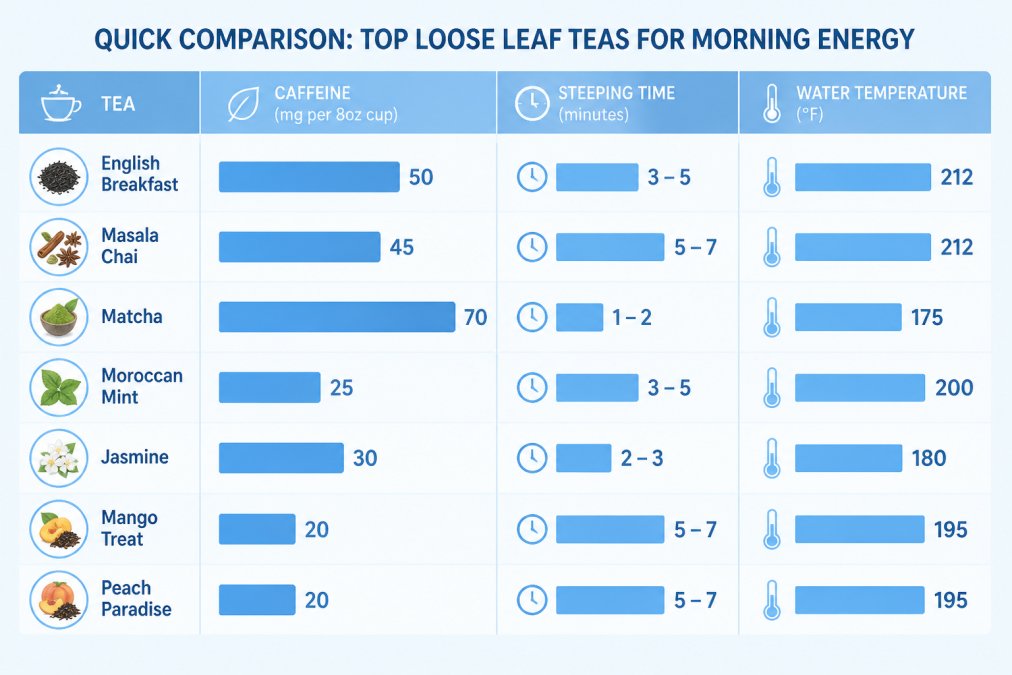
The standout difference between these teas is the type of energy they deliver. Black teas like English Breakfast and Masala Chai hit fast and hard, similar to coffee but with less edge. Green teas like Matcha and Moroccan Mint release more gradually, pairing caffeine with L-theanine for what many drinkers describe as a calm, clear-headed focus rather than a nervous buzz.

1. English Breakfast: The Classic High-Energy Black Tea
English Breakfast is the strongest morning starter in the loose leaf lineup, blending Assam TGFOP, Ceylon OP, and 2nd Flush Darjeeling for a malty, fruity, naturally sweet cup. The high oxidation level of these black teas produces more caffeine than green or white varieties, making this the closest tea equivalent to a standard cup of coffee.
The Brewtiful Coffee US version scores high on astringency with medium body and sweetness, which means it stands up beautifully to milk and sugar without turning bitter. For the best energy extraction, brew at 195°F for 5 to 7 minutes using 2.5 grams per 12 ounces of water. Longer steeping pulls more caffeine from the leaves, so if you need a stronger kick, lean toward the 7-minute mark.

This tea works best for drinkers who want a direct coffee replacement with a familiar, strong character. It pairs naturally with a hearty breakfast, and the caffeine content in loose leaf tea at this oxidation level provides a reliable morning lift without the stomach irritation some coffee drinkers experience.
2. Masala Chai: Spiced Energy with Sustained Focus
Masala Chai delivers a double benefit: the caffeine of organic Assam black tea combined with warming spices that aid digestion and slow caffeine absorption. The blend of organic cloves, ginger, cardamom, black pepper, and star anise creates a complex, fragrant cup that energizes without the sharp edge of plain black tea.

The spice profile does more than add flavor. Ginger and black pepper promote circulation, while the ritual of brewing chai with milk and sugar creates a slower, more mindful consumption pattern than gulping down coffee (the NIH). Many drinkers report that the fat in milk helps moderate the caffeine release, extending the energy window across the morning.
Brew this tea at 195°F for 5 to 7 minutes using 2.5 grams per 12 ounces. For an authentic preparation, simmer the leaves directly in a mixture of milk and water for 5 minutes, then strain. The high body and high astringency scores mean this tea holds its own against sweetener and dairy, making it a natural fit for anyone who finds plain tea too thin.
3. Matcha: Caffeine Content and L-Theanine Synergy for Smooth Alertness
Matcha is the only tea on this list where you consume the entire leaf, making it the most concentrated source of caffeine, L-theanine, and antioxidants like catechins. This ceremonial-grade matcha from the Matsushita Tea Garden in Kakegawa City, Japan, is stone-milled from Saemidori and Tsuyuhikari varieties harvested in spring, producing a fine, vivid green powder with silky, creamy texture and rich buttery umami.
The caffeine content in loose leaf tea powder form is unique because you ingest everything. A single gram of matcha whisked into 8 ounces of water delivers a focused dose of caffeine alongside L-theanine, an amino acid that promotes relaxation without drowsiness (peer-reviewed research). This combination is why matcha drinkers describe a calm alertness rather than the anxious stimulation coffee can trigger.
Whisk 1 gram of matcha into 8 ounces of water at 175°F. Do not use boiling water, which scorches the delicate powder and produces a bitter, harsh cup. The traditional bamboo whisk creates the frothy texture that integrates the powder fully, but a small milk frother works in a pinch.
Brewing Aspect |
English Breakfast |
Masala Chai |
Matcha |
|---|---|---|---|
Water Temperature |
195°F |
195°F |
175°F |
Steeping Time |
5-7 minutes |
5-7 minutes |
Whisk immediately |
Leaf Dose |
2.5g per 12oz |
2.5g per 12oz |
1g per 8oz |
Caffeine Release |
Fast, strong |
Moderate, extended |
Smooth, sustained |
How to Brew Loose Leaf Tea for Maximum Energy
Brewing loose leaf tea for maximum energy requires precise control of three variables: water temperature, steeping time, and leaf quantity. Getting these right separates a vibrant, energizing cup from a flat, bitter disappointment.
Water temperature directly affects caffeine extraction. Black teas need 195°F to 212°F to release their full caffeine content, while green teas perform best at 175°F, which preserves both L-theanine and the delicate polyphenols that contribute to smooth energy (peer-reviewed research). Boiling water on green tea destroys these compounds and extracts bitter tannins instead.
Steeping time is the second lever. Caffeine extracts quickly in the first few minutes, while tannins follow later. For black teas, 5 to 7 minutes balances caffeine yield against bitterness. For green teas, 3 to 4 minutes captures the energizing compounds without over-extracting astringent flavors.
Leaf quality matters more than any brewing variable. Full-leaf teas have more surface area intact, which controls the rate of extraction and allows multiple infusions. Broken leaves and dust, common in tea bags, release everything at once, producing a one-dimensional, often bitter cup with less complexity.
Caffeine Content in Loose Leaf Tea: What You Need to Know
Caffeine content in loose leaf tea depends primarily on oxidation levels, leaf grade, and harvest season, not on the type of tea plant itself. Black teas undergo full oxidation, which concentrates caffeine and produces the boldest energy kick. Green teas are minimally oxidized, retaining more L-theanine and antioxidants but delivering a gentler lift.
The oxidation levels also shape the flavor profile and how the caffeine hits your system. Highly oxidized black teas like English Breakfast and Masala Chai provide immediate, strong energy. Partially oxidized oolongs and unoxidized green teas like Matcha and Moroccan Mint release caffeine more gradually, aided by the calming influence of L-theanine.
Tea grade influences caffeine content as well. TGFOP (Tippy Golden Flowery Orange Pekoe) and other whole-leaf grades contain the tips and young leaves where caffeine concentrates. The 2nd Flush Darjeeling in Brewtiful's English Breakfast is harvested later in the season, producing a more mature leaf with a distinct muscatel character and steady energy profile.
Benefits of Loose Leaf Tea vs Tea Bags for Morning Energy
Loose leaf tea consistently outperforms tea bags for morning energy because of leaf quality, brewing control, and the preservation of beneficial compounds. Tea bags typically contain fannings and dust, the leftover particles from processing, which oxidize and lose potency faster than whole leaves.
The practical difference is measurable. Full leaves expand during steeping, allowing water to circulate and extract flavor and caffeine evenly. Fannings in tea bags present a high surface area that extracts rapidly, often producing a bitter, one-dimensional cup that lacks the smooth energy of properly brewed loose leaf.
Steeping vessel choice also affects results. A mesh infuser or teapot gives leaves room to expand, while cramped tea bags restrict water flow. The brew quality difference shows up in the cup: loose leaf tea tastes cleaner, more complex, and delivers a steadier energy curve without the harsh tannin bite of over-extracted bag tea.
For drinkers seeking a specific energy profile, loose leaf offers options that tea bags rarely match. A high-caffeine black tea like English Breakfast replaces coffee directly. A spiced blend like Masala Chai extends energy with digestive support. A ceremonial matcha provides smooth, jitter-free alertness. Each option requires only a few minutes of active brewing and delivers a dramatically better morning ritual than tearing open a bag.
Conclusion
Choosing the right morning tea comes down to matching the caffeine profile and flavor to your routine, then brewing it with precision. English Breakfast delivers the strongest, most direct kick. Masala Chai adds spice and sustained focus. Matcha offers the smoothest, most balanced alertness through caffeine and L-theanine synergy.
At Brewtiful Coffee US, we source premium loose leaf teas with exact brewing specifications so you can replicate cafe quality at home without guesswork. Our English Breakfast, Masala Chai, and ceremonial Matcha are fresh, full-leaf, and ready to ship nationwide. Get started with Brewtiful Coffee US and upgrade your morning ritual today.
Frequently Asked Questions
What is the best loose leaf tea for morning energy?
Black teas like English Breakfast and Masala Chai deliver high caffeine content. For sustained energy without jitters, matcha combines caffeine with L-theanine, which promotes calm alertness. Green teas offer moderate caffeine with antioxidants that support mental clarity throughout the morning.
How much caffeine is in a typical cup of loose leaf tea compared to coffee?
A cup of loose leaf black tea contains caffeine, while green tea has a moderate amount. Coffee typically has 95-200mg per 8oz. Loose leaf tea provides a gentler caffeine boost because the L-theanine in tea leaves slows caffeine absorption, creating sustained energy without the sharp spike or crash you get from coffee.
Does loose leaf tea provide more energy than tea bags?
Yes. Loose leaf tea delivers more caffeine and flavor because whole leaves release their full polyphenol content during steeping. Tea bags contain broken leaves and dust, which extract faster but produce weaker flavor and lower caffeine per cup. Proper brewing of loose leaf tea at the right temperature and time maximizes both energy and taste.
How do I avoid tea jitters in the morning?
Choose teas with L-theanine (matcha, green tea) or pair your tea with food to slow caffeine absorption. Brew at the correct temperature—lower temperatures (175°F for green tea) reduce tannin extraction, which can cause jitters. Avoid over-steeping; stick to recommended times like 3-4 minutes for green tea and 5-7 minutes for black tea.