

Best Alternatives to Expensive Espresso Machines
Last Updated: October 22, 2026
Quick Summary
The best alternatives to expensive espresso machines are moka pots, AeroPress, instant coffee, and pod systems, which deliver café-quality results for $25-$150 upfront and save $2,000-$2,600 over five years compared to a prosumer espresso machine. Pair any method with fresh specialty beans and a burr grinder to close the quality gap without the maintenance burden or learning curve.
- A moka pot ($25-$40) or AeroPress ($30-$40) produces concentrated coffee suitable for lattes and espresso-style drinks with minimal maintenance.
- Five-year total cost for a moka pot or AeroPress is roughly $1,045-$1,425 versus $3,400-$4,070 for a $2,000 espresso machine, including beans and maintenance.
- Pod systems cost $0.95-$1.90 per cup but eliminate skill barriers and cleanup time, making them ideal for offices and corporate pantries brewing 20+ cups daily.
- Bean quality matters more than equipment; specialty whole beans at $0.55-$0.75 per cup paired with a $100-$150 burr grinder outperform expensive machines fed stale pre-ground coffee.
- Moka pots require no electricity, work on any heat source, and last decades with only a $5-$8 gasket replacement every year or two.
Table of Contents
- Why Expensive Espresso Machines Aren't Your Only Option
- Moka Pot vs Espresso Machine: What You Actually Get
- AeroPress Espresso-Style Coffee: Simplicity Meets Quality
- Coffee for Lattes Without an Espresso Machine
- Instant Coffee and Pod Systems: Convenience at Scale
- Total Cost of Ownership: The Real Savings
- How to Choose Your Alternative Brewing Method
- Frequently Asked Questions
Why Expensive Espresso Machines Aren't Your Only Option
Not everyone needs a $2,000 espresso machine to enjoy café-quality coffee at home. Many of the best alternatives to expensive espresso machines deliver exceptional flavor, control, and satisfaction for a fraction of the cost. At Brewtiful Coffee US, we believe that the machine matters far less than the beans themselves.
A premium coffee bean brewed with a simple method beats mediocre beans pulled through an expensive machine every time. This guide breaks down the most practical alternatives to expensive espresso machines, showing how to get café-quality results without the investment, counter space, or learning curve.
Moka Pot vs Espresso Machine: What You Actually Get
A moka pot brews strong, concentrated coffee that mimics espresso in flavor and body, though it's not technically espresso. What matters more is the taste in your cup.
Moka pots force hot water through ground coffee using steam pressure, producing a rich, bold shot that works beautifully in lattes, cappuccinos, and macchiatos. Brewing takes 5-10 minutes, and cleanup is a simple rinse of the three chambers.
The real advantages:
- No electricity required
- Durable stainless steel construction lasts decades
- Works on any heat source: gas, electric, or stovetop
- Produces concentrated coffee suitable for milk-based drinks
- Entry price is typically $20-40 for quality models
The honest limitations:
- You can't control pressure like a true espresso machine
- Grind size and timing require some experimentation
- Steam can scald if you're not careful
- The coffee cools quickly, so serve immediately
For lattes and cappuccinos, a moka pot paired with fresh beans from Brewtiful Coffee US delivers results that satisfy most home brewers. The Specialty Coffee Association recognizes moka pots as legitimate brewing equipment, though not as true espresso machines. If you're making milk-based drinks regularly, this method wins on simplicity and reliability.
AeroPress Espresso-Style Coffee: Simplicity Meets Quality
An AeroPress produces coffee that's smoother and cleaner than a moka pot, though less syrupy than true espresso.
The AeroPress uses air pressure and immersion brewing to extract coffee in 60-90 seconds: add ground coffee, pour hot water, stir, then press with steady pressure. The result is a concentrated, flavorful cup with minimal bitterness.
Why home brewers choose AeroPress:
- Produces espresso-style shots with rich body and balanced flavor
- Brews in under two minutes from start to finish
- Incredibly forgiving, hard to brew badly
- Costs $30-40 and lasts for years
- Lightweight and portable (ideal for travel or small kitchens)
- Produces less sediment than French press methods
The trade-offs to know:
- Requires a grinder for best results (whole beans needed)
- Produces smaller volumes (one or two cups per brew)
- Less intuitive than a moka pot for first-time users
- Pressure control is manual, not mechanical
For single-serve coffee drinkers who value consistency and ease, AeroPress is unbeatable. Pair it with freshly roasted single-origin beans, our Specialty Coffee Association brewing guide notes that AeroPress highlights the nuanced flavors in quality beans better than most methods.
Coffee for Lattes Without an Espresso Machine
Making lattes at home doesn't require an espresso machine, just strong coffee and the ability to froth milk, both achievable without expensive equipment.
A moka pot or AeroPress produces the concentrated coffee base you need. For milk frothing, you have three practical options:
Manual frother (handheld whisk): Costs $10-15, requires 30-60 seconds of vigorous whisking. Works surprisingly well for small volumes.
Electric milk frother: Plug-in models cost $20-50 and froth milk hands-free in about 90 seconds. Heat and froth simultaneously, or froth only.
French press method: Heat milk in a saucepan, pour into a French press, and pump the plunger 20-30 times. Creates decent foam for under $30 total investment.
A moka pot ($30) plus an electric frother ($35) costs less than many single-serve espresso machines, and you'll make better lattes than most café chains because you control milk temperature and coffee strength.
Our Blonde roast works beautifully in milk-based drinks, it's a sweet blend from Central America and Africa designed specifically for espresso-style brewing. The richness cuts through steamed milk without bitterness.

Instant Coffee and Pod Systems: Convenience at Scale
If speed and consistency matter more than ritual, instant coffee and pod systems deserve consideration.
Instant coffee dissolves in hot water in seconds. Our National Coffee Association brewing standards confirms that instant coffee is real coffee, just dehydrated.
Instant coffee shines for:
- Busy mornings when you have 30 seconds
- Travel and camping
- Offices and break rooms
- Situations where equipment isn't available
Pod systems (K-cups and compatible) brew individual cups in 60-90 seconds, consistent, zero skill, acceptable coffee. The trade-off is environmental waste and higher per-cup cost.
For small businesses, employee kitchen benefits, and corporate pantry selections, pod systems offer simplicity that staff appreciate. Our Mexico Coffee Pods ($22.99) and Peru Coffee Pods ($22.99) deliver single-origin quality in convenient K-cup format.

Pods cost more per cup than whole beans, but they eliminate barriers to quality coffee, for offices where consistency and ease matter, they're the right choice.
| Brewing Method | Equipment Cost | Per-Cup Cost | Brew Time | Skill Required |
|---|---|---|---|---|
| Moka Pot | $25-40 | $0.30-0.50 | 8-10 min | Moderate |
| AeroPress | $30-40 | $0.25-0.40 | 2 min | Low |
| Instant Coffee | $5-15 | $0.60-0.80 | 1 min | None |
| Pod System | $50-150 | $0.50-0.75 | 2 min | None |
| Espresso Machine | $1,500+ | $0.40-0.60 | 3-5 min | High |
Total Cost of Ownership: The Real Savings
Most buyers fixate on the sticker price and ignore the five-year bill. The real comparison is equipment plus maintenance plus beans, and that math changes the recommendation for almost every household.
Start with maintenance. A prosumer espresso machine in the $1,500-$2,500 range typically needs descaling every 2-3 months ($15-$25 per bottle), a group gasket and shower screen every 6-12 months ($20-$40), and professional service every 12-18 months ($100-$250).
A moka pot has almost no maintenance, the gasket is the only wear item, at $5-$8 every year or two, and a stainless model can last decades. An AeroPress plunger seal lasts 1-3 years ($5-$10 to replace). Pod machines are often subsidized, but pods carry the cost and descaling is still required every 2-3 months.
Beans are the biggest variable, and they cost the same regardless of brew method. A pod system using single-origin pods at $22.99 per box (typically 12-24 pods) lands closer to $0.95-$1.90 per cup. Instant coffee at $0.60-$0.80 per cup sits in the middle, but the quality ceiling is lower.

Here is a five-year total cost comparison for a daily brewer making one cup per day:
| Method | Equipment (5-yr) | Maintenance (5-yr) | Beans (5-yr, 1 cup/day) | Approx. 5-yr Total |
|---|---|---|---|---|
| Espresso machine ($2,000) | $2,000 | $400-$700 | $1,000-$1,370 | $3,400-$4,070 |
| Moka pot ($35) | $35 | $10-$20 | $1,000-$1,370 | $1,045-$1,425 |
| AeroPress ($35) | $35 | $10-$20 | $1,000-$1,370 | $1,045-$1,425 |
| Pod system ($100 + pods) | $100 | $50-$100 | $1,730-$3,470 | $1,880-$3,670 |
| Instant coffee | $10 | $0 | $1,095-$1,460 | $1,105-$1,470 |
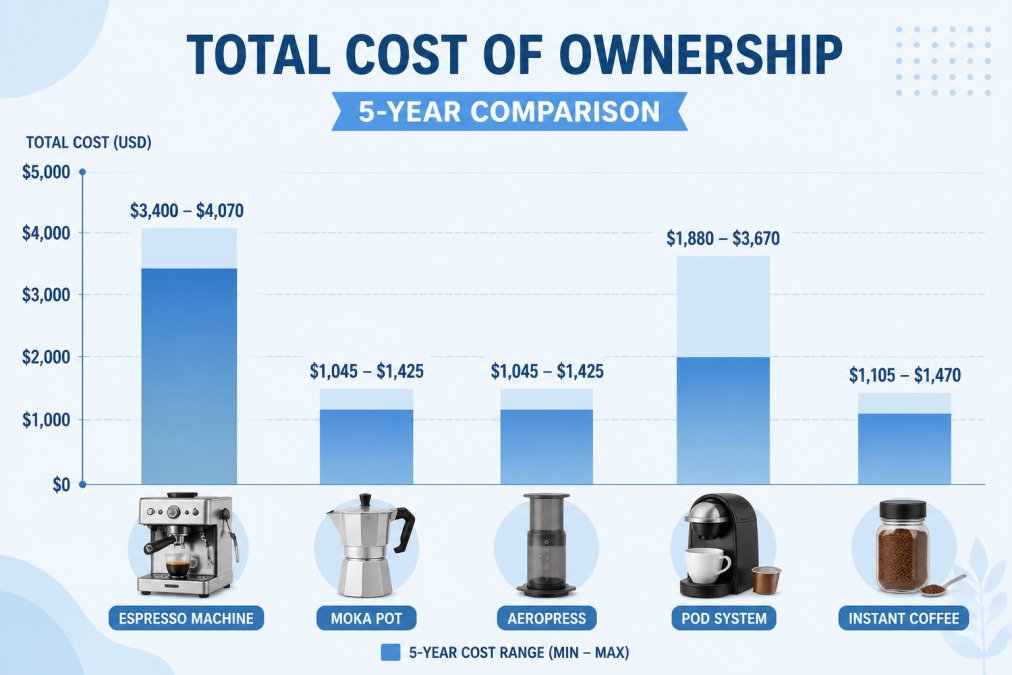
The takeaway isn't that the cheapest option wins, it's that the gap between a $2,000 machine and a $35 moka pot is roughly $2,000-$2,600 over five years for the same daily cup. For small businesses and employee kitchen benefit programs, that delta often funds a year of pantry selections and holiday gift boxes.
One line item competitors rarely mention: water. Espresso machines are sensitive to hardness and require filtered water to avoid scale and off-flavors, adding $30-$60 per year a moka pot owner doesn't pay. A moka pot or AeroPress works fine with most tap water, though filtered water still improves taste.
For offices and corporate pantries, the calculus shifts toward pods and instant because labor and cleanup time have a cost.
How to Choose Your Alternative Brewing Method
The right method depends on four variables: budget, daily routine, the drinks you actually order, and how many people you brew for. Use this framework before you buy anything.
Step 2: Match the method to your household size. One person, one cup: AeroPress or instant. Two people: moka pot (3- or 6-cup) or pod system.
Step 3: Match the method to your skill and patience. Zero learning curve: instant or pods. A forgiving 10-minute ritual: moka pot. Experimenting with grind, dose, and steep time: AeroPress.
Step 4: Match the method to your counter space. A moka pot and AeroPress store in a cabinet. A pod system needs 6-12 inches of counter width plus lid clearance.
Here is the decision tree in plain terms:
- Straight shots, small budget, willing to learn: moka pot ($25-$40) plus a burr grinder.
- Straight shots, small budget, minimal effort: AeroPress ($30-$40) plus pre-ground or a budget grinder.
- Milk drinks daily, one or two people: moka pot plus electric frother ($20-$50).
- Milk drinks daily, office or family: pod system plus a frother; accept the higher per-cup cost for consistency.
- Occasional use, travel, camping: AeroPress or instant.
- Multiple daily espresso drinks, willing to maintain equipment: espresso machine, with $400-$700 budgeted for five-year maintenance.
For wholesale buyers outfitting a small business, employee kitchen, or corporate pantry, the decision tree collapses to two questions: how many cups per day, and who cleans up? Above roughly 20 cups per day, a pod system or batch brewer is the practical choice. Below that, a moka pot or AeroPress plus a quality grinder keeps costs low and quality high. Holiday gift ideas follow the same logic: a curated moka pot or AeroPress bundle with specialty beans costs a fraction of a machine gift and gets used more often.
Wholesale coffee programs make the bean side of this decision easy, volume pricing on specialty coffee beans and pods lets an office standardize on one quality bean across moka pots, AeroPresses, and pod machines without renegotiating suppliers.
Frequently Asked Questions
Can you make espresso without an espresso machine?
Yes. A moka pot produces concentrated coffee similar to espresso, though without the pressure-driven extraction. An AeroPress creates rich, full-bodied shots. Neither delivers true espresso's signature crema, but both brew strong, flavorful coffee suitable for lattes and straight shots. For alternatives to expensive espresso machines, these methods deliver café-quality results at a fraction of the cost.
What's the difference between a moka pot vs espresso machine?
A moka pot uses steam pressure to force hot water through ground coffee, costing $20-$50. An espresso machine uses electric pumps for 9 bars of pressure, costing $300-$3,000+. Moka pots brew slower and produce less crema, but deliver bold, concentrated shots perfect for lattes. Espresso machines offer faster extraction and more control, but require significant investment and maintenance.
How do I make lattes without an espresso machine?
Use strong brewed coffee from an AeroPress, moka pot, or French press as your base, then add steamed or frothed milk. A handheld milk frother ($15-$30) creates microfoam without a steam wand. Pod systems and instant coffee also work well for milk-based drinks. Brewtiful Coffee's specialty blends like African Espresso ($22.99) and Italian Roast ($22.99) are designed to pair beautifully with milk.
Why should I pay more for specialty coffee beans if I'm not using an espresso machine?
Specialty beans shine in any brewing method. Fresh-roasted, single-origin beans deliver cleaner flavor, better aroma, and less bitterness than commodity coffee, regardless of equipment. Cheaper beans often taste flat or sour when brewed at home. Quality beans from Brewtiful Coffee work across moka pots, AeroPress, French press, and pod systems, making them a smart investment for any alternative brewing method.