

Pour Over Coffee Filters: Alternatives That Work
Table of Contents
- Why Coffee Drinkers Switch From Paper Filters
- Metal Coffee Filter vs Paper: What Changes in Your Cup
- Cloth Filters for Pour Over Coffee
- How to Make Coffee Without a Filter: Emergency and Intentional Methods
- Brewing Adjustments for Non-Paper Filter Methods
- Environmental and Health Considerations
- Conclusion
- Frequently Asked Questions
Last Updated: September 19, 2026
Why Coffee Drinkers Switch From Paper Filters
Pour over coffee filters made from paper dominate the market but absorb coffee oils that carry flavor, leaving a thinner cup. They're single-use waste, and some detect a subtle paper taste, especially with cheaper filters.
Switching filters means understanding what each type does to your coffee and choosing based on your priorities: richer mouthfeel, less waste, or convenience.
The beans matter most, but filter choice shapes how those flavors land in your cup.
Metal Coffee Filter vs Paper: What Changes in Your Cup
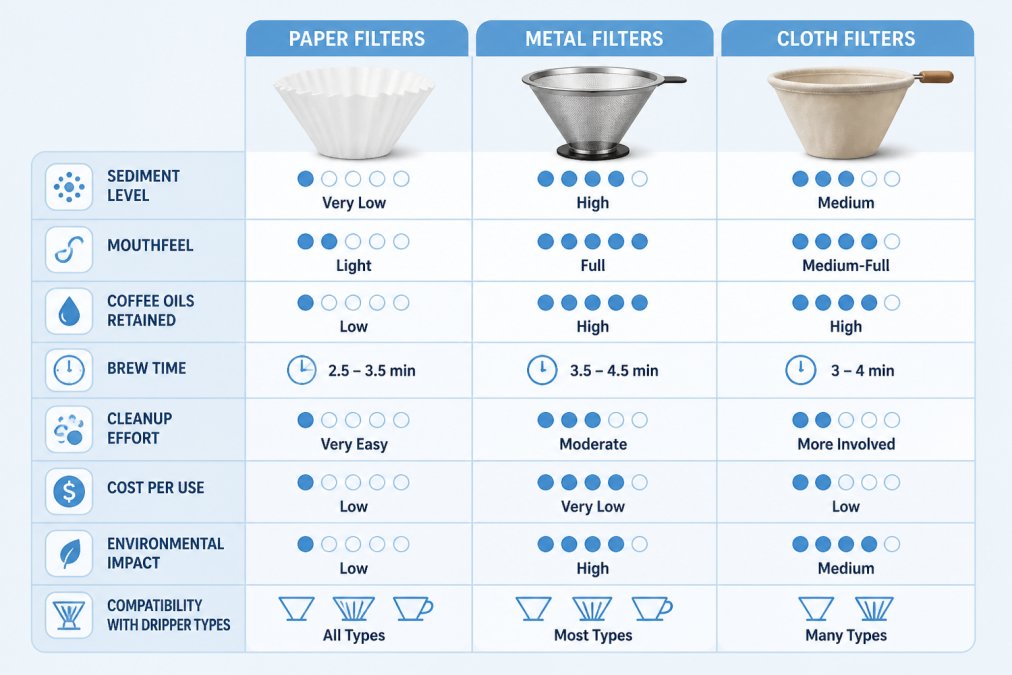
A metal coffee filter retains the coffee oils and micro-fines that paper absorbs, creating noticeably fuller body and richer mouthfeel.
How Filter Material Affects Extraction and Mouthfeel
Metal filters use a mesh screen (typically stainless steel with 100-150 micron openings) that lets more natural compounds through:
- Coffee oils (lipids): These carry flavor compounds and contribute to body and richness. Paper filters trap 75-90% of oils; metal filters let 95%+ pass through.
- Micro-fines: Particles smaller than 10 microns that add texture and perceived sweetness. Paper filters remove most micro-fines; metal filters let them through, creating a heavier mouthfeel.
- Diterpenes: Compounds in coffee oils linked to cholesterol effects in some individuals (discussed in the health section below).
The result is deeper, more complex notes with more sediment and heavier texture, preferred by some, unpleasant to others.
Paper filters trap oils and fine particles, delivering a cleaner, brighter cup that lets delicate floral or fruity notes shine through.
Brewing Technique Adjustments for Metal Filters
Metal filters require grind and brew time adjustments to avoid over-extraction and bitterness.
Grind size: Start one notch coarser than for paper (medium instead of medium-fine). Finer grinds can clog the mesh.
Brew time: Aim for 3-4 minutes total contact time. Under 3 minutes yields thin or sour coffee; over 4.5 minutes tastes bitter. Adjust pour rate or grind size accordingly.
Water temperature: 195-205°F, same as paper. Filter type doesn't change this.
Pros of Metal Filters
- Fuller body and richer mouthfeel from retained oils and micro-fines
- Reusable; no ongoing waste or cost per brew
- No paper taste
- Durable; a quality stainless steel filter lasts 5+ years
- Lets you taste the full flavor profile of specialty beans
Cons of Metal Filters
- More sediment in your cup (fine coffee particles, not harmful but texturally different)
- Requires technique adjustment (grind size and brew time)
- Harder to clean than paper; oils can build up and turn rancid if not rinsed promptly
- Can clog with very fine grinds or if not cleaned between brews
- Allows diterpenes through, which some people with cholesterol concerns may want to limit
Cloth Filters for Pour Over Coffee
Cloth filters occupy the middle ground between paper and metal, offering reusability with clarity closer to paper and richness closer to metal.
Cloth filters (often called coffee socks) weave cotton or linen tight enough to catch fine particles but loose enough to let oils through, creating a cup cleaner than metal but fuller than paper.
Cloth filters must stay wet between brews or they become hydrophobic. Store damp filters in a refrigerated container.
How to Clean Cloth Coffee Filters Between Brews
Rinse your cloth filter immediately after brewing while it's still warm. Hot water removes oils and grounds more effectively than cold. Gently rub the filter under running water, working both sides.
For deeper cleaning, soak the filter in hot water for 15 minutes every few brews. This prevents oil buildup that can turn rancid and affect flavor. Some brewers use a tiny drop of unscented dish soap, rinsing thoroughly afterward.
Store your damp cloth filter in a small glass or container in the refrigerator. The cold slows any mold or bacterial growth. Replace your cloth filter every 6-12 months depending on use. Even well-maintained cloth eventually develops micro-tears or odors that affect taste.
Pros of cloth filters:
- Reusable and sustainable
- Fuller body than paper
- Cleaner cup than metal
- Affordable; typically $5-15
Cons of cloth filters:
- Must stay wet between brews
- Requires regular deep cleaning
- Can retain odors over time
- Shorter lifespan than metal
How to Make Coffee Without a Filter: Emergency and Intentional Methods
Sometimes you run out of filters, or you're curious about unfiltered brewing. Both are valid reasons to explore filter-free methods. However, not all household substitutes are equally safe or effective. Understanding the trade-offs, both for cup quality and for your health, helps you make an informed choice.
Paper Towels as a Temporary Substitute: Safety Considerations
A paper towel works in a pinch if you fold it carefully. Fold a single sheet into quarters and fit it into your dripper, pressing gently so it stays in place. Rinse it with hot water before brewing; this removes loose fibers and helps it settle.
Why this matters for safety: Most commercial paper towels are bleached with chlorine-based compounds to achieve whiteness. While the bleaching process is regulated and residual bleach levels are considered safe for food contact by the FDA, some people prefer to avoid even trace chemical exposure. Additionally, some paper towels contain dyes or optical brighteners (fluorescent compounds added to make paper appear whiter) that are not designed for prolonged hot-water contact.
If you use a paper towel, choose an unbleached or chlorine-free option if available. These are increasingly common in grocery stores and carry no bleach residue. Rinse the towel thoroughly with hot water before brewing to remove any loose fibers or surface dust.
Brewing adjustments: Paper towels are thicker than coffee filters, so they slow your pour slightly. Water takes longer to pass through. You may need to extend your brew time by 30-60 seconds. The result is closer to a paper-filtered cup than you'd expect, though the texture of the towel can shed fine fibers into your coffee, creating a slightly grainy mouthfeel.
This method works best as a one-time solution, not a regular practice. Paper towels aren't designed for repeated hot-liquid contact and can break down or leave residue over multiple uses.
Cheesecloth and Fine Mesh Options: Sediment and Extraction Trade-offs
Cheesecloth is looser-weave than coffee filters, so it lets through more sediment and oils. Use multiple layers, fold cheesecloth into quarters or eighths, to improve filtration and reduce sediment in your cup.
Fine mesh strainers (typically 100-200 micron openings) work similarly: they catch larger grounds but let micro-fines pass through. Both methods require patience and technique adjustment.
Brewing adjustments: Water flows faster through loose weaves, which can under-extract your coffee if you're not careful. Slow your pour deliberately and extend your brew time by 60-90 seconds to compensate. Aim for a total contact time of 4-5 minutes (longer than standard paper-filtered coffee) to ensure adequate extraction.
The cup you get is closer to metal-filtered coffee: fuller body, visible sediment, more oils, and a heavier mouthfeel.
Cloth Napkins and Kitchen Linens: Not Recommended
While cloth napkins might seem like a logical substitute, most are treated with sizing (starch or synthetic compounds) to maintain crispness and shape. These treatments can leach into hot water and affect both flavor and safety. Additionally, many cloth napkins are dyed and not food-safe. Stick to unbleached, undyed cheesecloth or dedicated cloth coffee filters (discussed in the cloth filters section) if you want a cloth option.
When to Use Emergency Substitutes vs. When to Invest in Reusables
If you use pour over coffee filters daily, a one-time emergency substitute doesn't make financial or practical sense. A metal filter costs $10-25 and lasts years. A cloth filter costs $5-15 and lasts 6-12 months. Both pay for themselves in weeks compared to buying paper filters continuously.
Brewing Adjustments for Non-Paper Filter Methods
Switching filter types means adjusting your technique. The filter material changes how water flows through the grounds and how long extraction takes.
Environmental and Health Considerations
Paper filters create waste. A daily brewer goes through 365 filters per year. Multiplied across millions of home brewers, that's significant landfill impact. Most paper filters are bleached, though unbleached options exist and reduce chemical processing.
Conclusion
The best filter for your pour over coffee depends on what you prioritize: clarity and cleanliness, richness and body, sustainability, or convenience. Paper filters deliver clarity. Metal filters deliver body and zero waste. Cloth filters split the difference.
Frequently Asked Questions
What can I use instead of filter paper for pour over coffee?
Metal mesh filters, cloth coffee socks, fine cheesecloth, and even paper towels work as alternatives to paper filters. Each affects extraction yield and mouthfeel differently. Metal filters allow more coffee oils through, creating a heavier body and richer tasting notes. Cloth filters offer a middle ground between paper and metal, trapping some oils while letting micro-fines pass. Paper towels work in a pinch but may impart a slight taste if not rinsed thoroughly. The best choice depends on your dripper type and flavor preference.
Do metal coffee filters vs paper filters change the taste of pour over coffee?
Yes, significantly. Paper filters trap most coffee oils and micro-fines, producing a cleaner, brighter cup with clarity and lighter body. Metal mesh filters allow coffee oils and fine particles through, resulting in a fuller mouthfeel and bolder flavor with more pronounced tasting notes. This higher concentration of diterpenes (compounds in coffee oils) creates a richer, sometimes slightly oily texture. Your grind size and brew time may need adjustment when switching filter types to maintain proper extraction.
How do I clean cloth coffee filters between brews?
Rinse cloth filters immediately after brewing under hot running water to remove coffee grounds and oils before they dry. For deeper cleaning, soak the filter in hot water for 10-15 minutes, then scrub gently with a soft brush. Store them damp in the refrigerator to prevent mold and odor. Never use soap or bleach, as residue affects flavor. Replace cloth filters every 6-12 months depending on use frequency.
Can I make pour over coffee without any filter at all?
Yes, though results vary. The most practical filterless method is immersion brewing: steep coffee grounds directly in hot water for 4-5 minutes, then pour carefully into your cup, leaving sediment at the bottom. This maximizes extraction and body but produces a gritty mouthfeel from micro-fines. For a cleaner result without a traditional filter, use the paper towel method as a temporary solution, or employ the cowboy coffee technique of settling grounds with a small splash of cold water. Expect higher sediment and adjust your grind size coarser to minimize particles in your cup.