

Best Home Coffee Brewing Methods 2026
Table of Contents
- Best Home Coffee Brewing Methods Compared
- Pour Over Brewing Method
- French Press Techniques
- AeroPress Brewing Guide
- Instant Coffee and K-Cup Pods for Speed
- Coffee Grind Size Chart for Brewing
- How Much Caffeine in a Coffee by Brewing Method
- How to Troubleshoot Bitter Coffee
- Frequently Asked Questions
Last Updated: September 18, 2026
Best Home Coffee Brewing Methods Compared
When it comes to crafting cafe-quality coffee at home, the brewing method you choose matters as much as the beans themselves. At Brewtiful Coffee US, we've spent years helping home brewing enthusiasts dial in their techniques to achieve that perfect cup. The difference between bitter, over-extracted coffee and a smooth, balanced brew often comes down to understanding the fundamentals: water temperature, grind size distribution, brewing time, and the specific extraction method you're using.
The best home coffee brewing methods each have distinct strengths. Some prioritize simplicity and speed. Others demand precision but reward you with exceptional clarity and flavor. Your choice depends on your lifestyle, how much time you want to invest, and what flavor profile you're chasing.
Below, we'll walk you through the most popular methods, compare their pros and cons, and help you troubleshoot common issues that trip up new brewers.
Quick Comparison Table
| Brewing Method | Brew Time | Skill Level | Best For | Cleanup |
|---|---|---|---|---|
| Pour Over | 3-4 minutes | Beginner to intermediate | Clarity and control | Easy |
| French Press | 4 minutes | Beginner | Full body and immersion | Moderate |
| AeroPress | 1-3 minutes | Intermediate | Versatility and speed | Easy |
| K-Cup Pods | 1-2 minutes | Beginner | Convenience and consistency | Minimal |
| Instant Coffee | 1 minute | Beginner | Maximum speed | None |
Pour Over Brewing Method
Pour over is the gold standard for brewers who want control and clarity in every cup. This percolation method lets hot water pass through ground coffee and a paper filter, extracting flavors gradually as the water draws down through the grounds. The result is a clean, bright cup with excellent separation between different flavor notes.

The pour over process starts with a bloom phase. Pour just enough hot water to saturate the grounds, then wait 30-45 seconds. This allows CO2 to escape and ensures even extraction when you add the remaining water. The bloom phase is where many home brewers see the biggest improvement in their final cup.
Water temperature matters significantly here. Aim for 195-205°F for optimal extraction. Too hot, and you'll over-extract and create bitterness. Too cool, and the coffee tastes sour and underdeveloped. A gooseneck kettle gives you the precision pour control that pour over demands, though it's not strictly necessary.
Common pour over mistakes include pouring too fast (which causes channeling and uneven extraction), using water that's too hot, and grinding too fine. If your pour over tastes bitter, coarsen your grind slightly and check your water temperature. If it tastes sour, try a finer grind or hotter water.
French Press Techniques
French press brewing is immersion brewing at its finest. Ground coffee steeps directly in hot water for 4 minutes, then you press down a metal mesh filter to separate the grounds from the liquid. This method extracts more oils and fine particles than paper filters, creating a full-bodied cup with more mouthfeel and sweetness.
The French press rewards consistency and attention to detail. Use coarse grounds to prevent over-extraction and sediment in your cup. If your French press coffee tastes gritty, you're grinding too fine. If it tastes weak, your grind is too coarse or your brew time is too short.
Start with a 1:15 coffee-to-water ratio. For example, 30 grams of coffee to 450 grams of water. Pour your hot water (200-205°F) and stir gently after 30 seconds to ensure all grounds are saturated. Let it steep for 4 minutes, then slowly press down the plunger. Don't rush this step, as a fast plunge can create pressure that forces fine particles into your cup.
French press is ideal for single-origin beans where you want to taste the full body and character. The metal mesh filter allows more of the coffee's natural oils through, which enhances richness. However, this also means French press coffee has a shorter shelf life once brewed. Drink it within 15-20 minutes for the best experience.
AeroPress Brewing Guide
The AeroPress is a hybrid brewing device that combines aspects of immersion and percolation brewing. It uses air pressure to force hot water through finely ground coffee and a paper filter, producing a cup that's clean like pour over but with the body and sweetness of immersion methods. Brew time ranges from 1-3 minutes depending on your technique.
The standard AeroPress method starts with inserting a paper filter into the basket and rinsing it with hot water. Add finely ground coffee (slightly finer than pour over) and pour hot water to saturate the grounds. After a 30-second bloom, stir gently and add the remaining water. At the 1-minute mark, attach the plunger and slowly press down over 20-30 seconds. The entire process takes about 2-3 minutes.
What makes AeroPress special is its versatility. You can adjust grind size, water temperature, brew time, and pressing speed to dial in your preferred flavor. Finer grinds and longer brew times extract more, creating a heavier body. Coarser grinds and faster pressing create a lighter, brighter cup.
The paper filter is crucial to AeroPress brewing. It removes oils and fine particles, delivering exceptional clarity. If you prefer a heavier body with more oils, use a metal mesh filter instead, though this requires slightly coarser grounds to prevent over-extraction.
AeroPress excels at producing consistent, repeatable results. Once you dial in your technique, you can brew the same delicious cup every time. It's also incredibly portable, making it ideal for travel or camping.
Instant Coffee and K-Cup Pods for Speed
When time is your priority, instant coffee and K-cup pods deliver convenience without sacrificing quality. Instant coffee is ground coffee that's been brewed, then freeze-dried or spray-dried to remove water. One or two teaspoons mixed with hot water recreates the brewed coffee experience in seconds.
Brewtiful Coffee US's Instant Coffee offers a smooth, well-balanced profile with cocoa, caramel, and subtle citrus notes. At $21.00 for 3 oz with about 30 servings, it's an economical option for busy mornings. The clean finish means no bitterness, just pure coffee flavor.
K-cup pods offer similar speed with the added benefit of automation.
Coffee Grind Size Chart for Brewing
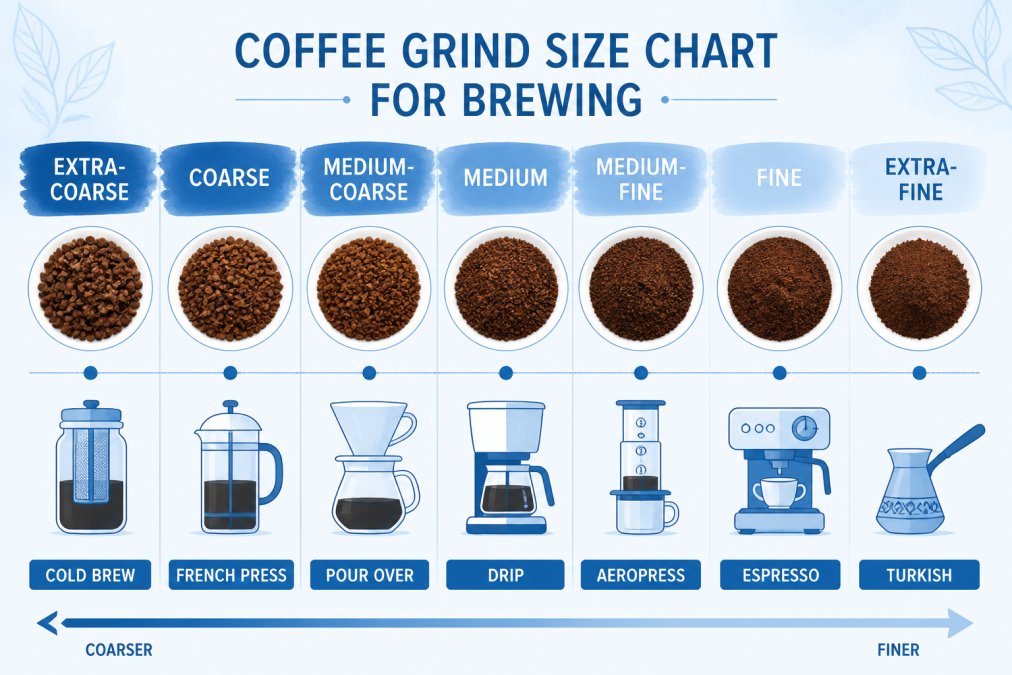
Grind size is one of the most important variables in home coffee brewing. It directly affects extraction rate, which determines whether your coffee tastes sour (under-extracted), balanced, or bitter (over-extracted). The finer your grind, the faster water passes through the grounds and the more extraction occurs.
How Much Caffeine in a Coffee by Brewing Method
Caffeine content varies significantly depending on your brewing method. The longer water contacts the grounds and the hotter the water, the more caffeine extracts into your cup.
How to Troubleshoot Bitter Coffee
Bitter coffee is the most common complaint from home brewers. The culprit is over-extraction, which happens when hot water spends too long pulling compounds from the grounds. The good news: once you understand the cause, the fix is straightforward.
If your coffee tastes bitter:
If your coffee tastes sour:
If your coffee tastes weak:
Frequently Asked Questions
What is the most effective way to brew coffee at home?
The best home coffee brewing method depends on your priorities. Pour over and French press deliver rich flavor through immersion or percolation brewing. AeroPress produces clean, balanced cups with minimal waste. Instant coffee and K-cup pods prioritize speed and consistency. All methods work well when you use fresh beans, proper grind size, the right water temperature (195-205°F), and correct coffee-to-water ratios. The 'best' method is the one you'll use consistently and enjoy most.
How much caffeine in a coffee, and does brewing method affect it?
A standard 8-ounce cup contains 95-200 mg of caffeine depending on the brewing method and bean type. French press and cold brew extract more caffeine due to longer steeping times and immersion brewing. Pour over and AeroPress produce moderate caffeine extraction. Instant coffee typically contains 65-100 mg per serving. Lighter roasts contain slightly more caffeine than dark roasts, though the difference is minimal. Choose your method based on flavor preference rather than caffeine content alone.
How does grind size affect different brewing methods?
Grind size controls extraction yield and flavor. Coarse grinds (cold brew, French press) slow water contact and prevent over-extraction, producing smooth, bold cups. Medium grinds (pour over, AeroPress) balance extraction and clarity. Fine grinds (espresso) maximize surface area for rapid pressure-based extraction. Inconsistent grind size distribution causes channeling and uneven extraction, resulting in bitter or sour notes. A burr grinder produces uniform particle sizes, while blade grinders create inconsistent results. Match your grind to your brewing method for optimal clarity, sweetness, and body.
What causes bitter coffee, and how do I fix it?
Bitter coffee results from over-extraction: too-fine grinds, water that's too hot, or brewing time that's too long. Cold brew and French press require coarse grounds and precise timing. Pour over needs medium grinds and 195-205°F water. If your coffee tastes bitter, coarsen your grind first, reduce brewing time by 15-30 seconds, or lower water temperature slightly. Scale precision matters, use a scale to measure coffee and water accurately. Single-origin beans and fresh-roasted coffee also reduce bitterness by preserving acidity, sweetness, and mouthfeel.
Is manual brewing better than automatic drip coffee makers?
Manual brewing methods like pour over and French press offer more control over extraction variables, water temperature, bloom time, agitation, and draw-down time. This precision produces more consistent, flavorful results and highlights the nuances of single-origin beans. Automatic drip makers prioritize convenience but often lack thermal stability and precise timing. For cafe-quality coffee at home, manual methods win. However, if speed and simplicity matter more, instant coffee or K-cup pods deliver reliable results without fuss. Neither approach is objectively 'better', choose based on your priorities and daily routine.