

10 Rarest Coffee Varieties for Home Brewing in 2026
Table of Contents
- Why These 10 Rarest Coffee Varieties Are Worth Hunting For
- What Makes a Coffee Variety Rare?
- What Is a Microlot Coffee and Why Does It Matter?
- 1. Geisha: The Gold Standard of Rare Coffee
- 2. Ethiopia Natural Heirloom: The Floral Pioneer
- 3. Kenya SL28: The Bright and Complex Classic
- 4. Tanzania Bourbon: The Floral and Fruity Find
- 5. Uganda Blue Mountain: The Highland Rarity
- Feature Comparison: Which Rare Bean Should You Try?
- How to Brew Rare Coffee Beans at Home
- Frequently Asked Questions
Last Updated: September 5, 2026
Why These 10 Rarest Coffee Varieties Are Worth Hunting For
Most coffee drinkers never taste a truly rare bean. They buy the same commercial blends, brew the same predictable cup, and assume specialty coffee is just marketing hype with a higher price tag. The reality is different. A rare coffee variety, grown at altitude and processed with care, can taste less like coffee and more like a complex fruit tea with floral aromatics.
At Brewtiful Coffee US, we roast single-origin beans sourced directly from farms in Uganda, Kenya, Ethiopia, Tanzania, and beyond. We have seen how a shift in variety or processing method transforms the entire flavor profile. Below, we will show you exactly how to identify, source, and brew the rarest coffee varieties at home.
The 5 varieties we cover in depth are selected because they represent the pinnacle of what specialty coffee can offer: exceptional cupping scores, distinctive tasting notes, and limited availability. These are the rarest coffee varieties for home brewing that reward patience and precision.
What Makes a Coffee Variety Rare?
A coffee variety becomes rare when three factors align: limited production volume, specific growing conditions, and a flavor profile that cannot be replicated elsewhere. Unlike mass-market arabica, rare varieties often thrive only at high altitudes with particular soil types and rainfall patterns.
Terroir plays an outsized role. A Geisha grown in Panama tastes dramatically different from the same botanical species planted in Colombia. The altitude, volcanic soil, and microclimate all imprint on the bean. Many rare varieties also have low yields per tree, making them economically challenging for farmers to grow at scale.
The processing method adds another layer of scarcity. Anaerobic fermentation, full natural drying on raised beds, and hand-sorted cherries require labor and expertise that commercial operations skip. According to the Specialty Coffee Association's varietal research, understanding the distinction between botanical species, varieties, and cultivars is essential for appreciating what makes a microlot truly exceptional.
Rarity is not permanent. A variety can be rare this year and widely planted the next if it proves commercially viable. The window to taste these coffees at their peak is often narrow, which is part of their appeal.
What Is a Microlot Coffee and Why Does It Matter?
A microlot coffee is a small, carefully separated batch of beans from a single farm or even a single section of a farm, processed and tracked independently from the farm's main harvest. This separation allows roasters to highlight the unique characteristics of that specific parcel of land.
Microlots matter because they offer traceability and quality control that blended lots cannot match. When a farmer separates a microlot, they can invest more attention in the harvest cycle, picking only the ripest cherries and processing them with precision. The result is a coffee with a clear, identifiable flavor profile that reflects its origin.
For home brewers, microlots are the gateway to experiencing the full potential of the rarest coffee varieties. You are not drinking a blend designed for consistency; you are tasting a specific place and season. The cupping score of a microlot often exceeds 85 points, placing it firmly in the specialty coffee category.
1. Geisha: The Gold Standard of Rare Coffee
Geisha is the most famous rare coffee variety in the world, originally discovered in Ethiopia and now cultivated primarily in Panama. It consistently wins international auctions, often selling for hundreds of dollars per pound. Its flavor profile is unmistakable: jasmine, bergamot, and a tea-like delicacy that defies expectations of what coffee should taste like.
For home brewing, Geisha rewards a lighter roast profile to preserve its delicate floral notes. The beans are typically grown at altitudes above 1,600 meters, which contributes to their complex acidity and bright, citrusy character. Brewing Geisha requires care; it is not a coffee that tolerates aggressive extraction.
The rarity of Geisha comes from its low yield and susceptibility to disease. Farmers must dedicate significant resources to keep the plants healthy, and the harvest is correspondingly small. This scarcity, combined with its extraordinary cup quality, makes Geisha the benchmark against which other rare varieties are measured.
2. Ethiopia Natural Heirloom: The Floral Pioneer
Ethiopia is the birthplace of coffee, and its indigenous heirloom cultivars represent an unmatched genetic diversity. The Ethiopia Natural from the Sidama Zone, available from Brewtiful Coffee, is a med-light roast with a tasting profile of milk chocolate, fruit, and caramel. Grown at 1,700 to 1,900 meters, these beans are processed using the full natural method, sorted by hand, and dried on raised beds.
The natural processing method is key to this coffee's character. By drying the whole cherry with the bean inside, sugars and fruit flavors concentrate, creating a winey, complex cup that is distinctly Ethiopian. For home brewers, this coffee shines with a pour-over method that highlights its fruity sweetness.
These heirloom varieties are rare not because they are scarce in Ethiopia, but because they are rarely exported as single-origin microlots. Most Ethiopian coffee is blended before export, losing the individual character of each farm's heirloom trees.
3. Kenya SL28: The Bright and Complex Classic
Kenya SL28 is a legendary variety developed in the 1930s, prized for its bright acidity and complex, wine-like character. The Kenya offering from Brewtiful Coffee, sourced from Othaya in Nyeri County at 1,700 to 1,890 meters, delivers tasting notes of orange, lemon, and floral undertones with an effervescent mouthfeel.
What makes SL28 rare is its specific adaptation to Kenyan growing conditions. The variety produces exceptional cup quality at high altitudes but is less productive than modern hybrids, making it less attractive to farmers focused on yield. The fully washed process used for this coffee enhances its clarity and brightness.
For home brewing, Kenya SL28 is a favorite among pour-over enthusiasts. Its pronounced acidity and complex flavor profile reward a medium-fine grind and a controlled extraction. The best single origin coffee beans for pour over often come from Kenya precisely because of this variety's clarity.
4. Tanzania Bourbon: The Floral and Fruity Find
Tanzanian Bourbon, particularly from the Mbeya region, offers a flavor profile that is both floral and fruity. The Tanzania coffee from Brewtiful Coffee is a medium-light roast with tasting notes of pear, jasmine, and strawberry, grown at altitudes between 1,200 and 1,900 meters on clay mineral soils.
Bourbon is one of the oldest known arabica varieties, but it is increasingly rare as farmers replace it with higher-yielding, disease-resistant cultivars. The fully washed process, followed by drying on raised beds, preserves the coffee's delicate floral aromatics and clean finish.
This coffee is a superb introduction to rare varieties for home brewers who find Geisha too delicate or Kenya too acidic. Its balance of fruit, florals, and a gentle body makes it approachable while still offering complexity.
5. Uganda Blue Mountain: The Highland Rarity
Uganda Blue Mountain is a rare gem, grown in the Sipi region of the Kapchorwa District at altitudes reaching 2,500 meters. The Uganda coffee from Brewtiful Coffee offers mild acidity, a light body, and notes of floral, chocolate, and dark fruits, with varieties including Bourbon, SL14, SL28, and Blue Mountain.
The Blue Mountain variety is more commonly associated with Jamaica, but its cultivation in the highlands of Uganda produces a distinct and compelling cup. The extreme altitude slows the bean's maturation, allowing for greater complexity to develop. The fully washed and sun-dried process highlights the coffee's clean, bright character.
This coffee is rare because the Blue Mountain variety is difficult to grow and the high-altitude regions of Uganda are challenging to farm. The result is a limited supply of beans with a flavor profile that bridges the gap between African brightness and the smoother, chocolatey notes of higher-altitude coffees from the Americas.
Feature Comparison: Which Rare Bean Should You Try?
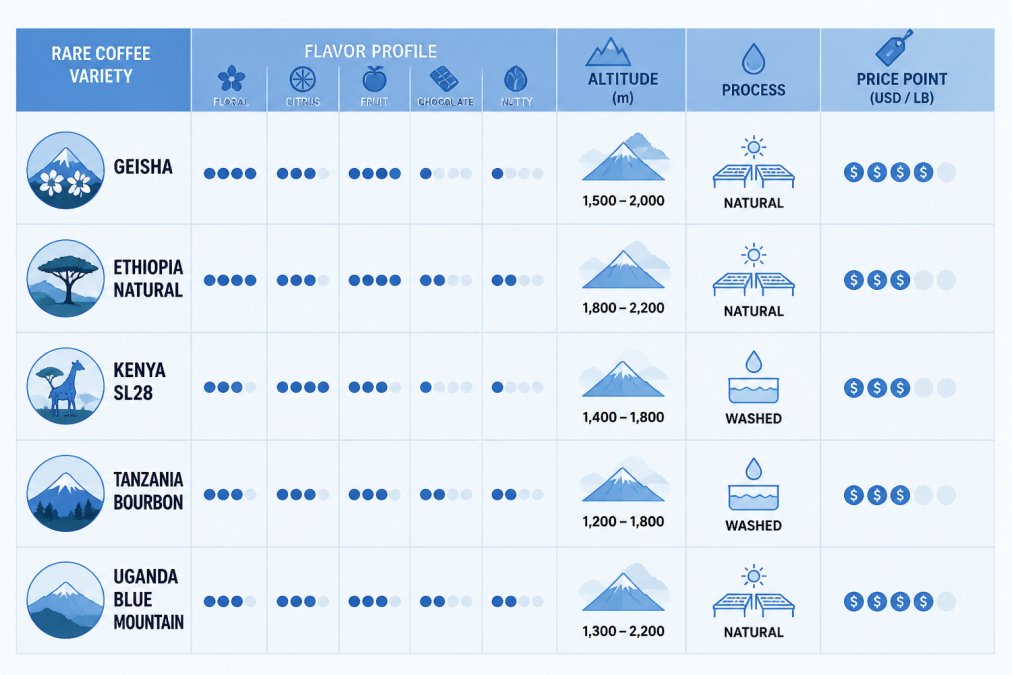
Choosing among these rarest coffee varieties depends on your palate and brewing style. The table below summarizes the key characteristics of each bean to help you decide.
Variety |
Flavor Profile |
Altitude |
Process |
Price |
|---|---|---|---|---|
Geisha |
Jasmine, bergamot, citrus |
1,600m+ |
Washed |
Premium |
Milk chocolate, fruit, caramel |
1,700-1,900m |
Natural |
$21.99 |
|
Kenya SL28 |
Orange, lemon, floral |
1,700-1,890m |
Washed |
$21.99 |
Tanzania Bourbon |
Pear, jasmine, strawberry |
1,200-1,900m |
Washed |
$21.99 |
Uganda Blue Mountain |
Floral, chocolate, dark fruit |
1,500-2,500m |
Washed |
$21.99 |
If you are new to rare coffee, start with the Ethiopia Natural. Its familiar chocolate and caramel notes make it an easy entry point. For a more adventurous palate, the Kenya SL28 offers a brightness that showcases what altitude and terroir can achieve.
How to Brew Rare Coffee Beans at Home
Brewing rare coffee beans at home requires attention to a few key variables: water temperature, grind size, and brew ratio. These coffees are delicate, and the wrong parameters can obscure their finest qualities.
For pour-over brewing, which suits most of these varieties, use water just off the boil at around 200-205°F. A medium-fine grind is a good starting point, similar to sea salt in texture. The standard ratio is 1:16, meaning one gram of coffee for every 16 grams of water. Start there and adjust to taste.
The bloom is critical. Pour just enough water to saturate the grounds, then wait 30-45 seconds for the coffee to degas. This step ensures even extraction and prevents channeling. After the bloom, pour in slow, circular motions, keeping the water level consistent.
For storage, keep the beans in an airtight container away from light and heat. Buy whole beans and grind fresh before each brew. These rare coffees are at their peak within two to three weeks of roasting, so buy in quantities you will use quickly.
The value proposition of rare coffee is straightforward: you are paying for a sensory experience that is fundamentally different from commodity coffee. The freshness, the complexity, and the story of the origin are all part of the cup. As research on coffee freshness and flavor stability demonstrates, the volatile compounds responsible for aroma degrade rapidly after roasting, making freshness a non-negotiable factor in quality.
According to the National Coffee Association's brewing guidelines, proper extraction is the difference between a great cup and a bitter one. The NCA recommends using the correct grind size for your brewing method and measuring both coffee and water by weight for consistency. These fundamentals matter even more when brewing expensive, rare beans where every gram counts.
For those who want to explore without a large commitment, Brewtiful Coffee offers these single-origin beans at $21.99 per bag, delivered fresh-roasted nationwide. The Whiskey Barrel Aged option, matured for 30 days in genuine Bourbon barrels, provides a bold alternative with notes of vanilla, oak, and caramel for those seeking a distinctive twist.
The rarest coffee varieties for home brewing are an investment in your daily ritual. They transform the morning cup from a caffeine delivery mechanism into a moment of genuine pleasure. Whether you choose the floral complexity of a Geisha or the chocolatey depth of an Ethiopia Natural, the key is to brew with intention and savor the result.
Frequently Asked Questions
What makes a coffee variety considered rare?
Rarity comes from limited production quantities, specific growing conditions like high altitude or unique soil, and specialized processing. Varieties like Geisha or SL28 require specific terroir to develop their signature flavors, so they can't be grown everywhere. Microlots, which come from a single farm or even a specific section of one, are rare by definition. This limited supply, combined with high cupping scores and distinctive profiles, drives both their price and their appeal to home brewers seeking something exceptional.
How do rare coffee varieties differ in flavor profile?
Rare varieties offer dramatically different taste experiences compared to standard commodity beans. For example, Ethiopia Natural heirloom beans deliver milk chocolate and fruity caramel notes, while Kenya SL28 presents bright acidity with orange and lemon. Tanzania Bourbon offers floral jasmine and strawberry, and Bali Blue brings dark chocolate and molasses. The differences come from the botanical species, the altitude where they grow, and the post-harvest processing method. These factors combine to create complex flavor profiles, distinct acidity, and unique body that you simply can't find in mass-market blends.
Are rare coffee beans worth the higher price?
For home brewing enthusiasts, yes. A 12-ounce bag of these single origin beans costs $21.99, which is more than standard grocery store coffee. But you're paying for beans that are fresh-roasted to order, sourced from specific farms, and graded with high cupping scores. The flavor difference is significant: you get bright, floral, and complex notes instead of generic bitterness. If you're someone who values the aroma and taste of a truly distinctive cup, the cost per brew is still far less than a cafe drink.
What is the best way to brew rare coffee beans at home?
For most of these rare varieties, a pour over method like a V60 or Chemex is ideal because it highlights the bright acidity and floral notes. Use water just off the boil, around 200-205 degrees Fahrenheit, and a ratio of 1:16 coffee to water. Grind the beans right before brewing to a medium-fine consistency. Start with a 30-second bloom with twice the water weight of coffee, then pour in stages. This method lets you taste the full range of flavors these expensive beans offer.
Where can home brewers source rare, limited-edition coffee beans?
Specialty roasters like Brewtiful Coffee US offer fresh-roasted single origin beans from regions like Ethiopia, Kenya, and Guatemala. Look for roasters that provide details about the farm, altitude, and processing method on the bag. Direct trade relationships often mean access to microlots that never reach supermarkets. Since these batches are limited, consider a subscription to secure your supply. Always check the roast date, not just the best-by date, to ensure you're getting beans at their peak freshness.