

Specialty Coffee Alternatives to CoffeeAM
Table of Contents
- Why Coffee Drinkers Choose Specialty Coffee Alternatives
- Fresh Roasted Coffee Beans: What Sets Them Apart
- Single-Origin Coffee Beans vs. Blends
- Coffee Beans for Office Pantry and Corporate Settings
- Wholesale Specialty Coffee Beans for Small Business
- How to Select Quality Specialty Coffee: Selection Criteria
- Brewing Methods That Highlight Specialty Coffee Quality
- Frequently Asked Questions
Last Updated: October 15, 2026
Why Coffee Drinkers Choose Specialty Coffee Alternatives
When you're tired of flat, stale coffee, specialty coffee alternatives start to make sense. The difference between mass-market beans and fresh-roasted specialty coffee isn't subtle, it's the difference between a forgettable morning and one that tastes good.
Most people assume all coffee is the same. It isn't. At Brewtiful Coffee US, we've watched home brewers discover that switching to specialty coffee beans transforms their ritual. Freshness, origin, and roast date are the actual reasons your cup tastes different.
A specialty coffee alternative to mass-market options gives you control. Instead of beans roasted six months ago, you're buying coffee roasted days or weeks before it arrives, with a roast date on the package. That freshness translates into flavor, aroma, and a coffee experience worth slowing down for.
The real question isn't whether specialty coffee is worth exploring, it's which alternative makes sense for your brewing style, your budget, and what you're actually looking for in a cup.
Fresh Roasted Coffee Beans: What Sets Them Apart
Fresh roasted coffee beans are the foundation of specialty coffee. The moment coffee is roasted, it begins losing flavor compounds (Effect of Temperature and Storage on Coffee’s Volatile Compound Profile and Sensory...). After a few weeks, beans taste flat; after a few months, stale.
This is why roast date matters more than almost anything else. Specialty roasters ship beans roasted within the last two to four weeks, versus grocery store coffee sitting for months. You're buying coffee at its peak.
Fresh roasted beans also smell different. That rich aroma when you open a bag means the beans are still releasing volatile flavor compounds. Stale coffee lacks that aroma because those compounds have dissipated or degraded.
The brewing experience changes too. Fresh beans produce better crema in espresso, bloom more dramatically in pour-overs, and extract more evenly in French presses. Every method benefits from beans that haven't lost oils and aromatics to oxidation.
Single-Origin Coffee Beans vs. Blends
Single-origin coffee comes from one specific region or farm. Kenya tastes different from Peru; Brazil Santos differs from Ethiopia Natural. Each region's beans have distinct characteristics shaped by altitude, soil, rainfall, and variety.
Blends combine beans from multiple origins to create a specific flavor profile, a balanced cup or one highlighting certain characteristics.
Neither approach is better; they serve different purposes. Single-origin coffees let you taste the terroir of a place. If you want to explore what different regions produce, single-origin is your path, Brazil, then Kenya, then Peru, each teaching you how geography shapes flavor.
Blends are designed for consistency and balance. A roaster crafts a blend to taste the same every time, so if you've found a profile you love, a blend delivers it reliably. Blends often cost less because roasters source from multiple regions to hit a price point.
For exploring specialty coffee alternatives, start with a sample pack. The Single Origin Favorites Sample Pack from Brewtiful Coffee US includes six origins in 2-ounce portions: Brazil Santos (cocoa), Colombia (dried orange and berry), Costa Rica (apple and honey), Ethiopia Natural (milk chocolate and caramel), Honduras (caramel and spice), and Tanzania (pear and floral). Taste the difference between regions without committing to full bags.

Understanding Roast Levels and Flavor Profiles
Roast level shapes what you taste. Light roasts preserve origin characteristics, acidity, brightness, specific flavor notes from where the coffee grew. Medium roasts balance origin and roast flavors. Dark roasts emphasize the roast itself: bolder, heavier, sometimes smoky or bitter.
There's no "best" roast level, it depends on your brewing method and taste. Pour-over and filter methods highlight light to medium roasts for clarity and complexity. French press and espresso handle darker roasts, whose bolder flavors cut through milk or cream.
Flavor profiles describe what you actually taste. Tasting notes like "cocoa," "berry," "citrus," or "caramel" aren't marketing invention, they help you know what to expect. "Salted caramel, silky sweet, citrus" on a Peru coffee is real information about that lot.
Single Origin Favorites Sample Pack →
Coffee Beans for Office Pantry and Corporate Settings
Corporate coffee doesn't have to mean bad coffee. Many offices are moving from traditional break-room makers and cheap beans toward specialty options that taste good.
For employee kitchen benefits, specialty coffee creates a tangible quality-of-life improvement. When your team can make good coffee at the office, they're less likely to spend at coffee shops and more likely to enjoy their break.
The practical advantage: specialty beans work with standard office equipment. No espresso machine or fancy gear needed, a drip coffee maker, pour-over cone, or French press all work. The beans do the heavy lifting.
For corporate pantry selections, offer variety. Some want a smooth, balanced medium roast; others want more character. A sample pack lets team members find what they enjoy.
Wholesale specialty coffee beans for small business and corporate clients make sense when buying in volume. Many roasters offer corporate pricing for regular office orders, keeping costs reasonable while maintaining quality.
Wholesale Specialty Coffee Beans for Small Business
Small businesses, offices, boutique retail spaces, corporate break rooms, often find wholesale specialty coffee more affordable than buying retail bags repeatedly.
The wholesale link for Brewtiful Coffee US lets businesses explore bulk options for ongoing supply rather than one-time purchases.
The advantage of wholesale ordering is consistency: you know what you're getting, when, and at what price. Buying directly from a roaster rather than a middleman often means fresher beans and better pricing.
For holiday gift ideas, specialty coffee works well. A box of single-origin beans or a sample pack from a quality roaster is a thoughtful, personal gift, the experience of good coffee, not a generic present.
Small business owners also use specialty coffee as part of their brand. A cafe, bookstore, or creative workspace serving quality coffee creates a better experience for customers and employees, it signals you care about details. Curating a selection of small batch roasts allows these establishments to further refine their identity and provide a distinct sensory narrative that resonates with a discerning clientele.
How to Select Quality Specialty Coffee: Selection Criteria
Choosing between specialty coffee options comes down to a few concrete criteria.
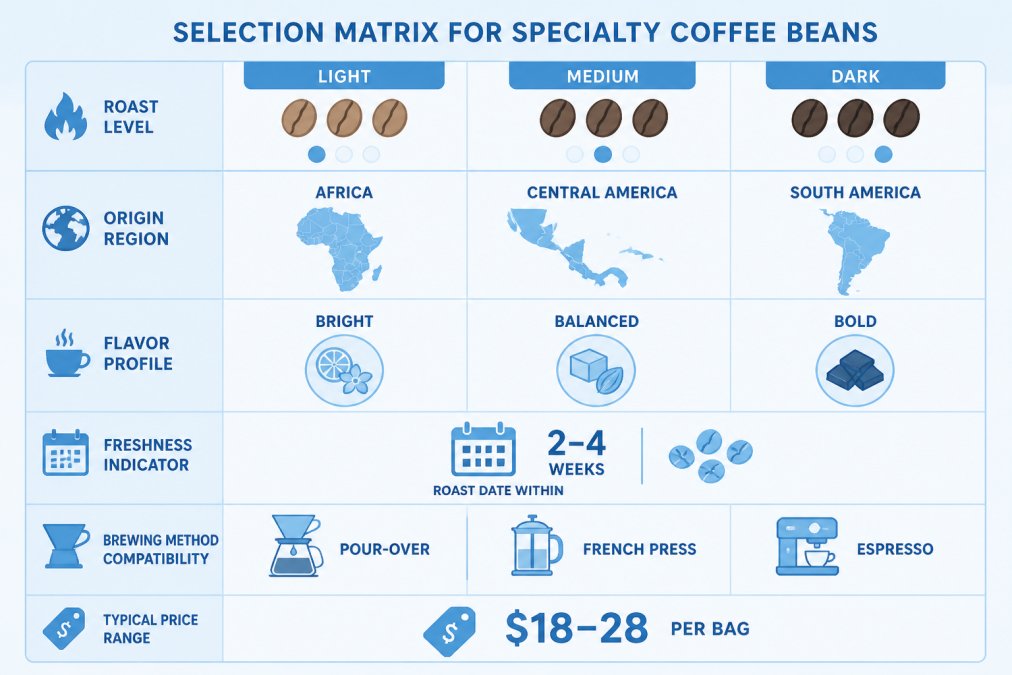
Roast Date: Non-negotiable. Look for beans roasted within two to four weeks. No roast date on the bag is a red flag.
Single Origin or Blend: Decide what you're looking for. Single-origin beans let you taste a specific place. Blends offer consistency and balance. Both have value, it depends on your mood and curiosity level.
Roast Level: Light roasts highlight origin flavors and acidity. Medium roasts balance origin and roast characteristics. Dark roasts emphasize boldness and body. Match the roast to your brewing method and taste preference.
Flavor Profile: Read the tasting notes. If you like chocolate and caramel, look for medium roasts from Brazil or Honduras. If you prefer bright, fruity, floral notes, look for light roasts from Kenya or Ethiopia. The descriptions aren't poetry, they're useful information.
Price: Specialty coffee costs more than mass-market coffee, but it's not unreasonable. Single-origin beans from Brewtiful Coffee US run around $22.99 per bag. A sample pack costs $24.99 for six different origins. Compare that to repeated coffee shop visits, and the math becomes clear.
Single Origin Favorites Sample Pack →
Brewing Method Compatibility: Some coffees shine in specific brewing methods. A light roast works beautifully in a pour-over but might taste thin in a French press. A dark roast can handle milk and cream. Think about how you're brewing and choose accordingly.
| Selection Criteria | What to Look For | Why It Matters |
|---|---|---|
| Roast Date | Within 2-4 weeks | Freshness directly affects flavor and aroma |
| Roast Level | Light, medium, or dark | Determines brightness vs. boldness in your cup |
| Origin | Single-origin or blend | Shapes the flavor profile and complexity |
| Tasting Notes | Specific descriptors like chocolate, citrus, berry | Helps you predict whether you'll enjoy it |
| Price Point | Reflects quality and freshness, not marketing | |
| Brewing Method | Matches your equipment | Ensures the coffee's strengths come through |
Brewing Methods That Highlight Specialty Coffee Quality
The brewing method you choose determines how much of the coffee's potential actually makes it into your cup. Different methods extract different characteristics from the same beans.
Pour-Over: This method gives you precision and clarity. You control water temperature, pour rate, and brew time. Pour-overs highlight the origin characteristics and acidity in light to medium roasts.
French Press: Full immersion brewing extracts more oils and body from the beans. French press works beautifully with medium to dark roasts, creating a heavier, more textured cup.
AeroPress: This hybrid method combines immersion and pressure. It's forgiving, quick, and produces a clean cup despite being a full-immersion brewer.
Moka Pot: A stovetop brewer that produces a strong, concentrated coffee similar to espresso but without the pressure. Moka pots work well with medium to dark roasts and are great for people who like bold, intense coffee.
Espresso Machine: True espresso requires pressure and precision. If you have an espresso machine, you can dial in grind size, tamp pressure, and extraction time to pull shots that highlight specific characteristics.
The key is matching your brewing method to the coffee's roast level and your taste preferences. A light roast in a French press might taste thin and underwhelming. The same light roast in a pour-over shines.
Specialty coffee beans from Brewtiful Coffee US work across all these brewing methods. The quality is consistent enough that you'll get good results whether you're using a simple pour-over or a sophisticated espresso setup.
Choosing a specialty coffee alternative to mass-market options is about reclaiming your morning ritual.
Frequently Asked Questions
What makes specialty coffee alternatives better than mass-market brands?
Specialty coffee alternatives focus on single-origin beans, freshness, and traceable sourcing. Unlike mass-market options, specialty beans are roasted in smaller batches to preserve flavor and aroma. The difference appears immediately in taste: specialty coffee delivers distinct flavor notes, citrus, chocolate, caramel, instead of a flat, bitter cup. Freshness matters too; beans roasted within weeks rather than months taste noticeably brighter and more complex.
How can I tell if fresh roasted coffee beans are actually fresh when they arrive?
Fresh roasted coffee beans should have a roast date printed on the bag. Look for beans roasted within 2-4 weeks of purchase; this window captures peak flavor and aroma. When you open the bag, the aroma should be strong and inviting, rich, sweet, or fruity depending on the origin. Beans that smell flat or stale indicate age. Quality roasters ship quickly and provide roast dates, so you know exactly how fresh your beans are.
Are single-origin coffee beans worth the cost compared to blends?
Single-origin coffee beans showcase distinct flavor profiles tied to their region, altitude, and processing method. A Kenya bean tastes bright and floral; a Brazil bean tastes smooth with cocoa notes. Blends combine beans to create balance, but single-origin beans let you explore global coffee culture and discover your preferences. For home brewing enthusiasts, single-origin beans justify the cost because you taste the difference in every cup, and they work beautifully with pour-over, French press, and espresso methods.
What brewing method works best for specialty coffee beans?
Specialty coffee shines with methods that control water temperature and extraction time. Pour-over, V60, AeroPress, and French press all highlight the complex flavors and body that specialty beans offer. Espresso machines work too, though they require proper grind size and technique. The key is using whole bean coffee ground just before brewing, pre-ground coffee loses aroma and flavor within hours. Start with a medium grind for pour-over or French press, and adjust based on taste.
Can specialty coffee beans work for office pantries and corporate settings?
Yes. Specialty coffee beans elevate the office experience and show employees you value quality. Single-origin beans offer variety so different preferences are covered, bright Kenya for those who like acidity, smooth Brazil for those who prefer balance. For corporate clients or small businesses, wholesale specialty coffee provides consistency and freshness across multiple bags. Employees notice the difference, and it's a meaningful benefit that costs less than a daily coffee shop visit.