

Top 5 Loose Leaf Tea Brands for Beginners
Table of Contents
- Why Loose Leaf Tea Beats Tea Bags for New Drinkers
- How to Choose Your First Loose Leaf Tea: A Beginner's Framework
- 1. English Breakfast: The Classic Starter Cup
- 2. Jasmine: Floral and Forgiving
- 3. Moroccan Mint: Refreshing Hot or Iced
- 4. Masala Chai: Spiced and Comforting
- 5. Apple Cider Rooibos: Caffeine-Free and Cozy
- How to Brew Loose Leaf Tea Without the Fuss
- Frequently Asked Questions
Last Updated: September 15, 2026
Why Loose Leaf Tea Beats Tea Bags for New Drinkers
Loose leaf tea is whole or broken tea leaves that steep freely in water rather than in a paper pouch. That room to expand changes everything about what ends up in your cup.
The case for loose leaf comes down to flavor, value, and control. Tea bags hold dust and fannings, the smallest particles left after processing, which release tannins fast and turn bitter quickly. Full leaf expands slowly and evenly, giving a rounder cup with less astringency.
There's also the ritual itself. Measuring leaves, watching the color bloom, timing the steep. It sounds fussy until you realize it takes about the same effort as pressing a French press. Tea Association of the USA industry overview notes that tea remains the most consumed beverage worldwide after water, and the specialty segment keeps growing as drinkers seek better quality.
Most guides make loose leaf sound like a hobby requiring expensive gear. It isn't. A strainer and a kettle get you 90% of the way there.
How to Choose Your First Loose Leaf Tea: A Beginner's Framework
Choosing your first loose leaf tea is simple: start with a flavor you already enjoy, then find the loose leaf version of it. Most beginners overthink this, buy something exotic, and feel lost when they don't like it.
Start With What You Already Drink
If you drink black tea with milk in the morning, begin with a breakfast blend. If you like iced tea, start with a mint green. If chai lattes are your thing, buy masala chai loose leaf and brew it on the stovetop. Familiar ground makes the transition painless.

The mistake most often made is beginners buying a delicate white tea first. It's the hardest category to brew well, and a bad first cup convinces people loose leaf isn't worth it.
The Cost-Per-Cup Reality Check
Loose leaf looks expensive on the shelf but isn't per cup, and the math is the strongest argument for switching.
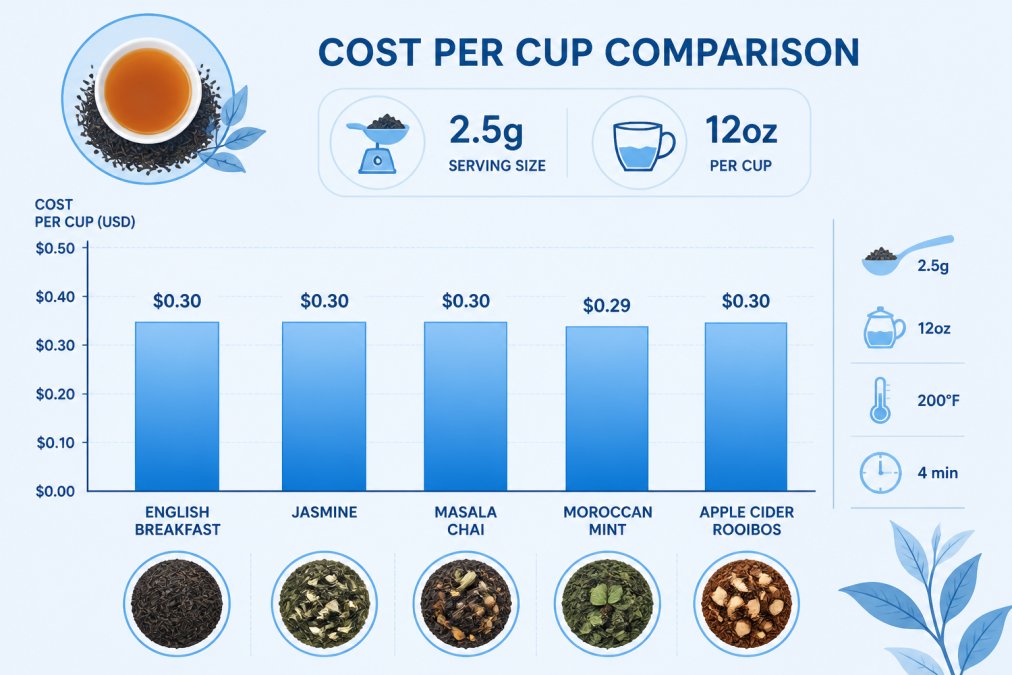
A 2.5-gram serving brews a 12-ounce cup (teausa.org). At $17.99 per pouch, a typical 4-ounce pouch holds roughly 45 servings: about 40 cents per cup on the first steep, 20 cents if you re-steep once, and under 15 cents if you re-steep twice.
A standard tea bag runs 10 to 30 cents per cup and gives exactly one cup with no re-steep. A daily coffee shop habit runs $3 to $6 per drink, 15 to 30 times the cost of a re-steeped loose leaf cup. Even a premium loose leaf costing twice typical pouches beats a coffee shop habit by a wide margin.
The catch: the cost-per-cup advantage only holds if you actually drink the tea. A $17.99 pouch you use twice is a $9 cup; one you finish over two months is a 40-cent cup. Buy one pouch at a time until you know what you like.
Read the Label Before You Buy
Two certifications are worth knowing as a beginner.
USDA Organic means the tea was grown without synthetic pesticides or fertilizers and processed under federal organic standards. This matters because you steep the leaves directly in your cup; if you drink several cups a day, organic is a reasonable default.
Fair Trade Certified means the tea was sourced under a program that sets minimum prices and adds a community development premium paid to the grower cooperative. It doesn't guarantee better tea, but the farmer was paid a floor price rather than whatever the market offered.
Neither label tells you the tea tastes good. A certified organic tea can still be stale, and a Fair Trade tea can still be a poor fit for your palate. Treat certifications as a sourcing signal, not a quality signal.
Match the Tea to the Moment
Before you buy, ask when you'll actually drink it. A caffeine-free rooibos suits an evening habit, a malty breakfast blend suits mornings, and a mint green suits iced tea drinkers.
Beginners who buy one tea for every occasion end up with a cupboard of half-used pouches; those who buy one that fits their routine finish it and buy a second. Start with one, not five.
A Simple First-Purchase Checklist
- Pick a flavor you already drink in bagged form.
- Buy one pouch, not a sampler, unless the sampler is priced at or below a single pouch.
- Check the packaging date if printed. Fresher is better.
- Confirm the leaf is whole or large-cut, not dust or fannings.
- Buy a basket infuser and a scale at the same time.
That's the entire decision. The rest of this guide covers five teas for the most common beginner starting points, with brewing details and trade-offs for each.
1. English Breakfast: The Classic Starter Cup
English Breakfast is the safest first purchase for anyone coming from bagged black tea. Our version blends Assam TGFOP, Ceylon OP, and 2nd Flush Darjeeling for a malty, fruity cup with medium body and a sweet finish.

It takes milk and sugar beautifully. Brew at 195°F for 5 to 7 minutes with 2.5 grams per 12 ounces.
2. Jasmine: Floral and Forgiving
Jasmine is the best entry point into green tea. Our blend pairs handpicked green tea with freshly harvested jasmine blossoms, resulting in a medium-bodied brew that is smooth, sweet, and silky.

Green tea intimidates beginners because it scorches easily, but Jasmine is forgiving: brew at 175°F for 4 to 6 minutes. The lower temperature means less bitterness even if you lose track of time.
It also re-infuses well: two or three good cups from the same leaves.
3. Moroccan Mint: Refreshing Hot or Iced
Moroccan Mint is gunpowder green tea blended with peppermint and spearmint, and it's a versatile tea. Hot, it's bright and sweet; over ice, it's a great summer drink.
Brew at 175°F for 3 to 4 minutes.
4. Masala Chai: Spiced and Comforting
5. Apple Cider Rooibos: Caffeine-Free and Cozy
| Tea | Caffeine | Best For | Brew Temp | Steep Time |
|---|---|---|---|---|
| English Breakfast | Yes | Morning, with milk | 195°F | 5-7 min |
| Jasmine | Yes | Green tea newcomers | 175°F | 4-6 min |
| Moroccan Mint | Yes | Iced tea, summer | 175°F | 3-4 min |
| Masala Chai | Yes | Chai lattes, cozy evenings | 195°F | 5-7 min |
| Apple Cider Rooibos | No | Evening, caffeine-free | 212°F | 4-6 min |
How to Brew Loose Leaf Tea Without the Fuss
The Three Variables, In Order of Impact
Gear That Actually Matters
Troubleshooting: Fixing Bitter, Weak, or Flat Tea
Never microwave water for green or white tea. Microwaves heat unevenly, and hot spots can scald delicate leaves even when the overall temperature reads correctly. Use a kettle with temperature control instead.
Water Temperature and Steeping Time Cheat Sheet
| Tea | Water Temp | Steep Time | Leaf Dose |
|---|---|---|---|
| English Breakfast | 195°F | 5-7 min | 2.5g / 12oz |
| Jasmine | 175°F | 4-6 min | 2.5g / 12oz |
| Moroccan Mint | 175°F | 3-4 min | 2.5g / 12oz |
| Masala Chai | 195°F | 5-7 min | 2.5g / 12oz |
| Apple Cider Rooibos | 212°F | 4-6 min | 2.5g / 12oz |
Re-Steeping: The Habit That Doubles Your Value
Storage: The Difference Between Fresh and Stale
Frequently Asked Questions
What is the best loose leaf tea for beginners?
English Breakfast is the easiest starting point because its malty, sweet flavor is familiar to anyone who drinks black tea bags. If you prefer something lighter, Jasmine green tea is floral and forgiving. For caffeine-free evenings, Apple Cider Rooibos offers warm spice without the buzz. The key is picking a flavor profile close to what you already enjoy, then adjusting steeping time and water temperature as you go.
Is loose leaf tea better than tea bags?
Loose leaf tea generally delivers more flavor because the leaves are larger and have room to unfurl during steeping. Tea bags often contain fannings, which are tiny particles that release tannins quickly and can turn bitter. Loose leaf also lets you control the dose, so you get a cup that matches your taste. The trade-off is a few extra seconds of cleanup, but a simple infuser or strainer solves that.
How much loose leaf tea should I use per cup?
A good starting point is 2.5 grams of loose leaf tea per 12 ounces of water, which is roughly one heaping teaspoon for most black and flavored teas. For green teas like Jasmine or Moroccan Mint, use the same amount but lower the water temperature to 175F. If your first cup tastes weak, add a pinch more leaf next time. If it tastes bitter, reduce the steeping time by a minute.
What equipment do I need to brew loose leaf tea?
You only need three things: a tea kettle, an infuser or strainer, and a mug. A simple basket infuser that sits inside your cup works well for beginners. A teapot with a built-in strainer is handy if you brew multiple cups. Skip the expensive gadgets until you know which teas you like. The brewing vessel matters less than water temperature and steeping time.
How do I store loose leaf tea to keep it fresh?
Keep loose leaf tea in an airtight container away from light, heat, and moisture. A tin or opaque ceramic jar works better than a clear glass one. Store it in a cabinet, not above the stove. Most loose leaf teas stay fresh for six to twelve months if sealed properly. Buy smaller amounts more often rather than a huge bag that sits for a year.