

Benefits of Organic Loose Leaf Tea: A 2026 Guide
Table of Contents
- Why Organic Loose Leaf Tea Stands Apart
- Health Benefits of Organic Tea
- Loose Leaf Tea vs. Tea Bags: What's the Real Difference
- How to Brew Loose Leaf Tea for Maximum Flavor and Benefits
- Organic Certification and What It Means
- Organic Loose Leaf Tea for Small Business and Workplace Benefits
- Frequently Asked Questions
Last Updated: September 24, 2026
Why Organic Loose Leaf Tea Stands Apart
Organic loose leaf tea delivers what tea bags simply cannot: full leaf expansion, complete flavor extraction, and the assurance that what you're steeping is pure tea, nothing else. When you choose organic loose leaf tea, you're choosing leaves that have been grown without synthetic pesticides, herbicides, or chemical fertilizers. The difference shows up immediately in your cup.
Most people don't realize how much they're missing with tea bags. The leaves inside are often fannings and dust, the broken fragments left over after whole leaves are processed and packaged. These particles steep faster, yes, but they also release tannins more aggressively, creating that harsh, astringent bite many people associate with tea. Whole leaves, by contrast, unfurl slowly in hot water, releasing their compounds gradually and creating a smoother, more nuanced flavor profile.
At Brewtiful Coffee US, we've built our loose leaf tea selection around the belief that quality matters from the moment you open the package. Our organic teas are sourced with care, stored to preserve freshness, and brewed with intention. Whether you're exploring a warming Masala Chai or discovering the bright, caffeine-free notes of Hibiscus Berry Tea, you'll taste the difference that whole leaves and organic certification make.

Health Benefits of Organic Tea
Antioxidants and Polyphenols
Organic loose leaf tea is rich in antioxidants, particularly catechins and EGCG (epigallocatechin gallate), which are polyphenolic compounds that your body uses to defend against oxidative stress. When leaves remain whole during processing, these compounds stay intact and bioavailable, meaning your body can actually use them when you drink the tea.
The antioxidant content varies by tea type and processing method. Black teas like our Masala Chai contain strong polyphenol profiles that develop during oxidation. Green teas preserve even higher catechin levels because they're processed with minimal oxidation. Herbal infusions like Hibiscus Berry Tea deliver their own unique antioxidant compounds from the hibiscus flowers and rosehips.

What matters most is steeping properly. Under-steeped tea leaves don't release their full complement of beneficial compounds. Over-steeped leaves can become bitter as tannins dominate. The sweet spot, usually 5-7 minutes for black tea, slightly less for delicate varieties, is where flavor and nutrient extraction align.
Cognitive Function and Mental Clarity
Loose leaf tea contains L-theanine, an amino acid that works in tandem with caffeine to support focus without the jitters. Unlike coffee, which delivers a sharp caffeine spike, tea's combination of L-theanine and caffeine creates a calm, sustained alertness that many find ideal for work or study.
Black teas like Masala Chai provide moderate caffeine alongside L-theanine, making them excellent for morning or afternoon mental clarity. The spice blend in chai, cloves, ginger, cardamom, and cinnamon, adds aromatic compounds that have been traditionally used to support cognitive function and digestive comfort.
The effect is noticeable but subtle. You're not looking for a dramatic energy boost; you're looking for the kind of mental clarity that lets you stay present and focused for hours. Many remote professionals and knowledge workers have made loose leaf tea their ritual precisely for this reason, it supports sustained attention without the crash that often follows coffee.
Stress Relief and Immune Support
The ritual of brewing and sipping loose leaf tea itself reduces cortisol, your body's primary stress hormone. Beyond the ritual, however, certain teas offer specific compounds that support relaxation and immune resilience.
Herbal infusions like Hibiscus Berry Tea contain vitamin C and other compounds that support immune function. The hibiscus flowers deliver anthocyanins, a class of polyphenols with anti-inflammatory properties. Regularly drinking organic loose leaf tea varieties that include immune-supporting herbs creates a gentle, cumulative effect on your body's defenses.
Stress relief also comes from the slower pace that loose leaf tea demands. You can't rush it. You measure the leaves, heat water to the right temperature, wait for steeping, and then actually sit down to drink it. That pause in your day, that intentional slowdown, is where much of the stress-relief benefit originates.
Loose Leaf Tea vs. Tea Bags: What's the Real Difference
Leaf Expansion and Flavor Extraction
The difference between loose leaf and tea bags comes down to surface area and infusion dynamics. Whole leaves need room to expand and move freely in hot water. As they unfurl, they gradually release their flavor compounds, aromatics, and beneficial polyphenols in a controlled, balanced way.
Tea bag leaves, fannings and dust, are compressed into a small paper or mesh sachet. They steep faster because of their smaller particle size, but this speed comes at a cost: tannins release aggressively, creating that harsh, mouth-puckering sensation. The paper or mesh also creates a physical barrier that slows water circulation around the particles, leading to uneven extraction.
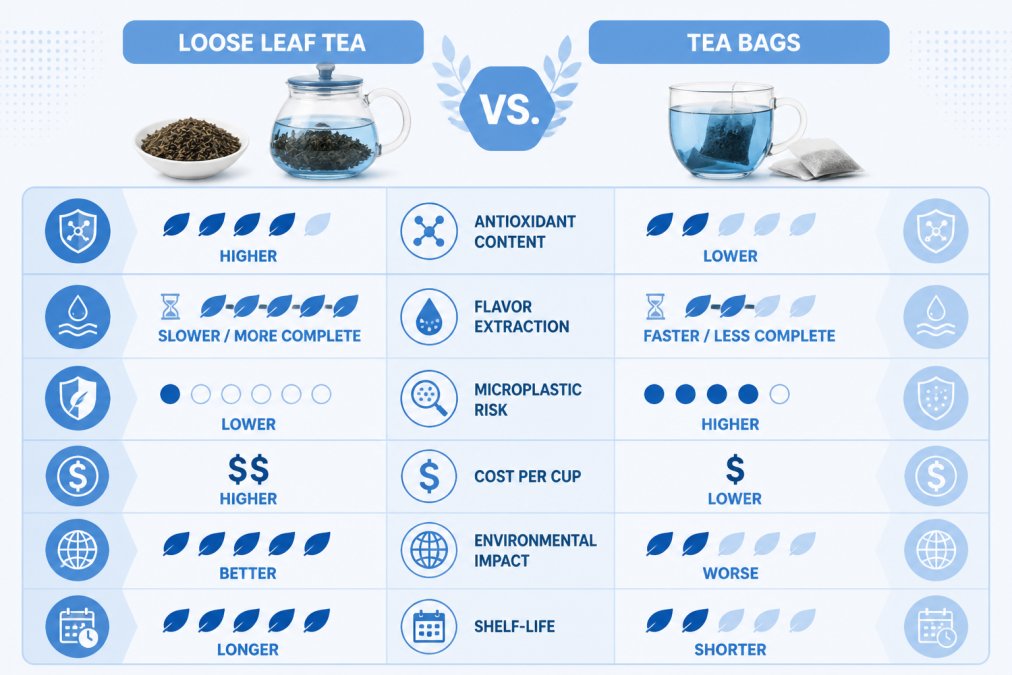
When you brew loose leaf tea properly, you get a fuller, more nuanced flavor profile. The first infusion tastes bright and clean. With quality loose leaves, you can often re-steep the same leaves 2-3 times, getting different flavor notes with each infusion. Tea bags typically deliver one decent cup, then decline rapidly.
The Microplastic Concern
Tea bags present a problem many people overlook: microplastic shedding. Some tea bags contain nylon or polypropylene mesh. When hot water contacts these synthetic materials, they can shed microscopic plastic particles into your tea.
Loose leaf tea eliminates this concern entirely. You're steeping actual plant material, leaves, flowers, herbs, with no synthetic packaging involved. If you use a stainless steel infuser or glass strainer, you're getting pure tea with zero plastic contact.
This matters if you're drinking tea daily. Over weeks and months, the cumulative microplastic exposure from tea bags adds up. For health-conscious consumers and those concerned about long-term exposure to synthetic particles, loose leaf tea is the clear choice.
Cost Per Cup Analysis
Tea bags appear cheaper upfront. A box of 20 bags might cost less than a comparable quantity of loose leaf. But cost-per-cup tells a different story.
A single serving of loose leaf tea typically requires 2-3 grams of tea. A quality loose leaf tea that costs around $17.99 for a standard package yields approximately 18-28 cups depending on leaf density and your steeping preference. That's roughly $0.64-$1.00 per cup.
Tea bags, meanwhile, deliver one steep per bag. If a box of 20 costs $4, that's $0.20 per bag, but you're also getting a lower-quality infusion that many people won't re-steep.
For small businesses considering tea for employee kitchen benefits or corporate clients looking to upgrade their pantry selections, loose leaf tea offers better value over time. A single container of Brewtiful Coffee US organic loose leaf tea can supply dozens of cups, making it an economical choice for workplace wellness programs and holiday gift ideas.
How to Brew Loose Leaf Tea for Maximum Flavor and Benefits
Water Temperature and Steeping Time
Water temperature is non-negotiable. Too hot, and you'll extract excessive tannins, creating bitterness. Too cool, and you won't extract enough flavor or beneficial compounds.
Black teas like Masala Chai thrive at 195-212°F (90-100°C). Start with water just off boiling, around 195°F is ideal, and steep for 5-7 minutes. This temperature range allows full extraction without over-steeping.
Herbal infusions like Hibiscus Berry Tea can handle boiling water (212°F) and benefit from longer steeping, typically 5-10 minutes. The higher temperature and extended time fully release the flower's flavor and beneficial compounds.
Steeping time matters because it directly controls how many tannins release.
Storage and Shelf-Life Science
Loose leaf tea stays fresh longer than tea bags because whole leaves oxidize more slowly. Proper storage extends shelf-life significantly.
Organic Certification and What It Means
Organic certification verifies that your tea has been grown without synthetic pesticides, herbicides, or chemical fertilizers. It's a meaningful assurance, not just marketing language.
Organic Loose Leaf Tea for Small Business and Workplace Benefits
Small businesses and corporate clients increasingly recognize that tea selection reflects their commitment to employee wellness. Offering quality organic loose leaf tea in the office kitchen signals that you value your team's health and comfort.
Frequently Asked Questions
Is organic loose leaf tea healthier than tea bags?
Organic loose leaf tea typically delivers more antioxidants and catechins because whole leaves release their compounds more fully during steeping. Tea bags often contain fannings and dust, small fragments that have less surface area and lower nutrient density. Additionally, some tea bags contain microplastics that can leach into your cup. Loose leaf tea avoids these concerns, making it the better choice for health-focused drinkers who want maximum polyphenols and bioavailable nutrients.
What are the main health benefits of organic tea?
Organic tea provides antioxidants like EGCG and catechins that support cellular health and L-theanine for stress reduction and cognitive function. Many people report improved mental alertness, better immune function, and a calming effect that reduces cortisol levels. Because organic tea is grown without synthetic pesticides, you're consuming a cleaner product.
How do I brew loose leaf tea to get the most benefits?
Use water between 195-212°F for black teas. Steep for 5-10 minutes to allow full infusion and maximum extraction of antioxidants and L-theanine. Use a proper infuser or strainer to let leaves expand fully, this expansion is critical for flavor and nutrient release. Store your tea in an airtight container away from light and heat to preserve potency and prevent oxidation that degrades bioavailability.
Are there microplastics in loose leaf tea?
Loose leaf tea is free from the microplastic risk associated with some commercial tea bags. Some commercial tea bags shed microfibers when steeped in hot water, but whole-leaf tea in an infuser avoids this contamination entirely. If you're concerned about microplastics, organic loose leaf tea is the safer choice. Store it in glass or ceramic containers rather than plastic to maintain purity from purchase through brewing.