

Ethical Coffee Brands: What Actually Matters in 2026
Table of Contents
- What Makes a Coffee Brand Truly Ethical
- Coffee Certifications Explained: Which Labels Actually Mean Something
- Direct Trade Coffee: Cutting Out the Middleman
- Best Fair Trade Coffee Brands and What They Deliver
- Ethical Coffee for Offices and Employee Kitchens
- How to Spot Greenwashing and Verify Ethical Claims
- Choosing Ethical Coffee: Trade-offs and Practical Tips
- Frequently Asked Questions
Last Updated: October 8, 2026
What Makes a Coffee Brand Truly Ethical
When you're shopping for coffee, "ethical" can mean almost anything. One brand highlights fair wages. Another emphasizes environmental stewardship. A third focuses on farmer relationships. The term has become so broad that it's easy to feel lost.
At Brewtiful Coffee US, we believe ethical coffee starts with understanding what actually matters. Transparency in sourcing, verifiable certifications, and genuine farmer partnerships separate authentic ethical brands from those simply using the language. The best ethical coffee brands don't just claim to do better, they prove it through traceable supply chains and clear communication about where your money goes.
The Three Pillars of Ethical Coffee
Ethical coffee brands typically build their practices around three core areas: farmer livelihoods, environmental impact, and supply chain transparency.
Farmer livelihoods address the core issue: coffee farmers in developing regions often earn below living wages. Ethical brands ensure farmers receive fair compensation, either through certified fair-trade pricing or direct relationships that cut out middlemen. This pillar asks: Are farmers paid enough to support their families and reinvest in their land?
Environmental impact covers sustainable farming practices that protect ecosystems. This includes shade-grown coffee (which preserves biodiversity), organic methods that avoid synthetic pesticides, and regenerative agriculture that builds soil health. It also addresses water conservation and reducing the carbon footprint of production and shipping.
Supply chain transparency means you can trace your coffee from the farm to your cup. Ethical brands publish information about their sourcing partners, farming cooperatives, and processing methods. They're willing to name specific regions, farms, or producer groups rather than hiding behind vague sourcing claims.
The strongest ethical coffee brands excel in all three areas, though some prioritize one pillar more heavily than others depending on their mission.
Coffee Certifications Explained: Which Labels Actually Mean Something
Walking into a coffee shop or scrolling through online retailers, you'll see dozens of certification labels. Fair Trade. Rainforest Alliance. Organic. Direct Trade. Each one signals a different set of standards, but they're not equally rigorous, and some are more meaningful than others.
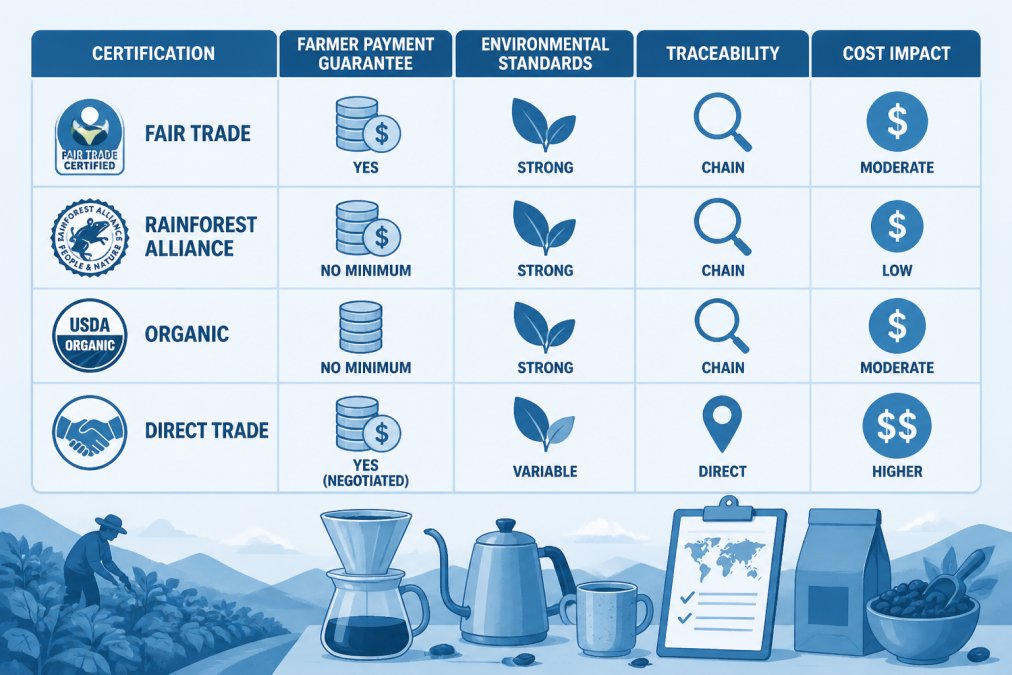
Fair Trade vs. Rainforest Alliance vs. Organic
Fair Trade certification guarantees a minimum price floor for farmers, typically around $1.40 per pound for Arabica beans. This protects farmers from price crashes when global markets collapse. Fair Trade also requires investment in community development and environmental practices. The certification is independently audited, making it verifiable.
Rainforest Alliance certification focuses heavily on environmental conservation and worker rights. It requires farms to protect biodiversity, manage water responsibly, and provide safe working conditions. Rainforest Alliance is less strict about price guarantees than Fair Trade, it relies on market mechanisms rather than price floors.
Organic certification verifies that coffee is grown without synthetic pesticides, herbicides, or fertilizers. Organic farming builds soil health and reduces chemical runoff into water systems. However, organic certification doesn't guarantee fair wages or direct farmer relationships. An organic coffee could still come from a farm where workers are underpaid.
Direct Trade isn't a formal certification, it's a business model where roasters buy directly from farms or producer groups, bypassing brokers. Direct Trade typically offers higher prices to farmers than Fair Trade minimums and builds long-term relationships. The downside: there's no independent auditing, so Direct Trade claims depend entirely on the roaster's integrity.
What Certifications Don't Guarantee
Here's what most guides won't tell you: certifications are tools, not guarantees of perfection.
Fair Trade doesn't ensure environmental sustainability beyond baseline requirements. A Fair Trade farm could still use water inefficiently or fail to protect local wildlife. Rainforest Alliance doesn't promise living wages, it sets labor standards but not income levels. Organic doesn't address labor practices at all. And Direct Trade depends on trusting a single roaster's claims with no third-party verification.
Many ethical coffee brands combine multiple certifications to cover these gaps. A coffee might be both Fair Trade and Organic, or Rainforest Alliance certified and Direct Trade. This layering of standards is often a sign of genuine commitment.
The certification that matters most depends on what you care about most. If farmer income is your priority, Fair Trade or Direct Trade are stronger choices. If environmental protection drives you, look for Rainforest Alliance or Organic. If you want both, seek brands that hold multiple certifications or publish detailed sourcing reports that go beyond what certification alone requires.
Direct Trade Coffee: Cutting Out the Middleman
Direct Trade is the model that's reshaping how specialty roasters source coffee. Instead of buying from brokers who aggregate beans from many farms, Direct Trade roasters establish direct relationships with specific farms or producer cooperatives.
Here's how it works: A roaster visits a farm, builds a relationship with the farmer or cooperative, and negotiates a price that's typically higher than Fair Trade minimums.
The benefit for farmers is substantial. They capture more of the retail price, skip broker markups, and gain long-term planning security. The benefit for roasters is traceability and control: they know exactly where their beans come from and can work with farmers to refine flavor profiles.
The catch: Direct Trade is only as ethical as the roaster practicing it. There's no independent auditing. A roaster could claim Direct Trade while still paying below-market rates or ignoring labor practices.
Brewtiful Coffee US sources single-origin beans directly from producers in Uganda, Kenya, Sumatra, Peru, Mexico, and Bali, building partnerships that ensure both quality and fair compensation. This direct approach allows us to offer beans with traceable origins and flavor profiles shaped by genuine farmer collaboration.
Best Fair Trade Coffee Brands and What They Deliver
Fair Trade certification provides a verifiable baseline, but the brands that wear it aren't all equal. Some go further with additional certifications, transparent reporting, or premium pricing to farmers.
When evaluating Fair Trade coffee brands, look for these signals: How long have they worked with specific cooperatives? Do they publish pricing information or sourcing reports? Do they hold additional certifications like Organic or Rainforest Alliance? Are they small-batch roasters or larger operations? What are customers saying about freshness and flavor?
The best Fair Trade brands combine certification with transparency. They name the cooperatives they work with, explain their pricing structure, and show evidence of long-term relationships. They often roast in small batches to ensure freshness, since Fair Trade certification doesn't guarantee your beans arrived yesterday.
Pricing varies widely depending on roast style, origin, and whether the brand combines Fair Trade with Organic or other certifications. For current prices, please visit our website.
Ethical Coffee for Offices and Employee Kitchens
Corporate break rooms and small business kitchens are where coffee consumption adds up. For offices and employee kitchens, ethical sourcing becomes a team decision with real impact.
Many offices default to whatever's cheapest, often overlooking the sourcing entirely. But a growing number of small businesses and corporate clients recognize that ethical coffee aligns with company values and employee satisfaction. Offering Fair Trade or Direct Trade options signals that your business cares about global impact.
For offices, consider these practical factors: Do you need whole bean or ground coffee? How often do you brew? Do you prefer single-serve pods or bulk options? Ethical coffee comes in all formats, though whole bean typically offers better freshness and value.
Brewtiful Coffee US offers wholesale options perfect for employee kitchens and corporate pantry selections. Our fresh-roasted specialty beans, including unique whiskey barrel-aged varieties and single-origin selections from Uganda, Kenya, Sumatra, Peru, Mexico, and Bali, elevate the daily coffee ritual for teams. We handle nationwide shipping, making it simple to stock your office with cafe-quality coffee that reflects your company's commitment to ethical sourcing.
| Ethical Coffee Format | Best For | Freshness Window | Ease of Use |
|---|---|---|---|
| Whole Bean | Coffee enthusiasts, French press, espresso | 2-3 weeks | Requires grinder |
| Ground Coffee | Standard drip makers, convenience | 1-2 weeks | Ready to brew |
| Single-Serve Pods | Offices, variety seekers | 6-12 months | Instant brewing |
| Bulk Wholesale | Corporate clients, high volume | Variable | Customizable |
How to Spot Greenwashing and Verify Ethical Claims
Greenwashing, making exaggerated or false ethical claims, is rampant in the coffee industry. A brand might use the word "sustainable" without certification, or highlight one ethical practice while ignoring others. Learning to spot these tactics protects both your wallet and your values.
Common greenwashing red flags:
Vague language without proof. Phrases like "responsibly sourced" or "ethically grown" sound good but mean nothing without certification or detailed sourcing information. Ask: Can you name the farms? What specific practices are you funding?
Single-issue focus. A brand might emphasize organic farming while staying silent on farmer wages. This isn't necessarily greenwashing, but it's incomplete. The strongest ethical brands address multiple pillars.
Certification without context. Displaying a certification logo is good, but the best brands explain what that certification actually means and how it impacts farmers and the environment.
No traceability. If a roaster can't tell you which farms or cooperatives they source from, they're hiding something. Transparency is the easiest way to verify ethical claims.
Premium pricing without justification. Some brands charge premium prices but don't explain where the money goes. Ethical coffee should cost more because farmers and the environment benefit, not just because the packaging looks nice.
To verify claims, check for third-party certifications, ask roasters directly about their sourcing, and read customer reviews that mention freshness and flavor (a sign the brand invests in quality sourcing, not just marketing).
Choosing Ethical Coffee: Trade-offs and Practical Tips
Ethical coffee rarely comes without trade-offs. Understanding these helps you make choices aligned with your actual priorities.
Cost vs. impact. Ethical coffee costs more because farmers are paid fairly and sustainable practices require investment (Coffee). Direct Trade and Organic certifications command the highest premiums. Fair Trade sits in the middle.
Freshness vs. availability. Small-batch roasters who prioritize ethical sourcing often have limited inventory and longer shipping times. Larger Fair Trade brands offer more consistent availability but may roast less frequently. Decide whether freshness or convenience matters more for your brewing style.
Certification vs. relationship. Certified coffee provides independent verification but sometimes less farmer connection. Direct Trade offers deeper relationships but requires trusting the roaster's claims. Many people find value in both.
Single-origin vs. blends. Single-origin beans (from one farm or region) offer traceability and unique flavor profiles but cost more. Blends can combine beans from multiple ethical sources at lower cost.
Practical tips for choosing:
- Start with Fair Trade if you're new to ethical coffee. It's verifiable, widely available, and costs less than Direct Trade.
- Buy whole bean and grind fresh. This preserves flavor and freshness better than pre-ground.
- Order smaller quantities more frequently rather than stockpiling. Coffee loses flavor after two to three weeks (Storage and shelf life - NCA).
- Taste before committing to large purchases. Ethical sourcing matters, but if you don't enjoy the coffee, you won't drink it.
- For offices, combine ethical sourcing with a brewing method that works for your team's pace and skill level.
Choosing ethical coffee means balancing values with practicality. The best ethical coffee brands combine verifiable certifications, transparent sourcing, and genuine farmer partnerships, and they taste good enough that you'll actually drink them.
Frequently Asked Questions
What makes a coffee brand ethical?
An ethical coffee brand prioritizes fair compensation for farmers, transparent supply chains, and environmentally responsible farming. Look for certifications like Fair Trade or Rainforest Alliance, direct relationships with producers, and clear sourcing information. Ethical brands also address water conservation, soil health, and packaging impact. Brewtiful Coffee sources single-origin beans from specific regions like Uganda, Kenya, and Peru, allowing traceability from farm to cup.
Which coffee certifications should ethical coffee shoppers look for?
Fair Trade and Rainforest Alliance certifications guarantee minimum farmer payments and environmental standards. Organic certification ensures no synthetic pesticides. Direct Trade, while not a formal certification, indicates direct relationships between roasters and farms, often resulting in higher farmer compensation. However, no single certification covers every ethical concern, check what each brand emphasizes and verify their sourcing practices beyond labels alone.
What's the difference between fair trade coffee and direct trade coffee?
Fair Trade operates through certified cooperatives and guarantees minimum prices set by the organization. Direct Trade involves roasters buying directly from farms, often at prices negotiated between buyer and farmer, with greater transparency. Direct Trade typically offers higher farmer compensation but less standardized verification. Fair Trade provides consistent third-party oversight. Both aim to improve farmer livelihoods, but through different supply-chain models.
Is ethical coffee suitable for office and employee kitchen programs?
Yes. Ethical coffee strengthens corporate social responsibility messaging and appeals to employees who value sustainability. For offices and employee kitchens, consider fair trade or direct trade options that align with your company's values. Wholesale options are available for bulk orders. Single-origin beans also elevate the break-room experience, making ethical sourcing both a values statement and a morale booster for remote and in-office teams.