

Loose Leaf Herbal Tea for Sleep: A Brewing Guide
Table of Contents
- Why Loose Leaf Herbal Tea Works for Sleep
- Key Calming Herbs in Bedtime Tea Blends
- Caffeine-Free Bedtime Tea: What to Look For
- Chamomile Tea for Sleep: Flavor, Aroma, and Benefits
- How to Brew Loose Leaf Herbal Tea Perfectly
- Bulk Herbal Tea for Offices and Shared Spaces
- Building Your Bedtime Routine with Herbal Tea
- Frequently Asked Questions
Last Updated: October 12, 2026
Why Loose Leaf Herbal Tea Works for Sleep
When you're winding down at night, loose leaf herbal tea for sleep offers a natural, caffeine-free way to prepare your body for rest. Unlike tea bags, which often contain broken fragments and dust, loose leaf delivers fuller flavor and more potent botanical properties because whole leaves release their compounds gradually during brewing.
The appeal goes beyond taste. The ritual of measuring leaves, heating water, and waiting for the steep creates a calming transition between daytime activity and bedtime.
At Brewtiful Coffee US, quality matters for your evening routine. Our premium loose leaf teas are sourced and blended for home brewers who want cafe-quality results.
Key Calming Herbs in Bedtime Tea Blends
Chamomile, Valerian Root, and Passionflower
These three herbs form the backbone of most bedtime tea blends. Chamomile is the most familiar, with a gentle, apple-like aroma and mild flavor approachable for beginners. Valerian root, earthier on its own, is respected for its traditional use. Passionflower adds a subtle floral note.
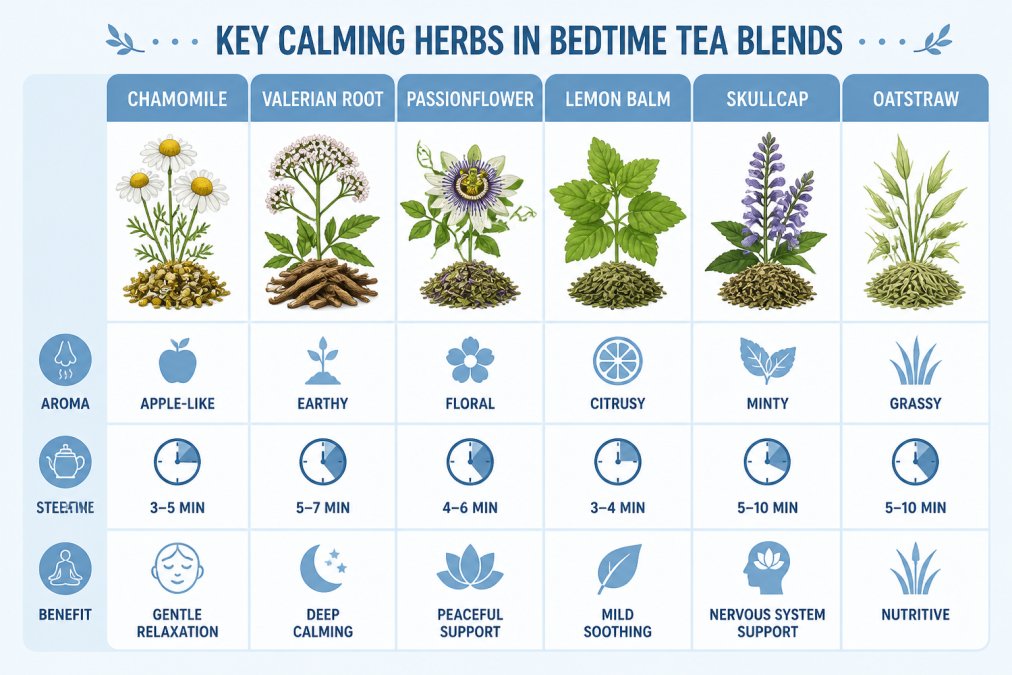
Each herb brings something different: chamomile is light and slightly sweet, valerian root grounding and earthy, passionflower delicate and floral.
When selecting a bedtime tea, look for blends that combine all three. Single-herb teas work, but a multi-herb blend delivers a more satisfying experience in taste.
Supporting Herbs: Lemon Balm, Skullcap, and Oatstraw
Beyond the main three, supporting herbs add depth. Lemon balm brings a bright, citrusy note that keeps a blend from feeling heavy. Skullcap has a minty quality. Oatstraw is milder, almost grassy, adding body.
These supporting herbs aren't afterthoughts, they separate a one-dimensional blend from one that tastes genuinely good. A blend with only chamomile and valerian can feel medicinal; add lemon balm and oatstraw and it becomes tea you'd actually want before bed.
When browsing loose leaf options, check the ingredient list.
Caffeine-Free Bedtime Tea: What to Look For
The most critical rule for bedtime tea is simple: it must be caffeine-free. That eliminates black, green, and most white teas, which all come from the Camellia sinensis plant and naturally contain caffeine.
True herbal teas, or tisanes, are naturally caffeine-free because they're made from herbs, flowers, roots, and fruits rather than tea leaves, ideal for evening use.
When shopping for loose leaf herbal tea for sleep, read the label carefully.
Brewtiful Coffee US offers options like our Apple Cider Rooibos and Hibiscus Berry Tea, both completely caffeine-free and designed for evening enjoyment, proof that caffeine-free doesn't mean boring.

Chamomile Tea for Sleep: Flavor, Aroma, and Benefits
Chamomile is the most recognized bedtime herb, and for good reason.
Apple Cider Rooibos (Caffeine Free) →
The sensory experience matters: if a tea smells medicinal or tastes bitter, you're less likely to make it a routine. Chamomile clears that hurdle, it tastes good enough to drink because you want to.
Quality matters here. Fresh, whole chamomile flowers deliver a brighter, more pleasant cup than dusty tea-bag fragments, brew loose leaf chamomile and you'll notice the fuller aroma and more nuanced flavor immediately.
Many people find chamomile works best in a blend rather than alone, pure chamomile can taste thin. Add valerian root, passionflower, or lemon balm and the cup becomes more interesting and satisfying.
How to Brew Loose Leaf Herbal Tea Perfectly
Steeping Time and Water Temperature
Water temperature matters more than most people realize. For loose leaf herbal tea for sleep, use water just off boiling, around 200-212°F, to extract full flavor and botanical properties without scorching delicate flowers or leaves.
Steeping time ranges from 4 to 10 minutes depending on the blend: chamomile and lighter herbs steep in 3 to 5 minutes, while valerian root and other roots need 5 to 10. Check the package, but know that longer steeping generally means a stronger, more potent cup.
Don't be afraid to experiment: a 4-minute steep tastes lighter and more delicate, a 7-minute steep fuller and more assertive. Find what works for your palate.
Brewing Tools and Technique
You don't need expensive equipment. A simple infuser basket, mesh strainer, or fine-mesh sieve works perfectly, the goal is keeping loose leaves separate from the water while allowing full contact during steeping.
For a more immersive experience, use a small teapot: warm it by rinsing with hot water, add the loose leaves directly, pour hot water, cover, and steep. When ready, pour through a fine-mesh strainer into your cup.
The ritual is part of the value, taking time to brew properly signals to your body that you're transitioning into relaxation mode.
Bulk Herbal Tea for Offices and Shared Spaces
If you're stocking a break room, employee kitchen, or shared pantry, bulk loose leaf herbal tea for sleep is a practical choice. Employees appreciate a quality caffeine-free option for afternoon, evening shifts, or a quiet moment between meetings, a low-effort employee kitchen benefit that reads as thoughtful rather than obligatory.
Why Bulk Makes Sense for Shared Spaces
Bulk loose leaf tea is more economical than individual servings. A pound yields roughly 60 to 80 cups depending on leaf density and scoop size, making the per-cup cost significantly lower than tea bags or pre-made beverages. For corporate clients and small business owners building a pantry selection, that efficiency compounds across a team.
Bulk also solves a practical problem: variety. Instead of committing to one box of tea bags, stock two or three blends and let people choose, a chamomile-forward blend for light sippers, a valerian-and-passionflower blend for the deeper wind-down crowd, and a rooibos or hibiscus option for anyone who wants caffeine-free without the herbal flavor profile.
Setting Up a Brewing Station That Actually Gets Used
The difference between a bulk tea program that works and one that sits untouched is friction. Remove it with a simple, clearly labeled station:
- A variable-temperature kettle. Herbal blends want water around 200-212°F, so a kettle that holds temperature means no guessing.
- Two or three infusers or a small teapot. Enough that no one waits, and easy to rinse between uses.
- Airtight storage jars. Loose leaf stales faster than bags once opened; small jars with tight lids keep leaves fresh and make the station look intentional.
- A laminated brewing card. List each blend, amount per cup (typically 1 to 1.5 teaspoons per 8 ounces), water temperature, and steep time, this single card prevents most bad cups.
- A small waste bowl or compost bin. Somewhere to dump spent leaves without clogging the sink.
Label each jar with the blend name and a one-line flavor note. "Chamomile, light, apple-like, 3-5 min" tells a first-time brewer everything they need.
Restocking Without Overbuying
A common pattern in offices is over-ordering on the first purchase and letting half go stale. Start with smaller quantities of two or three blends, track which jars empty first over a month, and restock based on that, most teams settle into one or two favorites quickly.
Apple Cider Rooibos (Caffeine Free) →
For wholesale options that work for office environments, Brewtiful Coffee US wholesale program provides bulk loose leaf tea selections ideal for pantry stocking and employee benefits. Ordering in bulk simplifies restocking and keeps costs down.
Holiday Gifting and Client Pantry Selections
Bulk loose leaf tea also scales neatly into holiday gift ideas. A curated tin of two or three caffeine-free blends paired with a simple infuser makes a practical gift for clients, remote team members, or evening-shift employees. Loose leaf stores well in airtight containers, so you can assemble gifts ahead of the season without worrying about freshness, and for corporate clients, a small branded card with brewing instructions turns a pantry item into something considered.
Building Your Bedtime Routine with Herbal Tea
The most effective use of loose leaf herbal tea isn't just drinking it, it's creating a consistent, trackable ritual. Your body responds to patterns: brewing and sipping at the same time each evening signals that sleep is coming, and the association strengthens over time.
Timing the Cup
Start 30 to 45 minutes before your target bedtime, giving you time to wind down. Avoid screens if possible, herbal tea, reduced light, and a pause from digital stimulation create an ideal environment for evening preparation.
Consistency matters more than perfection. Drinking loose leaf herbal tea four or five nights a week will produce better results than sporadic use.
A Simple Tracking Framework
Most people try a sleep tea for a week, feel unsure whether it helped, and stop. A short log fixes that. Keep it to four fields:
- Blend and steep time. Which tea, and how long you steeped it.
- Time you finished the cup. Relative to lights-out.
- How long it took to fall asleep. A rough estimate is fine.
- Morning grogginess. Rate it on a simple scale, or note "clear" or "foggy."
After two to three weeks, patterns emerge: you might find chamomile-based blends work better for you than valerian-heavy ones, or that a slightly longer steep makes a noticeable difference. This personalization is an advantage of loose leaf, you can adjust steeping time and leaf amount to match your preferences.
Realistic Expectations
It's worth being honest about what tea can and can't do. Chamomile, valerian, and passionflower have a long history of traditional use, and many people find them genuinely helpful in a wind-down routine.
If you're taking medications, are pregnant or breastfeeding, or have a health condition, check with a healthcare provider before making valerian or other herbal blends a regular habit, some herbs interact with medications or aren't appropriate in certain situations. And if problems persist for weeks despite a consistent routine, talk to a professional rather than adding stronger cups of tea.
Pairing Tea With the Rest of the Routine
Tea works best as the anchor of a broader wind-down, not the whole thing. A simple sequence: dim the lights an hour before bed, brew and sip away from screens, then move into a low-stimulation activity like reading or light stretching, the tea becomes the cue that the sequence has started.
Frequently Asked Questions
What is the best loose leaf herbal tea for nighttime sleep?
The best loose leaf herbal tea combines multiple calming herbs rather than relying on a single ingredient. Look for blends that feature chamomile, valerian root, and passionflower. Brewtiful Coffee's caffeine-free herbal blends are crafted to deliver both flavor. The key is finding a blend whose taste appeals to you, since you're more likely to make it part of your wind-down routine if you enjoy drinking it.
How long should herbal tea steep before bedtime?
Most loose leaf herbal tea blends steep for 5 to 10 minutes at 212°F (boiling water). Longer steeping extracts more of the herb's compounds. Start with 5 minutes, taste, and adjust upward if you prefer a stronger flavor or deeper infusion. Aim to drink your tea 30 to 45 minutes before bed to allow time for your body to wind down before sleep.
Can herbal tea for sleep contain caffeine?
Most herbal teas are naturally caffeine-free, but it depends on the ingredients. True teas made from the Camellia sinensis plant (black, green, white, oolong) contain caffeine and are not suitable for bedtime. Look for blends labeled caffeine-free that use only herbs, flowers, and roots, such as chamomile, rooibos, hibiscus, and valerian. Always check the ingredient list to confirm no black or green tea leaves are included in your bedtime blend.
What herbs are commonly used in bedtime tea blends?
Common herbs include chamomile (floral), valerian root (earthy), passionflower (delicate, herbaceous), lemon balm (citrusy), skullcap (mild, slightly bitter), and oatstraw (nutty). Many blends also feature aromatic additions like lavender, rosebuds, and orange blossoms for flavor and aroma appeal. Quality loose leaf blends combine 4 to 8 of these herbs to create a balanced flavor profile.