

Best Koffee Kult Alternatives for Home Brewers
Table of Contents
- Why Home Brewers Search for Koffee Kult Alternatives
- Best Coffee Beans for Home Brewing: What Sets Specialty Roasts Apart
- Coffee Roast Levels Explained: Finding Your Ideal Profile
- Single-Origin Coffee Beans: Why They Matter for Home Brewers
- Whiskey Barrel-Aged Coffee: A Unique Alternative to Standard Blends
- Comparison: Sample Packs and Single Origins for Every Budget
- How to Choose the Right Alternative for Your Brewing Method
- Conclusion: Making the Switch to Premium Home Brewing
- Frequently Asked Questions
Last Updated: October 17, 2026
Why Home Brewers Search for Koffee Kult Alternatives
Home brewers who've invested in quality equipment often find standard coffee doesn't match their expectations, which is where exploring alternatives becomes essential.
Mass-market options often taste flat or stale by the time they arrive, the freshness and aroma disappearing between roasting and your cup.
At Brewtiful Coffee US, we understand this frustration. Good coffee and exceptional coffee come down to three factors: roast recency, origin, and processing.
Finding the right koffee kult alternative for home brewers means understanding what makes specialty coffee different: fresher beans, more interesting flavor profiles, and consistency mass producers can't match.
Best Coffee Beans for Home Brewing: What Sets Specialty Roasts Apart
A great brewing method can't rescue stale coffee, but quality beans make even basic methods shine.
Specialty coffee starts with better raw material. Single-origin beans from specific regions and altitudes taste completely different from blended commodity coffee.
Freshness and Roast Date Matter
Roast date is the single most important factor for home brewers.
This is why buying from roasters who ship quickly makes such a difference. When you order from Brewtiful Coffee US, your beans ship within days of roasting.
Check the roast date on any coffee you're considering. If it doesn't have one printed clearly, that's a red flag. Reputable roasters are proud of their freshness and make it obvious.
Whole Bean vs. Pre-Ground
Whole beans stay fresh much longer than ground coffee, which loses peak flavor within hours of grinding.
If you're serious about quality, invest in a burr grinder. Blade grinders produce inconsistent particle sizes and muddy flavors; a burr grinder gives you control over grind size and consistency.
Pre-ground coffee has its place, convenience matters when you're rushing.
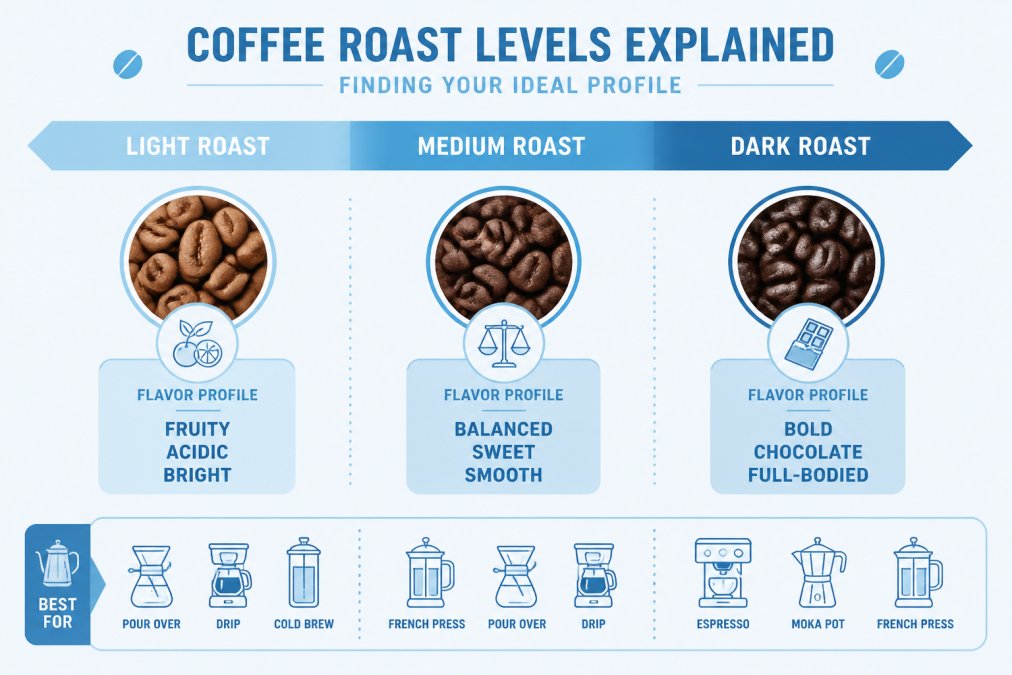
Coffee Roast Levels Explained: Finding Your Ideal Profile
Light roasts preserve origin character, dark roasts emphasize body and chocolate notes, and medium roasts split the difference.
Light, Medium, and Dark Roasts for Different Brewing Methods
Light roasts bring out natural acidity and origin flavors, working beautifully in pour-over and drip methods.
Medium roasts offer balance, retaining origin character while developing caramelized sweetness, and work across French press, espresso, and drip without technique adjustments.
Dark roasts create bold, full-bodied coffee with lower acidity, ideal for French press and espresso, where pressure extraction benefits from denser, more developed beans.
Single-Origin Coffee Beans: Why They Matter for Home Brewers
Single-origin coffee comes from one specific region, farm, or harvest, letting you taste the terroir that shapes flavor.
Bean Origin and Altitude Impact Flavor
Where coffee grows dramatically affects its taste.
Beans from Rwanda taste different from beans from Peru, which taste different from beans from Sumatra, real flavor variations you can taste.
Coffee grown at 1,100-1,700 meters develops more acidity, complexity, and brighter flavors than coffee from 750-1,050 meters, which often produces smoother, more chocolatey coffee.
Best Sellers Sample Pack: 6Bean, Cowboy, Breakfast, Peru, Mexico, Bali →
Soil type influences mineral notes and flavor balance: volcanic loam produces different results than clay minerals.
Processing Methods Shape Your Cup
How coffee is processed after harvesting changes its flavor profile dramatically. Washed coffees taste cleaner and brighter. Natural-processed coffees taste fruitier and fuller-bodied. Pulped natural processing splits the difference.
In washed processing, the fruit is removed before drying, creating cleaner, more acidic coffees that highlight origin character.
Natural processing leaves the fruit on the bean while it dries, creating fruity, wine-like, fuller-bodied, sweeter coffees.
Understanding these differences helps you choose coffee that matches what you want to taste.
Whiskey Barrel-Aged Coffee: A Unique Alternative to Standard Blends
Barrel-aged coffee gains complexity from aging in whiskey or bourbon barrels rather than relying solely on roasting and origin.
How Barrel Aging Develops Complex Flavors
When coffee beans rest in barrels that previously held whiskey or bourbon, they absorb compounds from the wood and remaining liquid.
Roasters monitor how long the beans sit, the barrel's previous contents, and environmental conditions so the barrel character enhances rather than overpowers the coffee.
This creates coffee that tastes different from anything roasting alone can achieve, adding layers of complexity, sweetness, smoothness, and subtle wood character to each sip.
Tasting Notes and Oak Character
A well-made barrel-aged coffee tastes like coffee first, with barrel character as a supporting note: chocolate, caramel, or fruit alongside subtle whiskey or oak undertones.
Poor barrel-aged coffee tastes like the barrel overpowered the bean, disappearing behind aggressive wood or harsh alcohol notes. The best versions balance both elements.
Oak contributes vanilla and caramel sweetness, while whiskey barrels add complexity and a smooth finish.
Comparison: Sample Packs and Single Origins for Every Budget
Finding your ideal koffee kult alternative for home brewers means trying different origins, roasts, and processing methods. Sample packs let you explore without committing to full bags.
Quick Comparison Table
| Option | Price | Best For | Roast Levels | What You Get |
|---|---|---|---|---|
| Best Sellers Sample Pack | $25.99 | Exploring variety | Light to dark | 6 different 2oz packs: blends and single origins |
| Single Origin Favorites Sample Pack | $24.99 | Tasting global terroir | Light to medium-dark | 6 different 2oz single-origin coffees |
| Flavored Coffees Sample Pack | $25.99 | Something different | Medium roast | 6 flavored varieties with natural oils |
| Individual Single Origins | $22.99 | Committing to a favorite | Varies by origin | Full 12oz bag of one specific coffee |
Best Sellers Sample Pack: Variety and Value
The Best Sellers Sample Pack includes six 2-ounce packs: the 6Bean Blend (dark roast house blend for espresso), Cowboy Blend (dark and medium blend with cocoa and caramel), Breakfast Blend (medium roast from South America), and three single origins from Peru, Mexico, and Bali.

This pack works for anyone trying to figure out what they actually like. The blends give you approachable, balanced coffee, while the single origins show how origin and altitude influence flavor, a low-risk way to explore.
The Peru coffee tastes like salted caramel and citrus. The Mexico coffee brings chocolate, cinnamon, and green apple. Each one teaches you something different about how coffee can taste.
Single Origin Favorites Sample Pack: Explore Global Terroir
The Single Origin Favorites Sample Pack focuses entirely on single-origin coffees from six regions: Brazil Santos, Colombia, Costa Rica, Ethiopia, Honduras, and Tanzania, letting you taste how geography shapes flavor.

Brazil Santos delivers an elegant, smooth cup with cocoa notes. Colombia brings dried orange, berry, and chocolate. Costa Rica tastes like sweet apple, raisin, and honey.
These aren't marketing descriptions, they're what you actually taste when you brew these coffees properly. Each region's altitude, soil, and processing create distinct flavor profiles.
Flavored Coffees: When You Want Something Different
The Flavored Coffees Sample Pack includes five medium-roast varieties: French Vanilla, Hazelnut, Cinnabun, Caramel, and Mocha, each using specialty-grade single-origin arabica beans flavored with high quality flavoring oils while still warm.
Best Sellers Sample Pack: 6Bean, Cowboy, Breakfast, Peru, Mexico, Bali →

Flavored coffee gets dismissed by some enthusiasts, but it serves a real purpose.
The key difference is quality. Mass-market flavored coffee uses cheap beans and artificial flavoring; these start with good beans and natural flavoring oils, creating a completely different experience.
How to Choose the Right Alternative for Your Brewing Method
The best specialty coffee for you depends on how you brew. Espresso machines, French press, and drip coffee makers extract differently, so they work better with different roast levels and bean types.
Espresso, French Press, and Drip: Roast Recommendations
Espresso machines force hot water through finely ground coffee quickly under pressure.
French press steeping is long, usually four minutes, so the water extracts more from the grounds. Medium and dark roasts handle the longer extraction without turning bitter; a light roast often tastes thin and acidic.
Drip coffee makers are the most forgiving, working well with light, medium, and dark roasts.
Pour-over brewing (Chemex, V60, Kalita Wave) works beautifully with light and medium roasts.
Freshness Guarantees and Storage Tips
When you order from Brewtiful Coffee US, your beans ship within days of roasting.
Store beans in an airtight container away from heat, light, and moisture.
Grind beans immediately before brewing. Pre-ground coffee loses peak flavor within hours; if convenience matters more, pre-ground is acceptable, but a burr grinder takes two minutes and makes a massive difference.
Buy whole beans in quantities you'll use within three to four weeks. Smaller, more frequent orders guarantee freshness better than bulk buying.
Conclusion: Making the Switch to Premium Home Brewing
Switching to premium specialty coffee requires small routine changes, but the difference in your cup is dramatic. Fresh beans, proper storage, and a grinder that gives you control transform your morning ritual.
A koffee kult alternative for home brewers means choosing based on freshness, origin, roast level, and brewing method. Sample packs let you explore without commitment, and single-origin coffees teach you how geography influences flavor.
Brewtiful Coffee US offers fresh-roasted specialty beans sourced from Uganda, Kenya, Sumatra, Peru, Mexico, and Bali, with unique barrel-aged varieties and thoughtfully crafted blends. Start with the Best Sellers Sample Pack or Single Origin Favorites to discover what cafe-quality coffee at home actually tastes like.
Making the switch to premium home brewing means investing in freshness and quality. For corporate clients, small business pantries, and employee kitchen benefits, we offer wholesale options that bring premium coffee to your team. Contact us for wholesale pricing and discover how fresh specialty coffee elevates your workplace.
Frequently Asked Questions
What makes a good koffee kult alternative for home brewing?
A strong alternative combines freshness (roasted within 2-4 weeks of purchase), whole-bean quality, transparent sourcing, and flavor consistency across brewing methods. Look for beans with a clear roast date, single-origin or carefully balanced blends, and tasting notes that match your preferences. Sample packs let you test multiple options before committing to larger quantities, which is ideal for discovering what works best with your equipment.
Are single-origin coffee beans better than blends for home brewing?
Both have merit. Single-origin beans showcase distinct regional characteristics and terroir, making them excellent for exploring different flavor profiles and understanding how altitude, soil, and processing affect taste. Blends are crafted to deliver consistency and balance across brewing methods. For home brewers, starting with a single-origin favorites sample pack helps you identify which origins resonate with you, then you can choose blends or single origins based on your mood and brewing method.
How do coffee roast levels affect my home brewing experience?
Light roasts preserve the bean's origin flavors and acidity, making them ideal for pour-over and filter methods where clarity matters. Medium roasts balance acidity and body, working well across most brewing styles including French press and drip. Dark roasts develop bold, smoky notes and lower acidity, suiting espresso and full-immersion brewing. Your brewing method and taste preference should guide roast selection, experiment with different levels to find what tastes best in your cup.
Does whiskey barrel-aged coffee actually taste like whiskey?
Whiskey barrel-aged coffee develops subtle oak and vanilla notes with hints of the barrel's character, rather than tasting strongly of whiskey itself. The aging process infuses complexity and smoothness into the beans. The flavor is sophisticated and layered, not overpowering, ideal if you enjoy nuanced, specialty-grade coffee. If you prefer straightforward, origin-forward flavors, single-origin beans from specific regions might be a better match for your palate.
How can I ensure the coffee I order arrives fresh?
Choose roasters who print a roast date on every bag and ship within days of roasting. Store beans in an airtight container away from light, heat, and moisture to preserve freshness for up to four weeks after opening. Whole beans stay fresher longer than ground coffee. Buying from small-batch roasters with fast shipping and strong freshness guarantees reduces the risk of stale beans arriving at your door.